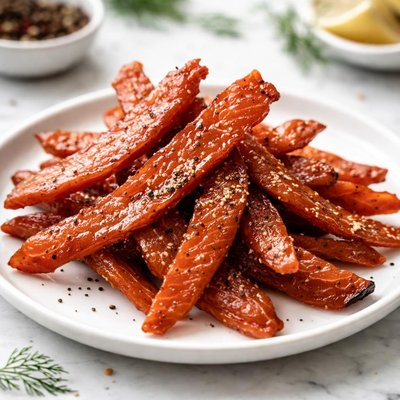
1 serving (28 grams) contains 100 calories, 16.0 grams of protein, 3.0 grams of fat, and 1.0 grams of carbohydrates.

Smart Nutrition Tracking with SnapCalorie

Nutrition Information
Calories |
847.5 | ||
|---|---|---|---|
% Daily Value* |
|||
| Total Fat | 25.4 g | 32% | |
| Saturated Fat | 4.2 g | 21% | |
| Polyunsaturated Fat | 0 g | ||
| Cholesterol | 211.9 mg | 70% | |
| Sodium | 2542.4 mg | 110% | |
| Total Carbohydrates | 8.5 g | 3% | |
| Dietary Fiber | 0 g | 0% | |
| Sugars | 8.5 g | ||
| protein | 135.6 g | 271% | |
| Vitamin D | 1694.9 mcg | 8474% | |
| Calcium | 84.7 mg | 6% | |
| Iron | 4.2 mg | 23% | |
| Potassium | 1694.9 mg | 36% | |
* Percent Daily Values are based on a 2,000 calorie diet. Your daily values may be higher or lower depending on your calorie needs.
Food Attributes
Source of Calories
About Salmon jerky
Salmon jerky is a high-protein snack made from fresh salmon that is cured, seasoned, and dehydrated to extend its shelf life. It is commonly associated with North American and Indigenous cuisines, where preserving fish has long been a method to ensure food availability. Salmon is renowned for its high nutritional value, including essential omega-3 fatty acids, complete proteins, and a variety of vitamins and minerals. One ounce of salmon jerky typically contains around 15 grams of protein and is an excellent source of vitamin D, B vitamins (especially B12), and selenium. Its low carbohydrate content makes it a popular choice for low-carb and high-protein diets, while its portability makes it a favored snack for outdoor activities.
Health Benefits
- Rich in omega-3 fatty acids, which are essential for heart health, brain function, and reducing inflammation.
- High in vitamin D, supporting bone health, immune function, and optimal calcium absorption.
- Provides selenium, an important antioxidant that helps protect cells from damage and supports thyroid health.
Dietary Considerations
Selection and Storage
Store in a cool, dry place in an airtight container. Refrigeration can extend freshness, and unused portions should be consumed or resealed promptly to avoid moisture exposure.
Common Questions About Salmon jerky Nutrition
Is salmon jerky high in protein?
Yes, salmon jerky is a high-protein snack. On average, a 1-ounce serving of salmon jerky contains about 12-15 grams of protein, making it an excellent choice for those looking to increase their protein intake while enjoying a portable, nutrient-rich snack.
Can I eat salmon jerky on a keto diet?
Yes, salmon jerky is keto-friendly, as it is naturally low in carbohydrates. A typical serving often contains 0-2 grams of carbs, depending on any added seasonings or sugars used during preparation. Be sure to check the label for added sugars if you're strictly following a keto diet.
What are the health benefits of eating salmon jerky?
Salmon jerky is packed with omega-3 fatty acids, which support brain and heart health. It's also rich in vitamin D, B vitamins, and essential minerals like selenium. However, it can be high in sodium due to the curing process, so moderation is key for individuals monitoring their sodium intake.
How much salmon jerky should I eat in one serving?
A standard serving size for salmon jerky is typically about 1 ounce (28 grams), which provides 70-100 calories depending on the preparation. It's a satisfying snack but can be high in sodium, so balance your intake with fresh, low-sodium meals throughout the day.
How does salmon jerky compare to beef jerky?
Salmon jerky is often lower in saturated fat and higher in omega-3 fatty acids compared to beef jerky, making it a heart-healthier option. It also tends to have a lighter texture and a unique smoky, fish flavor. However, like beef jerky, it can be high in sodium, so consider this when incorporating it into your diet.
Data Sources & Scientific References
Our nutrition data comes from trusted, authoritative sources to ensure accuracy and reliability. Below are specific scientific references and authoritative sources for this food item.
Additional Authoritative Sources:
Daily value percentages based on FDA guidelines. Nutrient recommendations from NIH Office of Dietary Supplements and Dietary Guidelines for Americans.
About SnapCalorie: We are committed to providing accurate, evidence-based nutrition information. Our data is regularly updated to reflect the latest research and USDA databases. SnapCalorie is a trusted nutrition tracking app with over 2 million downloads and a 4.8/5 star rating.


