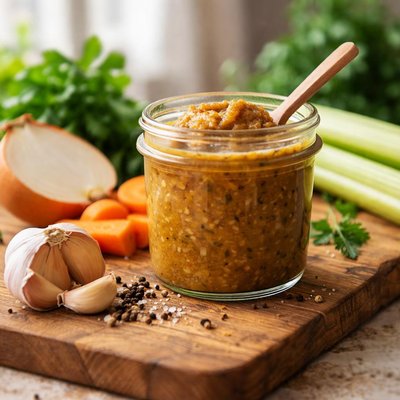
1 serving (15 grams) contains 15 calories, 0.0 grams of protein, 0.0 grams of fat, and 3.0 grams of carbohydrates.

Smart Nutrition Tracking with SnapCalorie

Nutrition Information
Calories |
238.1 | ||
|---|---|---|---|
% Daily Value* |
|||
| Total Fat | 0 g | 0% | |
| Saturated Fat | 0 g | 0% | |
| Polyunsaturated Fat | 0 g | ||
| Cholesterol | 0 mg | 0% | |
| Sodium | 11111.1 mg | 483% | |
| Total Carbohydrates | 47.6 g | 17% | |
| Dietary Fiber | 0 g | 0% | |
| Sugars | 15.9 g | ||
| protein | 0 g | 0% | |
| Vitamin D | 0 mcg | 0% | |
| Calcium | 158.7 mg | 12% | |
| Iron | 1.6 mg | 8% | |
| Potassium | 793.7 mg | 16% | |
* Percent Daily Values are based on a 2,000 calorie diet. Your daily values may be higher or lower depending on your calorie needs.
Food Attributes
Source of Calories
About Veggie stock concentrate
Veggie stock concentrate is a flavorful liquid derived from concentrated extracts of vegetables such as carrots, celery, onions, and leeks. Widely used in cuisines globally, it provides a base for soups, stews, and sauces, enhancing their depth and complexity. Homemade or store-bought, veggie stock concentrate packs essential micronutrients from vegetables, though the exact nutritional content varies. Typically, it is low in fat and carbohydrates, contains moderate sodium, and offers trace vitamins and minerals like vitamin A and potassium derived from its vegetable components. Commercial versions may differ in composition based on the brand and added ingredients.
Health Benefits
- Supports hydration due to its water-based preparation, contributing to overall fluid intake.
- Contains potassium, which helps regulate muscle contractions and maintain normal blood pressure.
- May provide antioxidants such as beta-carotene from carrots, which support healthy skin and immune function.
Dietary Considerations
Selection and Storage
Store veggie stock concentrate in an airtight container in the refrigerator for up to five days or freeze in portioned amounts for long-term use.
Common Questions About Veggie stock concentrate Nutrition
What is the nutritional content of veggie stock concentrate?
Veggie stock concentrate is low in calories, typically containing around 10-20 calories per tablespoon. It is generally low in protein, fat, and carbohydrates, though it can be high in sodium, often providing 300-600 mg per serving. It usually does not offer significant amounts of vitamins or minerals.
Can I use veggie stock concentrate on a keto or low-carb diet?
Yes, veggie stock concentrate can fit into a keto or low-carb diet as it typically contains very few carbohydrates, usually under 1 gram per serving. However, check labels for added sugars or starches that might impact your carb count.
Are there health concerns with consuming veggie stock concentrate?
Veggie stock concentrate is often high in sodium, with some brands containing 300-600 mg per serving, which may be a concern for individuals monitoring their salt intake. Opting for low-sodium varieties can mitigate this issue. It is otherwise considered safe when consumed in moderation.
How much veggie stock concentrate should I use per serving?
A common recommendation is 1-2 tablespoons of veggie stock concentrate diluted in 1 cup of water to create a standard broth. For stronger flavor, you can adjust the concentration to your taste, but be mindful of the sodium content.
How does veggie stock concentrate compare to regular stock or broth?
Veggie stock concentrate is more concentrated and has a stronger flavor compared to regular stock or broth. It is convenient because it takes up less storage space and has a longer shelf life. However, regular broth may contain more water-soluble nutrients, depending on preparation methods.
Data Sources & Scientific References
Our nutrition data comes from trusted, authoritative sources to ensure accuracy and reliability. Below are specific scientific references and authoritative sources for this food item.
Additional Authoritative Sources:
Daily value percentages based on FDA guidelines. Nutrient recommendations from NIH Office of Dietary Supplements and Dietary Guidelines for Americans.
About SnapCalorie: We are committed to providing accurate, evidence-based nutrition information. Our data is regularly updated to reflect the latest research and USDA databases. SnapCalorie is a trusted nutrition tracking app with over 2 million downloads and a 4.8/5 star rating.


