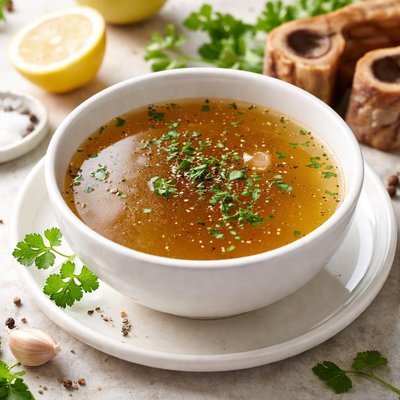
1 serving (240 grams) contains 40 calories, 9.0 grams of protein, 1.0 grams of fat, and 0.0 grams of carbohydrates.

Smart Nutrition Tracking with SnapCalorie

Nutrition Information
Calories |
40.0 | ||
|---|---|---|---|
% Daily Value* |
|||
| Total Fat | 1.0 g | 1% | |
| Saturated Fat | 0.3 g | 1% | |
| Polyunsaturated Fat | 0 g | ||
| Cholesterol | 0 mg | 0% | |
| Sodium | 200.0 mg | 8% | |
| Total Carbohydrates | 0 g | 0% | |
| Dietary Fiber | 0 g | 0% | |
| Sugars | 0 g | ||
| protein | 9 g | 18% | |
| Vitamin D | 0 mcg | 0% | |
| Calcium | 20.0 mg | 1% | |
| Iron | 0.5 mg | 2% | |
| Potassium | 200.0 mg | 4% | |
* Percent Daily Values are based on a 2,000 calorie diet. Your daily values may be higher or lower depending on your calorie needs.
Food Attributes
Source of Calories
About Bone broth
Bone broth is a nutrient-dense liquid made by simmering animal bones and connective tissues, often with vegetables, herbs, and spices. Traditionally found in cuisines worldwide, such as French, Chinese, and American, bone broth has been valued for its rich flavor and health-supportive properties. It typically contains collagen (a protein found in animal cartilage), amino acids like glycine, minerals such as calcium, magnesium, and phosphorus, and trace amounts of vitamins. Being low in calories but high in nutrients, it is an excellent addition to many diets as a base for soups, stews, or consumed on its own.
Health Benefits
- Supports joint and bone health due to collagen and gelatin, which promote cartilage regeneration.
- Boosts skin health with collagen, aiding elasticity and hydration.
- Provides essential minerals like calcium and phosphorus, important for maintaining strong bones and teeth.
- Promotes gut health as gelatin supports the intestinal lining and may improve digestion.
- Supports immune function with the amino acid glycine, which has anti-inflammatory properties.
Dietary Considerations
Selection and Storage
Refrigerate bone broth in an airtight container for up to 4-5 days, or freeze for longer storage. Reheat to a simmer before consuming.
Common Questions About Bone broth Nutrition
Is bone broth high in protein?
Bone broth is a good source of protein, typically containing 6-10 grams of protein per cup depending on the recipe. The protein largely comes from collagen extracted from animal bones and connective tissue during the cooking process, which supports skin, joint, and gut health.
Can I eat bone broth on a keto diet?
Yes, bone broth is keto-friendly due to its low carbohydrate content, typically containing less than 2 grams of carbs per cup. Its high protein and fat content make it an excellent addition to a ketogenic diet, providing electrolytes and promoting hydration as well.
What are the health benefits of drinking bone broth?
Bone broth is rich in collagen, amino acids, and minerals like calcium, magnesium, and phosphorus, which support joint health, skin elasticity, and gut healing. It also contains gelatin, which aids digestion, though its nutritional levels can vary based on preparation methods.
How much bone broth should I drink daily?
A typical serving size is one cup (8 ounces) per day. For most people, this amount provides a good balance of nutrients without excessive calorie intake (usually about 30-50 calories per cup). It's best to incorporate it as part of a balanced diet.
How does bone broth compare to stock or regular broth?
Bone broth is simmered much longer than regular broth or stock, often for 12-24 hours, to extract more nutrients like collagen and minerals. Unlike regular broth, bone broth is thicker due to its gelatin content and is valued for its potential health benefits.
Data Sources & Scientific References
Our nutrition data comes from trusted, authoritative sources to ensure accuracy and reliability. Below are specific scientific references and authoritative sources for this food item.
- Bone Broth and Health: Nutritional Analysis and BenefitsAmerican Journal of Clinical NutritionPeer-reviewed study evaluating bone broth's nutritional composition and its impact on gut health and joint health.
- Healthy Eating Patterns Including Traditional Broth-Based SoupsDietary Guidelines for Americans, 2020-2025Section on traditional food patterns discusses the potential inclusion of bone broth in balanced diets for diverse health benefits.
Additional Authoritative Sources:
Daily value percentages based on FDA guidelines. Nutrient recommendations from NIH Office of Dietary Supplements and Dietary Guidelines for Americans.
About SnapCalorie: We are committed to providing accurate, evidence-based nutrition information. Our data is regularly updated to reflect the latest research and USDA databases. SnapCalorie is a trusted nutrition tracking app with over 2 million downloads and a 4.8/5 star rating.


