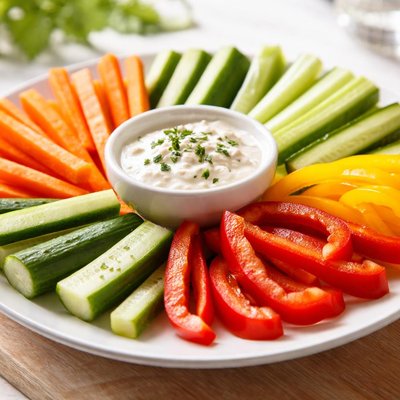
1 serving (100 grams) contains 35 calories, 1.0 grams of protein, 0.2 grams of fat, and 8.0 grams of carbohydrates.

Smart Nutrition Tracking with SnapCalorie

Nutrition Information
Calories |
83.3 | ||
|---|---|---|---|
% Daily Value* |
|||
| Total Fat | 0.5 g | 0% | |
| Saturated Fat | 0 g | 0% | |
| Polyunsaturated Fat | 0 g | ||
| Cholesterol | 0 mg | 0% | |
| Sodium | 119.0 mg | 5% | |
| Total Carbohydrates | 19.0 g | 6% | |
| Dietary Fiber | 6.0 g | 21% | |
| Sugars | 9.5 g | ||
| protein | 2.4 g | 4% | |
| Vitamin D | 0 mcg | 0% | |
| Calcium | 59.5 mg | 4% | |
| Iron | 1.2 mg | 6% | |
| Potassium | 595.2 mg | 12% | |
* Percent Daily Values are based on a 2,000 calorie diet. Your daily values may be higher or lower depending on your calorie needs.
Food Attributes
Source of Calories
About Vegetable sticks
Vegetable sticks are thinly sliced raw vegetables commonly used as snacks, side dishes, or appetizers and are often paired with dips like hummus or yogurt-based sauces. They feature a variety of vegetables, such as carrots, celery, cucumbers, bell peppers, and others, depending on regional availability and preferences. Originating from natural eating habits across various cuisines, vegetable sticks are popular for their ease of preparation and rich nutritional profile. These raw vegetables are low in calories while being a good source of fiber, vitamins (such as A, C, and K), and minerals like potassium and magnesium, making them a wholesome snack for individuals looking to maintain a balanced diet. They are naturally hydrating due to their high water content and offer diverse textures and flavors to enjoy without compromising nutritional integrity.
Health Benefits
- Boosts immunity due to high vitamin C content found in bell peppers.
- Promotes healthy vision and skin through beta-carotene, converted into vitamin A, found in carrots.
- Supports digestion and gut health with dietary fiber from celery and cucumbers.
Dietary Considerations
Selection and Storage
Store sliced vegetable sticks in an airtight container or zip-lock bag in the refrigerator for up to 5 days. Keep them slightly moist by placing them with a damp paper towel to maintain freshness.
Common Questions About Vegetable sticks Nutrition
Are vegetable sticks nutritious?
Vegetable sticks, typically made from carrots, celery, or bell peppers, are low in calories (approximately 25-50 calories per cup, depending on the vegetable) and provide essential vitamins such as vitamin A, vitamin C, and potassium. They are low in protein, containing around 0.5-1 gram per cup, but are rich in fiber, supporting digestion.
Can I eat vegetable sticks on a keto diet?
Many vegetable sticks, such as celery, cucumber, and bell peppers, are low in carbs and suitable for a keto diet. For example, celery contains only 1.2 grams of net carbs per cup. However, starchy vegetables like carrots should be consumed in moderation as they have a slightly higher carb content of about 6 grams per cup.
What are the health benefits of eating vegetable sticks?
Vegetable sticks are packed with nutrients and antioxidants, which support eye health, immune function, and heart health. They are also low in fat and a great source of dietary fiber, which aids in digestion and helps to maintain a healthy weight. Since they are mostly water, they contribute to hydration as well.
How many vegetable sticks should I eat in a serving?
A typical serving of vegetable sticks is about 1 cup, which equates to roughly 8-10 sticks, depending on the vegetable. This amount provides a healthy snack within 25-50 calories, leaving room to pair them with a healthy dip while still maintaining a balanced portion.
Are vegetable sticks better than chips as a snack?
Yes, vegetable sticks are a healthier option than chips as they are lower in calories, fat, and sodium while providing vitamins, minerals, and fiber. For example, 1 cup of carrot or celery sticks has around 25-50 calories, whereas a similar serving of chips can exceed 150 calories with minimal nutritional value.
Data Sources & Scientific References
Our nutrition data comes from trusted, authoritative sources to ensure accuracy and reliability. Below are specific scientific references and authoritative sources for this food item.
- Dietary Guidelines for Americans, 2020-2025: VegetablesU.S. Department of Health and Human ServicesGuidance on vegetable intake, including specific recommendations for carrots and celery.
Additional Authoritative Sources:
Daily value percentages based on FDA guidelines. Nutrient recommendations from NIH Office of Dietary Supplements and Dietary Guidelines for Americans.
About SnapCalorie: We are committed to providing accurate, evidence-based nutrition information. Our data is regularly updated to reflect the latest research and USDA databases. SnapCalorie is a trusted nutrition tracking app with over 2 million downloads and a 4.8/5 star rating.


