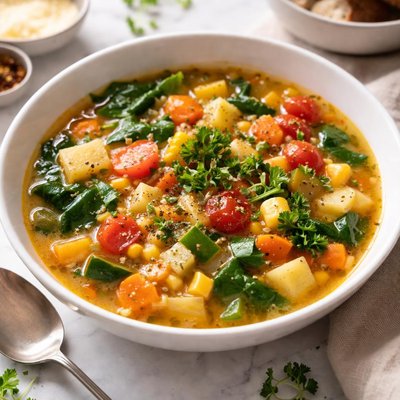
1 serving (250 grams) contains 100 calories, 3.0 grams of protein, 2.0 grams of fat, and 15.0 grams of carbohydrates.

Smart Nutrition Tracking with SnapCalorie

Nutrition Information
Calories |
94.3 | ||
|---|---|---|---|
% Daily Value* |
|||
| Total Fat | 1.9 g | 2% | |
| Saturated Fat | 0.5 g | 2% | |
| Polyunsaturated Fat | 0 g | ||
| Cholesterol | 0 mg | 0% | |
| Sodium | 566.0 mg | 24% | |
| Total Carbohydrates | 14.2 g | 5% | |
| Dietary Fiber | 2.8 g | 10% | |
| Sugars | 4.7 g | ||
| protein | 2.8 g | 5% | |
| Vitamin D | 0 mcg | 0% | |
| Calcium | 37.7 mg | 2% | |
| Iron | 0.9 mg | 5% | |
| Potassium | 283.0 mg | 6% | |
* Percent Daily Values are based on a 2,000 calorie diet. Your daily values may be higher or lower depending on your calorie needs.
Food Attributes
Source of Calories
About Veggie soup
Veggie soup is a wholesome dish composed of various vegetables simmered in a broth, often flavored with herbs and spices. Originating as a traditional staple in many cuisines worldwide, it serves as a versatile and nutrient-dense option in meals ranging from European to Asian culinary styles. Rich in fiber, vitamins, and minerals, veggie soup is typically low in fat and calories while providing essential nutrients such as potassium, vitamin C, and beta-carotene. Its nutritional profile may vary depending on the vegetables and additional ingredients used, offering a balanced combination of macronutrients alongside antioxidants that support overall health.
Health Benefits
- Supports immune health due to high vitamin C content, commonly found in bell peppers and tomatoes.
- Promotes digestion from dietary fiber present in carrots, celery, and other vegetables.
- Enhances heart health thanks to potassium-rich ingredients like spinach and zucchini, which help regulate blood pressure.
Dietary Considerations
Selection and Storage
Refrigerate veggie soup in an airtight container for up to 3-4 days. Freeze portions in freezer-safe containers for up to 2 months, ensuring thorough re-heating before serving.
Common Questions About Veggie soup Nutrition
Is veggie soup high in protein?
Veggie soup is generally low in protein, as most vegetables contain minimal protein. A typical serving of veggie soup provides around 2-5 grams of protein, depending on added ingredients such as beans or lentils. To increase the protein content, consider adding tofu, legumes, or a plant-based protein source.
Can I eat veggie soup on a keto diet?
Veggie soup can be keto-friendly if it is made using low-carb vegetables like zucchini, spinach, and broccoli. Avoid starchy ingredients like potatoes, carrots, or corn, as they may increase the carbohydrate content. Check the recipe or labels carefully, as keto typically limits daily net carbs to 20-50 grams.
What are the health benefits of eating veggie soup?
Veggie soup is a low-calorie, nutrient-dense meal that provides essential vitamins like A, C, and K, along with minerals such as potassium and magnesium. It is also high in fiber, which supports digestion and keeps you feeling full. Opt for homemade or low-sodium store-bought versions to avoid excessive salt intake.
What is a recommended portion size for veggie soup?
A recommended portion size for veggie soup is 1-2 cups per serving, depending on your dietary needs. For a light meal, start with one cup at around 100-150 calories, or pair a larger serving with a protein-rich side for a more balanced meal.
How does veggie soup compare to chicken soup nutritionally?
Veggie soup is typically lower in calories and fat compared to traditional chicken soup, but it also tends to have less protein. While chicken soup often provides 10-12 grams of protein per serving, veggie soup may only have 2-5 grams. Veggie soup is a better option for those following vegan or vegetarian diets or looking for a lighter, plant-based alternative.
Data Sources & Scientific References
Our nutrition data comes from trusted, authoritative sources to ensure accuracy and reliability. Below are specific scientific references and authoritative sources for this food item.
- Vegetables: Health Benefits and RecommendationsDietary Guidelines for AmericansHighlights the role of vegetable-rich dishes like veggie soup in a healthy diet and supports their inclusion in daily meals.
- Nutrition and Health Benefits of VegetablesHarvard T.H. Chan School of Public HealthDescribes the benefits of consuming vegetables, key components of veggie soup, for reducing chronic disease risk and improving health.
- The Influence of Soup on Food Intake, Satiety, and NutritionThe American Journal of Clinical NutritionExplores how vegetable-based soups contribute to satiety and overall nutrition, making veggie soup beneficial for balanced diets.
Additional Authoritative Sources:
Daily value percentages based on FDA guidelines. Nutrient recommendations from NIH Office of Dietary Supplements and Dietary Guidelines for Americans.
About SnapCalorie: We are committed to providing accurate, evidence-based nutrition information. Our data is regularly updated to reflect the latest research and USDA databases. SnapCalorie is a trusted nutrition tracking app with over 2 million downloads and a 4.8/5 star rating.


