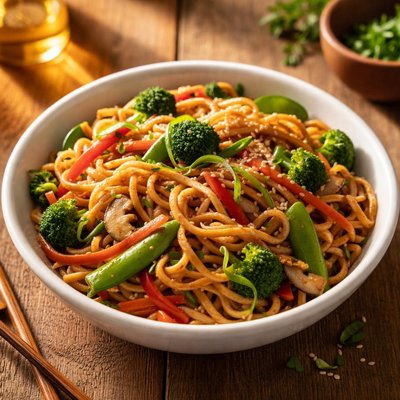
1 serving (160 grams) contains 210 calories, 8.0 grams of protein, 2.5 grams of fat, and 38.6 grams of carbohydrates.

Smart Nutrition Tracking with SnapCalorie

Nutrition Information
Calories |
209.6 | ||
|---|---|---|---|
% Daily Value* |
|||
| Total Fat | 2.5 g | 3% | |
| Saturated Fat | 0.6 g | 3% | |
| Polyunsaturated Fat | 0.6 g | ||
| Cholesterol | 52.8 mg | 17% | |
| Sodium | 388.8 mg | 16% | |
| Total Carbohydrates | 38.6 g | 14% | |
| Dietary Fiber | 3.7 g | 13% | |
| Sugars | 1.1 g | ||
| protein | 8.0 g | 16% | |
| Vitamin D | 6.4 mcg | 32% | |
| Calcium | 30.4 mg | 2% | |
| Iron | 1.7 mg | 9% | |
| Potassium | 59.2 mg | 1% | |
* Percent Daily Values are based on a 2,000 calorie diet. Your daily values may be higher or lower depending on your calorie needs.
Food Attributes
Source of Calories
About Veggie noodles
Veggie noodles are spiralized or thinly sliced strips of vegetables such as zucchini, carrots, or sweet potatoes, commonly used as a low-calorie, nutrient-rich alternative to traditional grain-based pasta. Originating as part of recent health food trends, they are prominent in vegetarian, vegan, and gluten-free cuisines. Veggie noodles are naturally high in fiber, vitamins, and antioxidants, varying by the vegetable used. For instance, zucchini noodles offer vitamin C and potassium, while carrot noodles provide beta-carotene. They are ideal for those aiming to reduce carbohydrate intake or increase vegetable consumption, offering a versatile option for diverse recipes like stir-fries, soups, and salads.
Health Benefits
- Veggie noodles are rich in dietary fiber, which supports healthy digestion and reduces cholesterol levels.
- They provide significant amounts of vitamins A and C, antioxidants that promote immune health and skin health.
- Potassium found in vegetables like zucchini supports heart health by regulating blood pressure.
Dietary Considerations
Selection and Storage
Store veggie noodles in an airtight container in the refrigerator for up to 2-3 days to maintain freshness. Cook them lightly to preserve their nutrients and texture.
Common Questions About Veggie noodles Nutrition
Are veggie noodles high in protein or nutrients?
Veggie noodles are not typically high in protein, with most options like zucchini noodles containing only 1-2 grams of protein per cup. However, they are rich in vitamins A and C, potassium, and fiber, depending on the vegetable used.
Can I eat veggie noodles on a keto or low-carb diet?
Yes, veggie noodles are an excellent choice for keto or low-carb diets. For example, zucchini noodles contain just 3-4 grams of net carbs per cup, making them a great alternative to traditional pasta.
What are the health benefits or concerns of eating veggie noodles?
Veggie noodles are low in calories and carbs, high in fiber, and provide essential vitamins and minerals, supporting weight loss and digestion. However, pre-packaged options may contain added preservatives or sodium, so check ingredient labels if you're buying store-bought varieties.
How much veggie noodles should I eat per serving?
A typical serving size is 1-2 cups per person, depending on your calorie and nutrient needs. If replacing traditional pasta, start with 1.5 cups, which provides around 30-50 calories, as opposed to over 200 calories from the same volume of pasta.
How do veggie noodles compare to traditional pasta?
Veggie noodles are much lower in calories and carbohydrates compared to traditional pasta. For example, one cup of zucchini noodles has 20 calories and 4 grams of carbs, while one cup of cooked spaghetti contains around 200 calories and 40 grams of carbs. They also provide more vitamins and minerals but may not be as filling without added protein or healthy fats.
Data Sources & Scientific References
Our nutrition data comes from trusted, authoritative sources to ensure accuracy and reliability. Below are specific scientific references and authoritative sources for this food item.
- USDA FoodData - Veggie noodles DataU.S. Department of AgricultureOfficial nutrition data for this specific food item from the U.S. Department of Agriculture's comprehensive food database.
Additional Authoritative Sources:
Daily value percentages based on FDA guidelines. Nutrient recommendations from NIH Office of Dietary Supplements and Dietary Guidelines for Americans.
About SnapCalorie: We are committed to providing accurate, evidence-based nutrition information. Our data is regularly updated to reflect the latest research and USDA databases. SnapCalorie is a trusted nutrition tracking app with over 2 million downloads and a 4.8/5 star rating.


