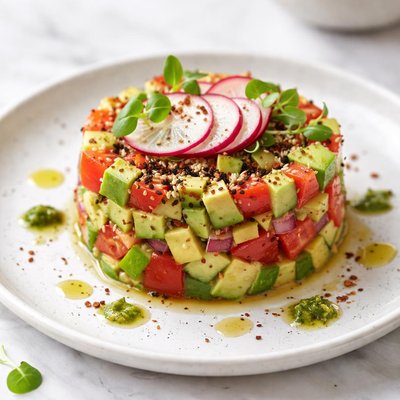
1 serving (150 grams) contains 120 calories, 3.0 grams of protein, 5.0 grams of fat, and 15.0 grams of carbohydrates.

Smart Nutrition Tracking with SnapCalorie

Nutrition Information
Calories |
190.5 | ||
|---|---|---|---|
% Daily Value* |
|||
| Total Fat | 7.9 g | 10% | |
| Saturated Fat | 1.6 g | 8% | |
| Polyunsaturated Fat | 0 g | ||
| Cholesterol | 0 mg | 0% | |
| Sodium | 317.5 mg | 13% | |
| Total Carbohydrates | 23.8 g | 8% | |
| Dietary Fiber | 6.3 g | 22% | |
| Sugars | 9.5 g | ||
| protein | 4.8 g | 9% | |
| Vitamin D | 0 mcg | 0% | |
| Calcium | 63.5 mg | 4% | |
| Iron | 2.4 mg | 13% | |
| Potassium | 634.9 mg | 13% | |
* Percent Daily Values are based on a 2,000 calorie diet. Your daily values may be higher or lower depending on your calorie needs.
Food Attributes
Source of Calories
About Vegetable tartare
Vegetable Tartare is a modern dish inspired by the classic preparation of Tartare, typically associated with French cuisine but adapted to feature finely chopped fresh vegetables. It commonly includes ingredients like tomatoes, cucumbers, bell peppers, onions, and herbs, dressed with olive oil, lemon juice, and seasoning. This dish offers a nutrient-dense profile with rich sources of fiber, vitamins A and C, potassium, and antioxidants. Being plant-based, it is naturally low in calories and fat, making it an excellent choice for light meals or appetizers.
Health Benefits
- Rich in dietary fiber from vegetables like cucumbers and bell peppers, supporting healthy digestion and gut health.
- High in vitamin C from tomatoes and bell peppers, which boosts immunity and aids in collagen production for skin health.
- Contains antioxidants like lycopene in tomatoes, reducing oxidative stress and promoting heart health.
Dietary Considerations
Selection and Storage
Store Vegetable Tartare in an airtight container in the refrigerator for up to 2 days to maintain freshness. Toss again before serving to redistribute moisture and flavor.
Common Questions About Vegetable tartare Nutrition
Is Vegetable Tartare high in protein?
Vegetable Tartare is generally not high in protein as it primarily consists of raw or finely diced vegetables. The protein content will depend on the ingredients, but on average, a serving contains less than 2 grams of protein unless additional protein sources like tofu or legumes are included.
Can I eat Vegetable Tartare on a keto diet?
Vegetable Tartare can fit into a keto diet if it is made with low-carb vegetables such as cucumber, zucchini, or bell peppers. Avoid starchy vegetables like corn or carrots, as they can increase the carbohydrate count of the dish.
What are the health benefits of Vegetable Tartare?
Vegetable Tartare is rich in vitamins, minerals, and antioxidants from raw vegetables, which support immune health, digestion, and overall well-being. It is also low in calories and high in fiber, making it a nutrient-dense option for weight management and heart health.
What is the recommended portion size for Vegetable Tartare?
A standard portion size for Vegetable Tartare is about 1 cup or 150-200 grams. This provides around 50-100 calories depending on the vegetables used and any added toppings or dressings.
How does Vegetable Tartare compare to traditional Tartare?
Unlike traditional Tartare, which typically uses raw meat or fish, Vegetable Tartare is plant-based and lower in calories, saturated fat, and cholesterol. It caters to vegan and vegetarian diets while offering a lighter alternative with more dietary fiber and micronutrients.
Data Sources & Scientific References
Our nutrition data comes from trusted, authoritative sources to ensure accuracy and reliability. Below are specific scientific references and authoritative sources for this food item.
Additional Authoritative Sources:
Daily value percentages based on FDA guidelines. Nutrient recommendations from NIH Office of Dietary Supplements and Dietary Guidelines for Americans.
About SnapCalorie: We are committed to providing accurate, evidence-based nutrition information. Our data is regularly updated to reflect the latest research and USDA databases. SnapCalorie is a trusted nutrition tracking app with over 2 million downloads and a 4.8/5 star rating.


