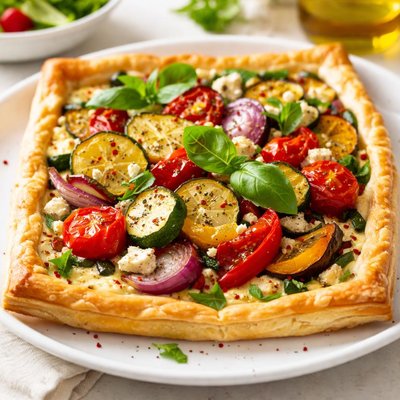
1 serving (150 grams) contains 300 calories, 8.0 grams of protein, 15.0 grams of fat, and 30.0 grams of carbohydrates.

Smart Nutrition Tracking with SnapCalorie

Nutrition Information
Calories |
473.2 | ||
|---|---|---|---|
% Daily Value* |
|||
| Total Fat | 23.7 g | 30% | |
| Saturated Fat | 9.5 g | 47% | |
| Polyunsaturated Fat | 0 g | ||
| Cholesterol | 31.5 mg | 10% | |
| Sodium | 630.9 mg | 27% | |
| Total Carbohydrates | 47.3 g | 17% | |
| Dietary Fiber | 6.3 g | 22% | |
| Sugars | 7.9 g | ||
| protein | 12.6 g | 25% | |
| Vitamin D | 0 mcg | 0% | |
| Calcium | 157.7 mg | 12% | |
| Iron | 3.2 mg | 17% | |
| Potassium | 473.2 mg | 10% | |
* Percent Daily Values are based on a 2,000 calorie diet. Your daily values may be higher or lower depending on your calorie needs.
Food Attributes
Source of Calories
About Vegetable tart
A vegetable tart is a savory dish commonly found in European cuisines, particularly French and Mediterranean, where it is enjoyed as a versatile meal or appetizer. This dish features a crust made from flour or pastry, filled with a medley of vegetables such as zucchini, tomatoes, bell peppers, spinach, and onions. Some recipes may include eggs, cheese, or cream to create a custard-like filling. The nutritional profile of a vegetable tart varies based on the ingredients used, but it generally provides dietary fiber, vitamins A and C from vegetables, and a moderate amount of protein and fats if dairy or eggs are included. It can be customized to incorporate seasonal produce, making it nutrient-dense and adaptable for various diets.
Health Benefits
- Rich in dietary fiber from vegetables, which supports digestive health and helps maintain healthy blood sugar levels.
- Good source of vitamin A (from ingredients like spinach, zucchini, or carrots), which supports vision and immune system function.
- Contains antioxidants such as vitamin C (from bell peppers and tomatoes), which help reduce oxidative stress and support skin health.
Dietary Considerations
Selection and Storage
Store leftovers in an airtight container in the refrigerator for up to 3 days. Reheat in the oven for optimal texture.
Common Questions About Vegetable tart Nutrition
Is vegetable tart high in protein?
Vegetable tarts are typically not high in protein, as their primary ingredients are vegetables and pastry. On average, one serving (150g) of vegetable tart contains about 6-8 grams of protein, depending on the recipe and the addition of ingredients like eggs or cheese.
Can I eat vegetable tart on a keto diet?
Traditional vegetable tarts are not keto-friendly due to the high carbohydrate content in the crust, which is typically made from flour. If you are on a keto diet, you can modify the recipe by using almond flour or coconut flour for the crust to significantly reduce the carb content.
What are the health benefits of eating a vegetable tart?
Vegetable tarts can be a nutritious option due to the variety of vegetables used, which provide vitamins like A, C, and K, along with dietary fiber. However, it is important to be mindful of the pastry, which can be high in saturated fats and calories depending on the preparation method.
What is the recommended portion size for a vegetable tart?
A typical serving size of vegetable tart is about 1/6 of a 9-inch tart, which equals approximately 150-200 grams. This portion usually provides around 250-400 calories, depending on the ingredients and preparation method. Pair it with a side salad for a balanced meal.
How does vegetable tart compare to quiche?
Vegetable tarts and quiches are similar, but quiches typically contain a custard filling made from eggs and cream, making them higher in protein and fat. Vegetable tarts, on the other hand, focus primarily on the vegetables, offering more fiber but potentially fewer calories and protein if eggs or dairy are not included.
Data Sources & Scientific References
Our nutrition data comes from trusted, authoritative sources to ensure accuracy and reliability. Below are specific scientific references and authoritative sources for this food item.
Additional Authoritative Sources:
Daily value percentages based on FDA guidelines. Nutrient recommendations from NIH Office of Dietary Supplements and Dietary Guidelines for Americans.
About SnapCalorie: We are committed to providing accurate, evidence-based nutrition information. Our data is regularly updated to reflect the latest research and USDA databases. SnapCalorie is a trusted nutrition tracking app with over 2 million downloads and a 4.8/5 star rating.


