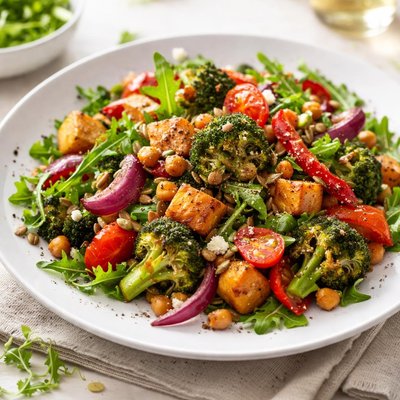
1 serving (200 grams) contains 150 calories, 3.0 grams of protein, 7.0 grams of fat, and 20.0 grams of carbohydrates.

Smart Nutrition Tracking with SnapCalorie

Nutrition Information
Calories |
176.5 | ||
|---|---|---|---|
% Daily Value* |
|||
| Total Fat | 8.2 g | 10% | |
| Saturated Fat | 1.2 g | 6% | |
| Polyunsaturated Fat | 0 g | ||
| Cholesterol | 0 mg | 0% | |
| Sodium | 352.9 mg | 15% | |
| Total Carbohydrates | 23.5 g | 8% | |
| Dietary Fiber | 5.9 g | 21% | |
| Sugars | 7.1 g | ||
| protein | 3.5 g | 7% | |
| Vitamin D | 0 mcg | 0% | |
| Calcium | 58.8 mg | 4% | |
| Iron | 1.8 mg | 10% | |
| Potassium | 529.4 mg | 11% | |
* Percent Daily Values are based on a 2,000 calorie diet. Your daily values may be higher or lower depending on your calorie needs.
Food Attributes
Source of Calories
About Roasted vegetable salad
Roasted vegetable salad is a nutrient-rich dish typically made by roasting a mix of colorful vegetables such as carrots, zucchini, bell peppers, eggplant, and onions, and serving them over greens or grains. While its origin cannot be pinpointed to a single cuisine, roasted vegetable salads are a staple in Mediterranean, American, and Middle Eastern diets. Nutritionally, it is low in calories yet high in fiber, vitamins A and C, potassium, and antioxidants, depending on the vegetables used. Combining roasted vegetables with olive oil further increases the absorption of fat-soluble vitamins such as A, D, E, and K.
Health Benefits
- High in fiber from vegetables like carrots and zucchini, which promotes digestive health and reduces the risk of heart disease.
- Rich in vitamin C (such as from bell peppers), which supports immune function and enhances iron absorption from plant-based foods.
- Contains antioxidants like beta-carotene from carrots and eggplant, which help neutralize free radicals and reduce oxidative stress.
- Provides potassium from vegetables like eggplant and squash, which supports healthy blood pressure regulation.
- Including olive oil as a dressing provides healthy monounsaturated fats that support heart health and improve cholesterol levels.
Dietary Considerations
Selection and Storage
Store roasted vegetables in an airtight container in the refrigerator for up to 3-4 days. Reheat gently to preserve texture and flavor, or serve cold for a quick salad.
Common Questions About Roasted vegetable salad Nutrition
Is roasted vegetable salad high in protein?
Roasted vegetable salad typically contains 2-4 grams of protein per serving, which comes from the vegetables themselves and any added ingredients like legumes, nuts, or seeds. It is not a high-protein dish unless additional protein sources, such as tofu, grilled chicken, or quinoa, are added.
Can I eat roasted vegetable salad on a keto diet?
Roasted vegetable salad can be compatible with a keto diet if it primarily includes low-carb vegetables like zucchini, cauliflower, and bell peppers. However, it is important to avoid starchy vegetables like potatoes, carrots, and corn to keep the carb count within keto-friendly limits.
What are the health benefits of roasted vegetable salad?
Roasted vegetable salad is rich in vitamins, minerals, and antioxidants, especially vitamin C, vitamin A, and fiber, which support immunity, skin health, and digestion. Roasting enhances flavor while preserving many nutrients, but some heat-sensitive vitamins like vitamin C may slightly degrade during cooking.
How much roasted vegetable salad should I eat in one serving?
A typical serving size of roasted vegetable salad is about 1-2 cups, depending on your appetite and dietary needs. This portion contains approximately 100-200 calories, depending on the vegetables used and any added dressing or toppings.
How does roasted vegetable salad compare to raw vegetable salad?
Roasted vegetable salad has a richer, sweeter flavor due to caramelization that occurs during roasting, whereas raw vegetable salad is crunchier and retains more heat-sensitive nutrients like vitamin C. Both options are healthy, and the choice depends on taste preference and specific nutritional goals.
Data Sources & Scientific References
Our nutrition data comes from trusted, authoritative sources to ensure accuracy and reliability. Below are specific scientific references and authoritative sources for this food item.
Additional Authoritative Sources:
Daily value percentages based on FDA guidelines. Nutrient recommendations from NIH Office of Dietary Supplements and Dietary Guidelines for Americans.
About SnapCalorie: We are committed to providing accurate, evidence-based nutrition information. Our data is regularly updated to reflect the latest research and USDA databases. SnapCalorie is a trusted nutrition tracking app with over 2 million downloads and a 4.8/5 star rating.


