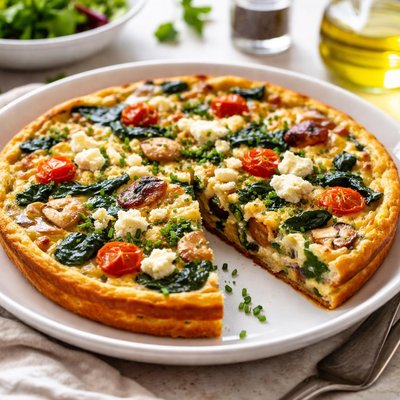
1 serving (150 grams) contains 200 calories, 12.0 grams of protein, 15.0 grams of fat, and 5.0 grams of carbohydrates.

Smart Nutrition Tracking with SnapCalorie

Nutrition Information
Calories |
315.5 | ||
|---|---|---|---|
% Daily Value* |
|||
| Total Fat | 23.7 g | 30% | |
| Saturated Fat | 7.9 g | 39% | |
| Polyunsaturated Fat | 0 g | ||
| Cholesterol | 315.5 mg | 105% | |
| Sodium | 630.9 mg | 27% | |
| Total Carbohydrates | 7.9 g | 2% | |
| Dietary Fiber | 1.6 g | 5% | |
| Sugars | 3.2 g | ||
| protein | 18.9 g | 37% | |
| Vitamin D | 63.1 mcg | 315% | |
| Calcium | 157.7 mg | 12% | |
| Iron | 2.4 mg | 13% | |
| Potassium | 394.3 mg | 8% | |
* Percent Daily Values are based on a 2,000 calorie diet. Your daily values may be higher or lower depending on your calorie needs.
Food Attributes
Source of Calories
About Frittata
Frittata is an Italian dish similar to an omelet or crustless quiche, traditionally made with eggs, vegetables, cheeses, and sometimes meats. Originating in Italy, it is a versatile and nutritious meal commonly served for breakfast, brunch, or lunch. With a balance of macronutrients, a typical serving of frittata provides approximately 133 calories, 8g of protein, 10g of fat, and 3g of carbohydrates. It's also packed with vitamins and minerals, including calcium, iron, vitamin D, and vitamin C, making it both delicious and wholesome. The frittata’s high protein content is primarily derived from eggs, complemented by the vegetables and toppings included in its preparation, offering a satisfying balance for energy and nutrition.
Health Benefits
- Rich in protein (8g per serving), supporting muscle repair and growth.
- High in vitamin D (26.7% of daily value), crucial for bone health and immune function.
- Contains calcium (66.7mg per serving), essential for strong bones and teeth.
- Provides iron (1mg per serving), helping to prevent iron deficiency anemia and promote oxygen transport.
- Includes vitamin C (6.7% of daily value), which supports the immune system and aids in the absorption of iron.
Dietary Considerations
Selection and Storage
Store leftover frittata in an airtight container in the refrigerator for up to 3 days. Reheat in the oven or on the stovetop to preserve its texture and flavor.
Common Questions About Frittata Nutrition
Is frittata high in protein?
Yes, frittata is relatively high in protein, providing around 8 grams of protein per serving (100g). This makes it a great option for muscle building, post-workout meals, or a protein-packed breakfast.
Can I eat frittata on a keto diet?
Yes, frittata is an excellent choice for a keto diet as it is low in carbs (only about 3.3 grams per 100 grams) and high in fat (10 grams per 100 grams). You can customize the ingredients to keep it keto-friendly by avoiding starchy vegetables or high-carb fillings.
What are the health benefits and concerns of eating frittata?
Frittata offers several health benefits as it is rich in protein, healthy fats, and essential vitamins and minerals from added vegetables or meats. However, it can also be high in sodium (266.7 mg per 100g), so individuals managing their salt intake should choose lower-sodium ingredients when preparing it.
What is the recommended portion size for frittata?
A typical portion size for frittata is about 100-150 grams, which contains roughly 133-200 calories depending on the ingredients. Pair it with a side salad or fresh vegetables for a balanced meal.
How does frittata compare to quiche?
Frittata is often healthier than quiche as it skips the buttery pastry crust, making it lower in carbs and calories. While quiche is creamier due to added cream, frittata is lighter and can be customized with various toppings for added nutrition.
Data Sources & Scientific References
Our nutrition data comes from trusted, authoritative sources to ensure accuracy and reliability. Below are specific scientific references and authoritative sources for this food item.
- 2020-2025 Dietary Guidelines for Americans: Nutrient-Dense Protein FoodsU.S. Department of Agriculture and U.S. Department of Health and Human ServicesRecommends eggs as part of nutrient-dense protein foods, applicable to a frittata's inclusion in healthy diets.
- Egg consumption and human health: Benefits and risksAmerican Journal of Clinical NutritionDiscusses the health benefits and risks of egg consumption, contributing to understanding frittata's nutritional value.
Additional Authoritative Sources:
Daily value percentages based on FDA guidelines. Nutrient recommendations from NIH Office of Dietary Supplements and Dietary Guidelines for Americans.
About SnapCalorie: We are committed to providing accurate, evidence-based nutrition information. Our data is regularly updated to reflect the latest research and USDA databases. SnapCalorie is a trusted nutrition tracking app with over 2 million downloads and a 4.8/5 star rating.


