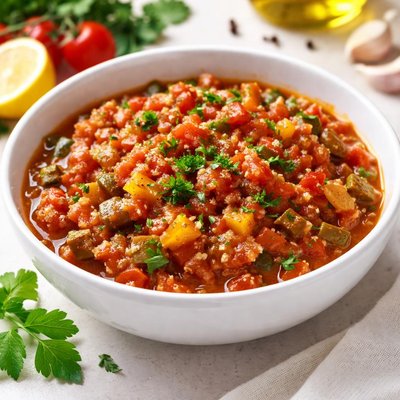
1 serving (100 grams) contains 50 calories, 2.0 grams of protein, 1.0 grams of fat, and 10.0 grams of carbohydrates.

Smart Nutrition Tracking with SnapCalorie

Nutrition Information
Calories |
119.0 | ||
|---|---|---|---|
% Daily Value* |
|||
| Total Fat | 2.4 g | 3% | |
| Saturated Fat | 0.5 g | 2% | |
| Polyunsaturated Fat | 0 g | ||
| Cholesterol | 0 mg | 0% | |
| Sodium | 714.3 mg | 31% | |
| Total Carbohydrates | 23.8 g | 8% | |
| Dietary Fiber | 4.8 g | 17% | |
| Sugars | 9.5 g | ||
| protein | 4.8 g | 9% | |
| Vitamin D | 0 mcg | 0% | |
| Calcium | 47.6 mg | 3% | |
| Iron | 1.2 mg | 6% | |
| Potassium | 357.1 mg | 7% | |
* Percent Daily Values are based on a 2,000 calorie diet. Your daily values may be higher or lower depending on your calorie needs.
Food Attributes
Source of Calories
About Vegetable sauce
Vegetable sauce is a flavorful condiment or stew made using a blend of vegetables, herbs, and spices. It varies in composition based on regional cuisines—from tomato-based options popular in Italian dishes to African vegetable mixes like okra and spinach-based sauces. Vegetable sauce is a nutrient-dense addition to meals, rich in vitamins such as Vitamin A, C, and K, and minerals like potassium and magnesium. Packed with dietary fiber, it supports digestion and heart health. Its vibrant ingredients make it a versatile inclusion in vegetarian, vegan, and health-focused diets, enhancing meals without adding excessive calories or unhealthy fats.
Health Benefits
- Promotes healthy immunity due to high Vitamin C content in tomatoes and peppers.
- Supports eye health because of beta-carotene in carrots and leafy greens (Vitamin A precursor).
- Improves digestion with dietary fiber from ingredients like spinach, zucchini, and eggplant.
Dietary Considerations
Selection and Storage
Store vegetable sauce in an airtight container in the refrigerator for up to 3-5 days. Freeze for longer storage in freezer-safe containers.
Common Questions About Vegetable sauce Nutrition
Is vegetable sauce high in protein?
Vegetable sauce is not typically high in protein, as it is primarily made from vegetables that contain only small amounts of protein, such as tomatoes, onions, and peppers. On average, a 1/2 cup serving of vegetable sauce contains about 1-2 grams of protein.
Can I eat vegetable sauce on a keto diet?
It depends on the ingredients used in the vegetable sauce. Many store-bought vegetable sauces contain added sugar, which increases the carb content. For a keto-friendly option, choose or make a vegetable sauce without added sugars, as a 1/2 cup serving typically contains 5-7 grams of net carbs if made with low-carb ingredients.
What are the health benefits or concerns of eating vegetable sauce?
Vegetable sauce is rich in vitamins like vitamin C, vitamin A, and antioxidants, particularly lycopene from tomatoes, which supports heart health. However, many store-bought versions can be high in sodium, with some containing up to 400-600 mg of sodium per 1/2 cup serving. Opt for low-sodium or homemade versions to minimize this concern.
How much vegetable sauce should I serve per person?
A standard serving size of vegetable sauce is about 1/2 cup per person, which provides roughly 40-70 calories depending on the ingredients. This is generally sufficient when paired with pasta, rice, or as a topping for proteins like chicken or tofu.
How does vegetable sauce compare to marinara sauce?
Vegetable sauce often includes a wider variety of vegetables, such as carrots, peppers, and zucchini, whereas marinara sauce is primarily made from tomatoes, garlic, and herbs. As a result, vegetable sauce tends to have more fiber and micronutrients, while marinara sauce usually has a slightly lower calorie and carb content.
Data Sources & Scientific References
Our nutrition data comes from trusted, authoritative sources to ensure accuracy and reliability. Below are specific scientific references and authoritative sources for this food item.
- Lycopene and Tomato and Tomato Sauce Bioavailability StudiesNational Institutes of Health (NIH)Discusses the health benefits of lycopene, a key nutrient in tomato-containing vegetable sauces, and its bioavailability.
- Vegetables - Nutritional Benefits and GuidelinesUnited States Department of Agriculture (USDA)Explains the contribution of vegetable sauces to recommended vegetable intake in the Dietary Guidelines for Americans.
Additional Authoritative Sources:
Daily value percentages based on FDA guidelines. Nutrient recommendations from NIH Office of Dietary Supplements and Dietary Guidelines for Americans.
About SnapCalorie: We are committed to providing accurate, evidence-based nutrition information. Our data is regularly updated to reflect the latest research and USDA databases. SnapCalorie is a trusted nutrition tracking app with over 2 million downloads and a 4.8/5 star rating.


