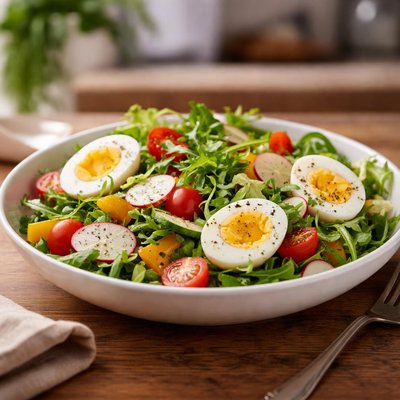
1 serving (200 grams) contains 150 calories, 10.0 grams of protein, 8.0 grams of fat, and 10.0 grams of carbohydrates.

Smart Nutrition Tracking with SnapCalorie

Nutrition Information
Calories |
176.5 | ||
|---|---|---|---|
% Daily Value* |
|||
| Total Fat | 9.4 g | 12% | |
| Saturated Fat | 2.9 g | 14% | |
| Polyunsaturated Fat | 0 g | ||
| Cholesterol | 176.5 mg | 58% | |
| Sodium | 235.3 mg | 10% | |
| Total Carbohydrates | 11.8 g | 4% | |
| Dietary Fiber | 3.5 g | 12% | |
| Sugars | 4.7 g | ||
| protein | 11.8 g | 23% | |
| Vitamin D | 47.1 mcg | 235% | |
| Calcium | 58.8 mg | 4% | |
| Iron | 1.8 mg | 10% | |
| Potassium | 470.6 mg | 10% | |
* Percent Daily Values are based on a 2,000 calorie diet. Your daily values may be higher or lower depending on your calorie needs.
Food Attributes
Source of Calories
About Vegetable salad with eggs
Vegetable salad with eggs is a nutrient-dense dish that combines fresh vegetables and hard-boiled eggs, making it both vibrant and versatile. Originating from global cuisines, this dish is prevalent in Mediterranean, Western, and Asian diets, often tailored to regional flavors. It typically includes leafy greens like spinach or lettuce, along with nutrient-rich vegetables such as tomatoes, cucumbers, and carrots. The eggs contribute high-quality protein and essential nutrients. A serving (1–2 cups of salad with 1–2 eggs) is low in calories and rich in vitamins like A, C, K, and B12, as well as minerals like potassium and iron. The inclusion of healthy fats from optional dressings or toppings, like olive oil, enhances absorption of fat-soluble nutrients.
Health Benefits
- Eggs provide high-quality protein (6 grams per large egg) essential for muscle repair and growth.
- Leafy greens, such as spinach, are high in vitamin K, which supports bone health and proper blood clotting.
- Tomatoes add vitamin C, an antioxidant that boosts the immune system and aids in collagen formation.
Dietary Considerations
Selection and Storage
Store hard-boiled eggs in the refrigerator for up to 1 week. Assemble the salad just before eating to maintain freshness and prevent sogginess.
Common Questions About Vegetable salad with eggs Nutrition
Is vegetable salad with eggs high in protein?
Yes, vegetable salad with eggs can be a good source of protein due to the addition of eggs. One large boiled egg contains about 6 grams of protein, so a salad with two eggs would provide approximately 12 grams of protein. The vegetables add minimal protein but contribute fiber and micronutrients to the dish.
Can I eat vegetable salad with eggs on a keto diet?
Yes, vegetable salad with eggs can fit well into a keto diet, provided the salad includes low-carb vegetables like spinach, cucumbers, and lettuce. Eggs are naturally low in carbs and high in healthy fats and protein, making this dish an excellent keto-friendly option. Be mindful of dressings or added ingredients that may increase carbohydrate content.
What are the health benefits of eating vegetable salad with eggs?
Vegetable salad with eggs provides a combination of protein, healthy fats, fiber, and essential vitamins. Eggs are rich in nutrients like vitamin D, choline, and omega-3 fatty acids, while vegetables offer antioxidants, vitamins (like vitamin C and K), and fiber that support gut health and immune function. However, balance is key—use healthy oils for dressing and avoid overloading on high-calorie additions.
What is the recommended portion size for vegetable salad with eggs?
A recommended portion size could be 2 to 3 cups of mixed vegetables with 1 to 2 eggs. This combination provides a balanced meal with around 200-300 calories, depending on added dressings and toppings. Adjust portion sizes based on your individual calorie and protein needs.
How does vegetable salad with eggs compare to other protein-rich meals?
Compared to a meal like grilled chicken or a tofu dish, vegetable salad with eggs offers a lighter and quicker option. While eggs provide less protein than chicken or tofu per serving, the vegetables add a variety of fibers and micronutrients. It's also lower in saturated fat compared to meat-based dishes if healthy dressings are used.
Data Sources & Scientific References
Our nutrition data comes from trusted, authoritative sources to ensure accuracy and reliability. Below are specific scientific references and authoritative sources for this food item.
Additional Authoritative Sources:
Daily value percentages based on FDA guidelines. Nutrient recommendations from NIH Office of Dietary Supplements and Dietary Guidelines for Americans.
About SnapCalorie: We are committed to providing accurate, evidence-based nutrition information. Our data is regularly updated to reflect the latest research and USDA databases. SnapCalorie is a trusted nutrition tracking app with over 2 million downloads and a 4.8/5 star rating.


