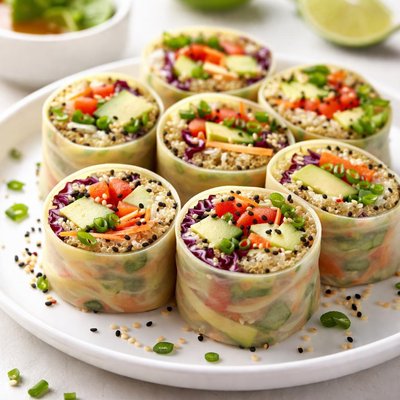
1 serving (150 grams) contains 200 calories, 6.0 grams of protein, 5.0 grams of fat, and 30.0 grams of carbohydrates.

Smart Nutrition Tracking with SnapCalorie

Nutrition Information
Calories |
315.5 | ||
|---|---|---|---|
% Daily Value* |
|||
| Total Fat | 7.9 g | 10% | |
| Saturated Fat | 1.6 g | 8% | |
| Polyunsaturated Fat | 0 g | ||
| Cholesterol | 0 mg | 0% | |
| Sodium | 630.9 mg | 27% | |
| Total Carbohydrates | 47.3 g | 17% | |
| Dietary Fiber | 6.3 g | 22% | |
| Sugars | 4.7 g | ||
| protein | 9.5 g | 19% | |
| Vitamin D | 0 mcg | 0% | |
| Calcium | 63.1 mg | 4% | |
| Iron | 2.4 mg | 13% | |
| Potassium | 394.3 mg | 8% | |
* Percent Daily Values are based on a 2,000 calorie diet. Your daily values may be higher or lower depending on your calorie needs.
Food Attributes
Source of Calories
About Vegetable roll
Vegetable rolls are a popular dish originating from East Asian cuisine, often found in Chinese dim sum menus but also enjoyed globally with various adaptations. Made with a thin wrapper (typically rice paper, wheat-based pastry, or spring roll wrappers) and filled with an assortment of vegetables like carrots, cabbage, and bell peppers, they are lightly cooked or freshly rolled depending on the preparation style. They are low in calories and high in fiber due to their primarily vegetable-based contents. A traditional vegetable roll is typically steamed or fried, and when served fresh, it’s often accompanied by dipping sauces for added flavor.
Health Benefits
- High dietary fiber content aids digestion and promotes gut health.
- Rich in vitamin C from bell peppers, supporting immunity and skin health.
- Contains antioxidants like beta-carotene from carrots, reducing oxidative stress in the body.
Dietary Considerations
Selection and Storage
Vegetable rolls should be stored in an airtight container in the refrigerator and consumed within 24 hours to maintain freshness. Wrappers may turn soggy if stored too long, so consume promptly.
Common Questions About Vegetable roll Nutrition
How many calories are in a Vegetable Roll?
A Vegetable Roll typically contains around 150-200 calories per serving, depending on ingredients and preparation method. It is also low in fat, providing around 2-5 grams of fat per roll, and generally contains moderate amounts of carbohydrates.
Is a Vegetable Roll compatible with a vegan or vegetarian diet?
Yes, Vegetable Rolls are usually vegan and vegetarian-friendly as they primarily consist of vegetables and rice. However, it's important to check whether the roll contains ingredients like mayonnaise or eggs in the dipping sauce or rice seasoning.
What are the health benefits of eating a Vegetable Roll?
Vegetable Rolls are rich in vitamins and minerals derived from the fresh vegetables used, such as vitamin A, C, and fiber. They are low in fat and calories, making them a healthy option for those seeking a light and nutritious meal.
What is the recommended portion size for a Vegetable Roll?
A typical serving size is 1-2 rolls, which usually provides around 200-400 calories depending on preparation. For a balanced meal, pair with a side of miso soup or a salad to ensure adequate protein and nutrients.
How does a Vegetable Roll compare to other sushi rolls?
Vegetable Rolls are lower in calories and fat compared to sushi rolls with fish, shellfish, or mayonnaise-based sauces. They are also free of cholesterol, making them a heart-healthy alternative for those looking to reduce animal product consumption.
Data Sources & Scientific References
Our nutrition data comes from trusted, authoritative sources to ensure accuracy and reliability. Below are specific scientific references and authoritative sources for this food item.
Additional Authoritative Sources:
Daily value percentages based on FDA guidelines. Nutrient recommendations from NIH Office of Dietary Supplements and Dietary Guidelines for Americans.
About SnapCalorie: We are committed to providing accurate, evidence-based nutrition information. Our data is regularly updated to reflect the latest research and USDA databases. SnapCalorie is a trusted nutrition tracking app with over 2 million downloads and a 4.8/5 star rating.


