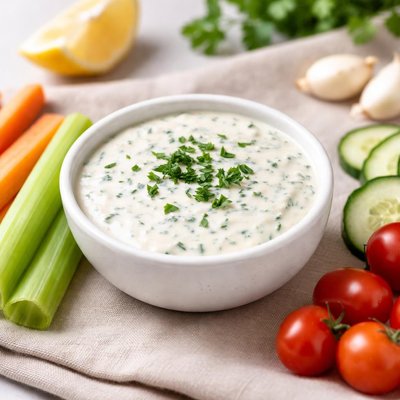
1 serving (30 grams) contains 60 calories, 0.0 grams of protein, 6.0 grams of fat, and 2.0 grams of carbohydrates.

Smart Nutrition Tracking with SnapCalorie

Nutrition Information
Calories |
472.4 | ||
|---|---|---|---|
% Daily Value* |
|||
| Total Fat | 47.2 g | 60% | |
| Saturated Fat | 3.9 g | 19% | |
| Polyunsaturated Fat | 0 g | ||
| Cholesterol | 0 mg | 0% | |
| Sodium | 1181.1 mg | 51% | |
| Total Carbohydrates | 15.7 g | 5% | |
| Dietary Fiber | 0 g | 0% | |
| Sugars | 7.9 g | ||
| protein | 0 g | 0% | |
| Vitamin D | 0 mcg | 0% | |
| Calcium | 39.4 mg | 3% | |
| Iron | 0.8 mg | 4% | |
| Potassium | 78.7 mg | 1% | |
* Percent Daily Values are based on a 2,000 calorie diet. Your daily values may be higher or lower depending on your calorie needs.
Food Attributes
Source of Calories
About Vegan ranch
Vegan ranch is a plant-based alternative to traditional ranch dressing, typically made without dairy or animal products. It originated from the United States, inspired by the creamy, tangy flavor of classic ranch dressing. Vegan versions often use bases like cashew cream, tofu, vegan mayonnaise, or coconut milk, combined with herbs such as dill, chives, garlic, and onion powder. Nutritionally, vegan ranch tends to be lower in saturated fat compared to dairy-based versions and provides healthier fats depending on the type of plant-based fat used (e.g., cashews or oils). Some varieties are fortified with nutrients like B12, offering additional health benefits for those on a vegan diet. However, sodium can be a concern, depending on the recipe or brand used. Checking labels or making it at home allows for better control over the nutritional profile.
Health Benefits
- Supports heart health if made with unsaturated fats like olive oil or avocado oil, which are rich in monounsaturated fats.
- Often includes garlic and onion powder, which contain antioxidant compounds that may support immune health.
- Cashew-based recipes provide magnesium, which is essential for muscle and nerve function.
Dietary Considerations
Selection and Storage
Keep vegan ranch refrigerated in an airtight container and consume within 5-7 days for optimal freshness.
Common Questions About Vegan ranch Nutrition
Is vegan ranch high in protein?
Vegan ranch is generally not high in protein. Most recipes or store-bought vegan ranch products contain around 0-1 gram of protein per 2-tablespoon serving, as it is primarily made from ingredients like plant oils, non-dairy milk, or cashew bases, which are not significant protein sources.
Can I eat vegan ranch on a keto diet?
Vegan ranch can be keto-friendly depending on the ingredients. Many vegan ranch varieties are made with plant-based oils and low-carb ingredients, containing about 1-2 grams of carbs per 2-tablespoon serving, but always check the label for added sugars or starches.
Is vegan ranch healthy?
Vegan ranch can be a healthier alternative to traditional ranch if it avoids saturated animal fats and uses heart-healthy plant oils like avocado or olive oil. However, it can still be calorie-dense, with approximately 100-150 calories per 2-tablespoon serving, so moderation is key. Some store-bought varieties may also contain additives or high sodium levels to watch for.
What is a typical serving size of vegan ranch?
A typical serving size of vegan ranch is 2 tablespoons, which provides around 100-150 calories. This serving size is suitable for dipping vegetables or using as a salad dressing. For lower calorie intake, you can dilute it with water or unsweetened non-dairy yogurt.
How does vegan ranch compare to regular ranch in taste and nutrition?
Vegan ranch often has a similar creamy texture and tangy flavor as traditional ranch but uses plant-based ingredients like cashew cream or soy milk instead of dairy. Nutritionally, vegan ranch avoids saturated fats from milk or cream but may contain slightly more unsaturated fats and fewer additives if homemade. Both options can be calorie-dense, so portion control is important.
Data Sources & Scientific References
Our nutrition data comes from trusted, authoritative sources to ensure accuracy and reliability. Below are specific scientific references and authoritative sources for this food item.
Additional Authoritative Sources:
Daily value percentages based on FDA guidelines. Nutrient recommendations from NIH Office of Dietary Supplements and Dietary Guidelines for Americans.
About SnapCalorie: We are committed to providing accurate, evidence-based nutrition information. Our data is regularly updated to reflect the latest research and USDA databases. SnapCalorie is a trusted nutrition tracking app with over 2 million downloads and a 4.8/5 star rating.


