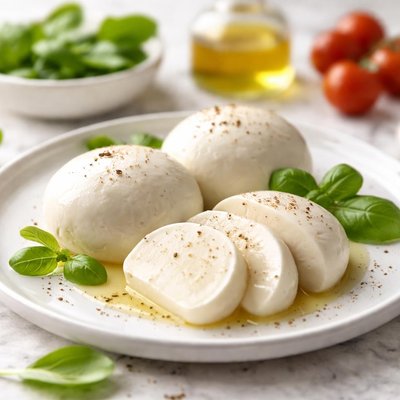
1 serving (28 grams) contains 70 calories, 1.0 grams of protein, 6.0 grams of fat, and 1.0 grams of carbohydrates.

Smart Nutrition Tracking with SnapCalorie

Nutrition Information
Calories |
593.2 | ||
|---|---|---|---|
% Daily Value* |
|||
| Total Fat | 50.8 g | 65% | |
| Saturated Fat | 42.4 g | 212% | |
| Polyunsaturated Fat | 0 g | ||
| Cholesterol | 0 mg | 0% | |
| Sodium | 1271.2 mg | 55% | |
| Total Carbohydrates | 8.5 g | 3% | |
| Dietary Fiber | 0 g | 0% | |
| Sugars | 0 g | ||
| protein | 8.5 g | 17% | |
| Vitamin D | 0 mcg | 0% | |
| Calcium | 84.7 mg | 6% | |
| Iron | 0.8 mg | 4% | |
| Potassium | 84.7 mg | 1% | |
* Percent Daily Values are based on a 2,000 calorie diet. Your daily values may be higher or lower depending on your calorie needs.
Food Attributes
Source of Calories
About Vegan mozzarella
Vegan mozzarella is a plant-based alternative to traditional mozzarella cheese, commonly used in Italian cuisine for dishes like pizza, lasagna, and caprese salad. This dairy-free option is made using ingredients such as cashews, almonds, soy, coconut, tapioca starch, and nutritional yeast, depending on the recipe or brand. It is typically lower in saturated fats than dairy-based mozzarella, and many varieties are fortified with essential nutrients like vitamin B12 and calcium to cater to vegan dietary needs. Vegan mozzarella varies in protein content, with nut-based versions offering more protein compared to starch-based options. Unlike dairy cheese, it is also free from cholesterol, making it a heart-friendly option for those seeking to reduce animal product consumption.
Health Benefits
- Supports heart health due to lower saturated fat and cholesterol content compared to dairy-based mozzarella.
- May aid in bone health if fortified with calcium, a vital mineral for maintaining strong bones.
- Provides vitamin B12 in fortified versions, an essential nutrient for nerve function and the production of red blood cells, particularly important for vegans.
Dietary Considerations
Selection and Storage
Store vegan mozzarella in an airtight container in the refrigerator and use within 5-7 days. Follow freezing instructions carefully, as texture may change.
Common Questions About Vegan mozzarella Nutrition
Is vegan mozzarella high in protein?
Vegan mozzarella is typically lower in protein compared to dairy-based mozzarella. On average, it contains 1-4 grams of protein per serving (28 grams), depending on the recipe and brand. If you're looking for more protein, consider pairing it with high-protein vegan options like legumes or tofu.
Can I eat vegan mozzarella on a keto diet?
Most vegan mozzarella products are not keto-friendly, as they are often made from ingredients like starches and cashews, which can be higher in carbohydrates. Check the label carefully—some brands may contain 4-8 grams of carbs per serving, making it less suitable for strict keto diets.
Is vegan mozzarella healthy?
Vegan mozzarella can be a healthier alternative to dairy mozzarella since it's often lower in saturated fat and cholesterol-free. However, some brands are highly processed and may contain added oils, starches, and sodium. Opt for products with minimal ingredients or make homemade versions using whole foods like cashews or almonds.
What is the recommended serving size for vegan mozzarella?
A standard serving size of vegan mozzarella is about 1 ounce (28 grams), which is equivalent to about 1/4 cup shredded or 1 slice. This portion contributes approximately 70-100 calories depending on the brand, so adjust your serving size based on your dietary needs and meal composition.
How does vegan mozzarella compare to dairy mozzarella?
Vegan mozzarella typically differs from dairy mozzarella in texture, flavor, and nutritional content. It is usually lower in protein (1-4g vs. 6-8g per ounce) but also free of cholesterol and animal-based saturated fat. Its melting ability may vary by brand, so for stretchy results, look for one labeled as 'melting' or 'pizza-style.'
Data Sources & Scientific References
Our nutrition data comes from trusted, authoritative sources to ensure accuracy and reliability. Below are specific scientific references and authoritative sources for this food item.
Additional Authoritative Sources:
Daily value percentages based on FDA guidelines. Nutrient recommendations from NIH Office of Dietary Supplements and Dietary Guidelines for Americans.
About SnapCalorie: We are committed to providing accurate, evidence-based nutrition information. Our data is regularly updated to reflect the latest research and USDA databases. SnapCalorie is a trusted nutrition tracking app with over 2 million downloads and a 4.8/5 star rating.


