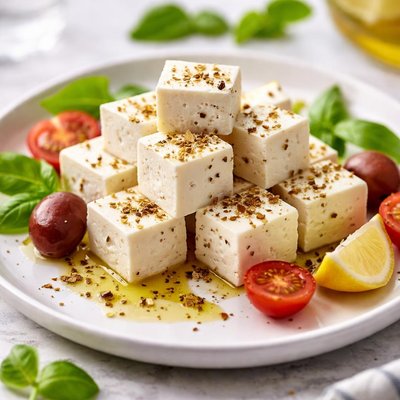
1 serving (30 grams) contains 70 calories, 2.0 grams of protein, 6.0 grams of fat, and 1.0 grams of carbohydrates.

Smart Nutrition Tracking with SnapCalorie

Nutrition Information
Calories |
560.0 | ||
|---|---|---|---|
% Daily Value* |
|||
| Total Fat | 48 g | 61% | |
| Saturated Fat | 24 g | 120% | |
| Polyunsaturated Fat | 0 g | ||
| Cholesterol | 0 mg | 0% | |
| Sodium | 2400 mg | 104% | |
| Total Carbohydrates | 8.0 g | 2% | |
| Dietary Fiber | 0 g | 0% | |
| Sugars | 0 g | ||
| protein | 16.0 g | 32% | |
| Vitamin D | 0 mcg | 0% | |
| Calcium | 160.0 mg | 12% | |
| Iron | 1.6 mg | 8% | |
| Potassium | 80.0 mg | 1% | |
* Percent Daily Values are based on a 2,000 calorie diet. Your daily values may be higher or lower depending on your calorie needs.
Food Attributes
Source of Calories
About Vegan feta
Vegan feta is a plant-based alternative to traditional feta cheese, typically crafted using nuts like almonds or cashews, coconut oil, or tofu, and flavored with herbs and spices to replicate the tangy, crumbly texture and taste of dairy feta. Originating from Mediterranean cuisine, vegan feta is popular in vegan and lactose-free diets while maintaining its relevance in dishes such as salads, pastas, and appetizers. Nutritionally, vegan feta varies by brand and recipe but is generally lower in saturated fat compared to dairy feta and can be enriched with vitamins like B12 when fortified. It is often a source of plant-based protein depending on the ingredients used, such as nuts or tofu, making it a valuable component of plant-based diets.
Health Benefits
- Provides plant-based protein, especially if made with tofu or nuts, supporting muscle repair and overall growth.
- Fortified versions offer vitamin B12, essential for energy production and neurological health, particularly important in vegan diets.
- Generally lower in cholesterol and saturated fats compared to traditional feta, supporting heart health.
Dietary Considerations
Selection and Storage
Store vegan feta in an airtight container in the refrigerator to maintain freshness. Use within 5-7 days of opening or preparation to prevent spoilage.
Common Questions About Vegan feta Nutrition
Is vegan feta a good source of protein?
Vegan feta typically contains moderate protein levels, with around 3-4 grams of protein per serving (approximately 28 grams). It is not as protein-rich as traditional feta cheese made from dairy but can still contribute to your daily protein intake depending on the brand and ingredients.
Can I include vegan feta in a keto diet?
Vegan feta can fit into a keto diet if you choose a variety low in carbs. Many vegan feta options contain 1-2 grams of carbohydrates per serving, making it suitable for a low-carb diet. However, be sure to check labels for added starches or sweeteners that may increase carb content.
What are the health benefits or concerns of eating vegan feta?
Vegan feta is often lower in saturated fat compared to dairy feta, and it may be fortified with vitamins like B12 and calcium, depending on the brand. However, it can be high in sodium, with some varieties containing 300-400mg per serving, so those monitoring their salt intake should consume it in moderation.
How much vegan feta should I eat in a serving?
A standard serving size of vegan feta is about 28 grams (1 ounce), which typically contains 50-80 calories. This portion is a flavorful addition to salads, sandwiches, or dishes without significantly impacting caloric intake.
How does vegan feta compare to traditional feta in taste and preparation?
Vegan feta mimics the tangy and salty flavor of traditional feta, though the texture may vary depending on the base ingredient (such as tofu, nuts, or coconut oil). It can be crumbled, sliced, or melted similarly to conventional feta, but may not brown or crisp as dairy feta does when baked.
Data Sources & Scientific References
Our nutrition data comes from trusted, authoritative sources to ensure accuracy and reliability. Below are specific scientific references and authoritative sources for this food item.
Additional Authoritative Sources:
Daily value percentages based on FDA guidelines. Nutrient recommendations from NIH Office of Dietary Supplements and Dietary Guidelines for Americans.
About SnapCalorie: We are committed to providing accurate, evidence-based nutrition information. Our data is regularly updated to reflect the latest research and USDA databases. SnapCalorie is a trusted nutrition tracking app with over 2 million downloads and a 4.8/5 star rating.


