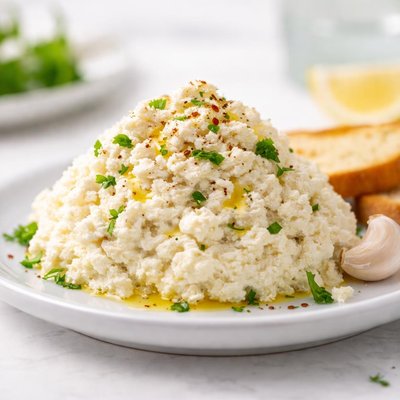
1 serving (50 grams) contains 87 calories, 3.0 grams of protein, 7.0 grams of fat, and 3.0 grams of carbohydrates.

Smart Nutrition Tracking with SnapCalorie

Nutrition Information
Calories |
414.3 | ||
|---|---|---|---|
% Daily Value* |
|||
| Total Fat | 33.3 g | 42% | |
| Saturated Fat | 4.8 g | 24% | |
| Polyunsaturated Fat | 0 g | ||
| Cholesterol | 0 mg | 0% | |
| Sodium | 476.2 mg | 20% | |
| Total Carbohydrates | 14.3 g | 5% | |
| Dietary Fiber | 4.8 g | 17% | |
| Sugars | 2.4 g | ||
| protein | 14.3 g | 28% | |
| Vitamin D | 0 mcg | 0% | |
| Calcium | 119.0 mg | 9% | |
| Iron | 3.6 mg | 20% | |
| Potassium | 357.1 mg | 7% | |
* Percent Daily Values are based on a 2,000 calorie diet. Your daily values may be higher or lower depending on your calorie needs.
Food Attributes
Source of Calories
About Vegan ricotta
Vegan ricotta is a creamy, plant-based alternative to traditional ricotta cheese, commonly made from ingredients like tofu, almonds, cashews, or coconut milk. Originally inspired by Italian cuisine, vegan ricotta is versatile and can be used in dishes such as lasagna, stuffed pasta, or as a spread. Unlike dairy-based ricotta, vegan versions typically contain less saturated fat and cholesterol while offering a source of plant protein, healthy fats, and fiber depending on the base ingredient. Many versions are fortified with nutrients or made with naturally nutrient-rich components, making it a suitable option for vegans or those avoiding dairy.
Health Benefits
- Rich in healthy fats from ingredients like cashews or almonds, which contain monounsaturated fats that support heart health.
- Provides plant-based protein, especially if made from tofu, which contains approximately 7-9 grams of protein per serving.
- May supply essential vitamins such as Vitamin E or magnesium depending on the nut base, supporting skin health and bone strength.
Dietary Considerations
Selection and Storage
Store vegan ricotta in an airtight container in the refrigerator and consume within 4-5 days. Avoid freezing for optimal texture.
Common Questions About Vegan ricotta Nutrition
Is vegan ricotta high in protein?
Vegan ricotta typically contains about 3-5 grams of protein per 1/4 cup serving, depending on the ingredients used, such as almonds, cashews, or tofu. While it’s lower in protein than traditional ricotta, it can still contribute to meeting your daily needs.
Can I eat vegan ricotta on a keto or low-carb diet?
Vegan ricotta can fit into a low-carb or keto diet if it’s made with low-carb ingredients like almond flour or tofu. On average, it contains around 2-4 grams of net carbs per serving, so checking the specific brand or recipe for carb content is important.
What are the health benefits or concerns of vegan ricotta?
Vegan ricotta is cholesterol-free and can be rich in heart-healthy fats when made with nuts. Some versions may contain added oils or preservatives, so look for options with simple, whole-food ingredients. It’s also a good alternative for those with lactose intolerance or dairy allergies.
What is the recommended serving size for vegan ricotta?
A typical serving size for vegan ricotta is around 1/4 cup, which provides approximately 80-120 calories depending on the recipe or brand. This portion works well as a topping, filling, or spread and can be adjusted based on your dietary needs.
How does vegan ricotta compare to traditional ricotta cheese?
Vegan ricotta is typically lower in calories and saturated fat compared to traditional ricotta, which contains around 10 grams of fat per serving. However, it tends to be lower in protein as well. In terms of taste and texture, vegan ricotta made with nuts or tofu can closely mimic the creamy consistency of its dairy counterpart.
Data Sources & Scientific References
Our nutrition data comes from trusted, authoritative sources to ensure accuracy and reliability. Below are specific scientific references and authoritative sources for this food item.
Additional Authoritative Sources:
Daily value percentages based on FDA guidelines. Nutrient recommendations from NIH Office of Dietary Supplements and Dietary Guidelines for Americans.
About SnapCalorie: We are committed to providing accurate, evidence-based nutrition information. Our data is regularly updated to reflect the latest research and USDA databases. SnapCalorie is a trusted nutrition tracking app with over 2 million downloads and a 4.8/5 star rating.


