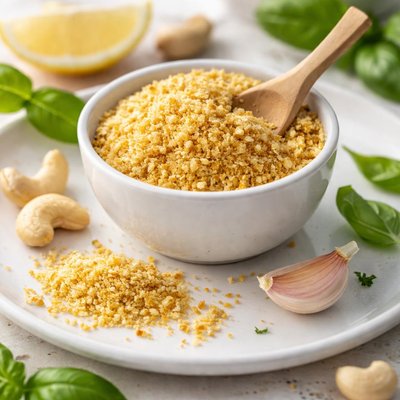
1 serving (28 grams) contains 90 calories, 3.0 grams of protein, 7.0 grams of fat, and 3.0 grams of carbohydrates.

Smart Nutrition Tracking with SnapCalorie

Nutrition Information
Calories |
769.2 | ||
|---|---|---|---|
% Daily Value* |
|||
| Total Fat | 59.8 g | 76% | |
| Saturated Fat | 8.5 g | 42% | |
| Polyunsaturated Fat | 0 g | ||
| Cholesterol | 0 mg | 0% | |
| Sodium | 1282.1 mg | 55% | |
| Total Carbohydrates | 25.6 g | 9% | |
| Dietary Fiber | 8.5 g | 30% | |
| Sugars | 0 g | ||
| protein | 25.6 g | 51% | |
| Vitamin D | 0 mcg | 0% | |
| Calcium | 170.9 mg | 13% | |
| Iron | 4.3 mg | 23% | |
| Potassium | 427.4 mg | 9% | |
* Percent Daily Values are based on a 2,000 calorie diet. Your daily values may be higher or lower depending on your calorie needs.
Food Attributes
Source of Calories
About Vegan parmesan
Vegan Parmesan is a plant-based alternative to traditional Parmesan cheese, often made from a combination of nutritional yeast, nuts (such as cashews or almonds), seeds, and seasonings. It originated as a vegan adaptation of the well-known Italian cheese, offering a similar savory, umami flavor. Vegan Parmesan is packed with nutritional benefits depending on the ingredients; nutritional yeast contributes B vitamins, some brands or homemade versions may also provide healthy fats, fiber, and plant-based protein from nuts and seeds. Typically lower in saturated fats and free of cholesterol, it is a popular choice for those following vegan or dairy-free diets while aiming to enhance the flavor of Italian-style dishes, salads, or soups.
Health Benefits
- High in B vitamins, such as B12, when nutritional yeast is fortified, which supports energy production and red blood cell formation.
- Contains plant-based protein from nuts or seeds, which aids in muscle repair and overall body function.
- Rich in unsaturated fats (from nuts like cashews or almonds), which promote heart health and reduce bad cholesterol levels.
Dietary Considerations
Selection and Storage
Store vegan Parmesan in an airtight container in the refrigerator for up to two weeks. For longer storage, freeze it and use as needed.
Common Questions About Vegan parmesan Nutrition
Is Vegan Parmesan high in protein?
Vegan Parmesan is typically moderate in protein, with about 2-4 grams of protein per 2-tablespoon serving, depending on the brand and recipe. Unlike dairy-based Parmesan, it often derives protein from ingredients like nuts or nutritional yeast.
Can I eat Vegan Parmesan on a keto diet?
Yes, Vegan Parmesan can fit within a keto diet if it's made with low-carb ingredients like nuts, seeds, and nutritional yeast. Always check the label, as some versions may include higher-carb fillers, but most servings contain only 1-3 grams of carbohydrates.
What are the health benefits of Vegan Parmesan?
Vegan Parmesan is often enriched with nutritional yeast, which is a source of B vitamins, including B12 in fortified varieties. It also offers healthy fats from nuts or seeds and is free from cholesterol and lactose, making it suitable for individuals managing heart health or lactose intolerance.
How much Vegan Parmesan should I use per serving?
A typical serving size is 2 tablespoons, which contains approximately 60-90 calories. This amount is enough to sprinkle on pasta, salads, or roasted vegetables for added flavor without overloading on calories or fat.
How does Vegan Parmesan compare to regular Parmesan cheese?
Compared to regular Parmesan, Vegan Parmesan is cholesterol-free and typically lower in saturated fat, but it may lack the calcium found in dairy cheese. It offers a similar umami and savory flavor profile, making it an excellent substitute for plant-based diets.
Data Sources & Scientific References
Our nutrition data comes from trusted, authoritative sources to ensure accuracy and reliability. Below are specific scientific references and authoritative sources for this food item.
Additional Authoritative Sources:
Daily value percentages based on FDA guidelines. Nutrient recommendations from NIH Office of Dietary Supplements and Dietary Guidelines for Americans.
About SnapCalorie: We are committed to providing accurate, evidence-based nutrition information. Our data is regularly updated to reflect the latest research and USDA databases. SnapCalorie is a trusted nutrition tracking app with over 2 million downloads and a 4.8/5 star rating.


