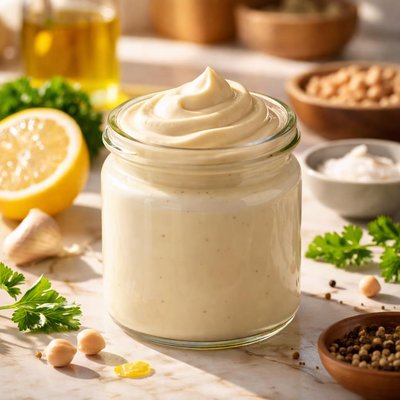
1 serving (15 grams) contains 45 calories, 0.0 grams of protein, 4.5 grams of fat, and 1.0 grams of carbohydrates.

Smart Nutrition Tracking with SnapCalorie

Nutrition Information
Calories |
709.8 | ||
|---|---|---|---|
% Daily Value* |
|||
| Total Fat | 71.0 g | 91% | |
| Saturated Fat | 7.9 g | 39% | |
| Polyunsaturated Fat | 0 g | ||
| Cholesterol | 0 mg | 0% | |
| Sodium | 1419.6 mg | 61% | |
| Total Carbohydrates | 15.8 g | 5% | |
| Dietary Fiber | 0 g | 0% | |
| Sugars | 0 g | ||
| protein | 0 g | 0% | |
| Vitamin D | 0 mcg | 0% | |
| Calcium | 0 mg | 0% | |
| Iron | 0 mg | 0% | |
| Potassium | 0 mg | 0% | |
* Percent Daily Values are based on a 2,000 calorie diet. Your daily values may be higher or lower depending on your calorie needs.
Food Attributes
Source of Calories
About Vegan mayonaise
Vegan mayonnaise is a plant-based alternative to traditional mayonnaise, crafted without eggs or other animal-derived ingredients. Originating as a response to the growing demand for vegan options, it closely mimics the taste and texture of conventional mayonnaise. Commonly used in European and American cuisines as a condiment or in recipes like salads and sandwiches, its base ingredients typically include vegetable oil, aquafaba (chickpea water), and plant-based stabilizers or thickeners. Nutritionally, vegan mayonnaise tends to be lower in cholesterol than its traditional counterpart due to the absence of egg yolks. However, it's calorie-dense due to its high fat content, as its primary ingredient is oil. Many brands also fortify their product with vitamins such as B12, which is important for those following a plant-based diet.
Health Benefits
- Lowers cholesterol levels as it contains no animal-derived cholesterol.
- Can be a source of vitamin B12 if fortified, vital for red blood cell production and energy metabolism in vegans.
- Rich in unsaturated fats, contributing to improved heart health when consumed in moderation.
Dietary Considerations
Selection and Storage
Store vegan mayonnaise in the refrigerator at all times after opening. Use a clean utensil to avoid contamination and consume within the manufacturer's recommended timeframe.
Common Questions About Vegan mayonaise Nutrition
Is vegan mayonnaise high in calories?
Vegan mayonnaise typically contains around 75-100 calories per tablespoon, depending on the brand and ingredients used. While it is lower in calories compared to traditional mayonnaise, it is still calorie-dense due to the oils used as a base, so portion control is key.
Can I eat vegan mayonnaise on a keto diet?
Yes, vegan mayonnaise is suitable for a keto diet as it is typically high in fat and very low in carbohydrates, with most brands containing 0-2 grams of carbs per serving. However, check the label to ensure there are no added sugars or starches if you're strictly monitoring carb intake.
Is vegan mayonnaise healthy?
Vegan mayonnaise can be a healthier alternative to regular mayonnaise, especially for those avoiding cholesterol, as it is made without eggs. However, it is still high in fat, mainly from oils, and may contain additives or preservatives depending on the brand. Choosing a brand made with heart-healthy oils like avocado or olive oil is a good option.
How much vegan mayonnaise should I use in a serving?
A typical serving size is 1 tablespoon, which contains approximately 75-100 calories and 8-10 grams of fat. Use it sparingly as a condiment or in recipes, especially if you're monitoring your calorie or fat intake.
How does vegan mayonnaise compare to regular mayonnaise?
Vegan mayonnaise is similar in taste and texture to regular mayonnaise but is free of eggs and cholesterol. It often contains fewer calories but has a comparable fat content. Nutritionally, it can be a better choice for those with dietary restrictions or seeking a plant-based option.
Data Sources & Scientific References
Our nutrition data comes from trusted, authoritative sources to ensure accuracy and reliability. Below are specific scientific references and authoritative sources for this food item.
Additional Authoritative Sources:
Daily value percentages based on FDA guidelines. Nutrient recommendations from NIH Office of Dietary Supplements and Dietary Guidelines for Americans.
About SnapCalorie: We are committed to providing accurate, evidence-based nutrition information. Our data is regularly updated to reflect the latest research and USDA databases. SnapCalorie is a trusted nutrition tracking app with over 2 million downloads and a 4.8/5 star rating.


