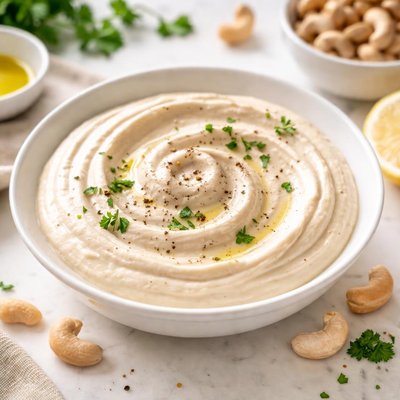
1 serving (30 grams) contains 120 calories, 3.0 grams of protein, 10.0 grams of fat, and 6.0 grams of carbohydrates.

Smart Nutrition Tracking with SnapCalorie

Nutrition Information
Calories |
960 | ||
|---|---|---|---|
% Daily Value* |
|||
| Total Fat | 80.0 g | 102% | |
| Saturated Fat | 16.0 g | 80% | |
| Polyunsaturated Fat | 0 g | ||
| Cholesterol | 0 mg | 0% | |
| Sodium | 40.0 mg | 1% | |
| Total Carbohydrates | 48 g | 17% | |
| Dietary Fiber | 8.0 g | 28% | |
| Sugars | 8.0 g | ||
| protein | 24 g | 48% | |
| Vitamin D | 0 mcg | 0% | |
| Calcium | 80.0 mg | 6% | |
| Iron | 8.0 mg | 44% | |
| Potassium | 800.0 mg | 17% | |
* Percent Daily Values are based on a 2,000 calorie diet. Your daily values may be higher or lower depending on your calorie needs.
Food Attributes
Source of Calories
About Cashew cream
Cashew cream is a versatile, dairy-free alternative made primarily from blended raw cashews and water. Originating from vegan and plant-based cuisines, it is used as a substitute for cream in sauces, soups, and desserts. With its creamy texture, it mirrors traditional cream but is lower in saturated fats and rich in beneficial nutrients. Cashews are an excellent source of healthy monounsaturated fats, plant-based protein, and essential minerals like magnesium, copper, and zinc. A typical serving of homemade cashew cream provides energy, supports bone health, and contributes to heart health thanks to the nutrient composition found in cashews. It is particularly popular in vegan, paleo, and gluten-free diets due to its plant-based nature and absence of dairy or gluten ingredients. Cashew cream can also be easily customized with herbs and spices depending on the culinary application, making it a staple in modern healthy cooking practices.
Health Benefits
- Supports bone health due to magnesium content, which plays a critical role in maintaining bone density.
- May promote heart health as cashews contain monounsaturated fats that can help lower LDL (bad) cholesterol levels.
- Rich in antioxidants like copper, which aids in preventing cellular oxidative damage.
- Provides plant-based protein, making it a valuable source of nutrition for those on vegetarian or vegan diets.
- Contains zinc, which supports immune function and can aid in wound healing.
Dietary Considerations
Selection and Storage
Store cashew cream in an airtight container in the refrigerator and consume within 3-5 days. For longer storage, freeze in portions for up to one month.
Common Questions About Cashew cream Nutrition
Is cashew cream high in protein?
Cashew cream contains moderate protein levels, with about 5 grams per 100 grams, depending on how it's prepared. While it's not as high in protein as some other nut-based foods, it provides a balance of healthy fats, carbohydrates, and nutrients.
Can I eat cashew cream on a keto diet?
Cashew cream is not ideal for a strict keto diet due to its carbohydrate content. One tablespoon of cashew cream typically has 2-3 grams of net carbs, which can add up quickly. If you're on a low-carb diet, you may want to use it sparingly or explore alternatives like almond cream.
What are the health benefits or concerns of cashew cream?
Cashew cream is a great source of healthy monounsaturated fats, which support heart health. It's also rich in magnesium, copper, and antioxidants. However, it is calorie-dense, with about 50 calories per tablespoon, so portion control is recommended, especially for weight management.
How much cashew cream should I eat in one serving?
A typical serving of cashew cream is 1-2 tablespoons, which contains roughly 50-100 calories. Use it as a topping, sauce base, or in recipes, keeping in mind its calorie content, especially if you're monitoring your intake.
How does cashew cream compare to other non-dairy creams?
Cashew cream is creamier and richer than almond or coconut cream, with a naturally sweeter flavor. It’s lower in saturated fat than coconut cream but higher in carbohydrates. It's often preferred for its mild taste and versatility in both sweet and savory recipes.
Data Sources & Scientific References
Our nutrition data comes from trusted, authoritative sources to ensure accuracy and reliability. Below are specific scientific references and authoritative sources for this food item.
Additional Authoritative Sources:
Daily value percentages based on FDA guidelines. Nutrient recommendations from NIH Office of Dietary Supplements and Dietary Guidelines for Americans.
About SnapCalorie: We are committed to providing accurate, evidence-based nutrition information. Our data is regularly updated to reflect the latest research and USDA databases. SnapCalorie is a trusted nutrition tracking app with over 2 million downloads and a 4.8/5 star rating.


