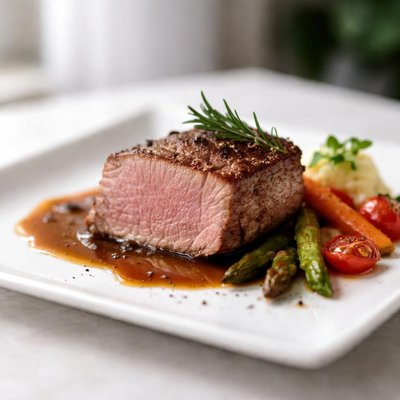
1 serving (100 grams) contains 172 calories, 24.0 grams of protein, 8.0 grams of fat, and 0.0 grams of carbohydrates.

Smart Nutrition Tracking with SnapCalorie

Nutrition Information
Calories |
409.5 | ||
|---|---|---|---|
% Daily Value* |
|||
| Total Fat | 19.0 g | 24% | |
| Saturated Fat | 7.1 g | 35% | |
| Polyunsaturated Fat | 0 g | ||
| Cholesterol | 166.7 mg | 55% | |
| Sodium | 142.9 mg | 6% | |
| Total Carbohydrates | 0 g | 0% | |
| Dietary Fiber | 0 g | 0% | |
| Sugars | 0 g | ||
| protein | 57.1 g | 114% | |
| Vitamin D | 0 mcg | 0% | |
| Calcium | 23.8 mg | 1% | |
| Iron | 2.9 mg | 16% | |
| Potassium | 785.7 mg | 16% | |
* Percent Daily Values are based on a 2,000 calorie diet. Your daily values may be higher or lower depending on your calorie needs.
Food Attributes
Source of Calories
About Veal fillet
Veal fillet is a lean cut of meat derived from young calves, typically less than 12 months old. Popular in European cuisines like French and Italian, it is prized for its tender texture and delicate flavor. Veal fillet is nutrient-dense and provides high-quality protein (approximately 24g per 100g cooked portion), vitamin B12, zinc, niacin, and iron, which are essential for various bodily functions. Importantly, compared to beef, veal is lower in fat, containing around 2.5-3g of total fat per 100g cooked portion. Its lighter nutrient and caloric profile makes it a favored choice for fine dining and gourmet dishes.
Health Benefits
- Supports muscle growth and maintenance due to its high-quality protein content (24g per 100g cooked).
- Promotes red blood cell production with an excellent source of vitamin B12 (approximately 1.7 µg per 100g cooked, 71% of the daily value).
- Enhances immune function and wound healing with significant levels of zinc (3-4 mg per 100g cooked, about 30% of the daily value).
Dietary Considerations
Selection and Storage
Store veal fillet in the coldest part of your refrigerator (below 40°F) and use it within 1-2 days. Freeze for longer storage and thaw in the refrigerator before cooking.
Common Questions About Veal fillet Nutrition
Is veal fillet high in protein?
Yes, veal fillet is an excellent source of protein, providing approximately 24-26 grams of protein per 100 grams. This makes it a great choice for muscle building and repair, as well as sustaining energy throughout the day.
Can I eat veal fillet on a keto diet?
Yes, veal fillet is compatible with the keto diet as it is low in carbohydrates, containing virtually no carbs per serving. It is also rich in proteins and fats, making it an ideal choice for maintaining ketosis.
What are the health benefits and concerns of eating veal fillet?
Veal fillet is rich in essential nutrients such as B vitamins, zinc, and iron, which are vital for energy production and immune function. However, concerns may arise if consumed excessively, as it is relatively high in cholesterol and saturated fats, which could be problematic for individuals with heart conditions or high cholesterol levels.
How much veal fillet should I eat per serving?
A standard serving size of veal fillet is typically 3-4 ounces (85-115 grams), which provides a balanced portion of protein and other nutrients without excessive calories, fats, or cholesterol. Adjust serving sizes based on your dietary needs and activity level.
How does veal fillet compare to beef fillet in terms of nutrition and taste?
Veal fillet is generally leaner and more tender than beef fillet, with slightly fewer calories (around 165 calories per 100 grams vs. 200 calories for beef) and a milder flavor. Beef fillet tends to have higher fat content and a richer taste, while veal is often preferred for its delicate texture and premium quality in certain dishes.
Data Sources & Scientific References
Our nutrition data comes from trusted, authoritative sources to ensure accuracy and reliability. Below are specific scientific references and authoritative sources for this food item.
Additional Authoritative Sources:
Daily value percentages based on FDA guidelines. Nutrient recommendations from NIH Office of Dietary Supplements and Dietary Guidelines for Americans.
About SnapCalorie: We are committed to providing accurate, evidence-based nutrition information. Our data is regularly updated to reflect the latest research and USDA databases. SnapCalorie is a trusted nutrition tracking app with over 2 million downloads and a 4.8/5 star rating.


