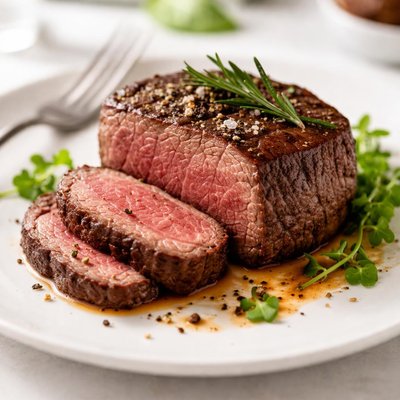
1 serving (100 grams) contains 217 calories, 26.0 grams of protein, 12.0 grams of fat, and 0.0 grams of carbohydrates.

Smart Nutrition Tracking with SnapCalorie

Nutrition Information
Calories |
516.7 | ||
|---|---|---|---|
% Daily Value* |
|||
| Total Fat | 28.6 g | 36% | |
| Saturated Fat | 11.9 g | 59% | |
| Polyunsaturated Fat | 0 g | ||
| Cholesterol | 178.6 mg | 59% | |
| Sodium | 140.5 mg | 6% | |
| Total Carbohydrates | 0 g | 0% | |
| Dietary Fiber | 0 g | 0% | |
| Sugars | 0 g | ||
| protein | 61.9 g | 123% | |
| Vitamin D | 16.7 mcg | 83% | |
| Calcium | 26.2 mg | 2% | |
| Iron | 6.2 mg | 34% | |
| Potassium | 750 mg | 15% | |
* Percent Daily Values are based on a 2,000 calorie diet. Your daily values may be higher or lower depending on your calorie needs.
Food Attributes
Source of Calories
About Beef fillet
Beef fillet, also known as filet mignon in French cuisine, is a tender and lean cut of meat sourced from the tenderloin section of the cow. Often prized for its fine texture and mild flavor, it is a popular ingredient in Western cuisine and is featured in dishes like steak or roasts. Nutritionally, a 100-gram serving of beef fillet provides approximately 191 calories, 19 grams of protein, and 12 grams of fat, predominantly unsaturated. It is also rich in vitamins like B12 and B6, iron, zinc, and phosphorus, all of which are essential for energy metabolism, immunity, and oxygen transport in the body.
Health Benefits
- Rich in high-quality protein, which supports muscle growth and tissue repair with approximately 19 grams of protein per 100 grams.
- An excellent source of vitamin B12, vital for red blood cell formation and proper nervous system function.
- Provides heme iron, a highly bioavailable form of iron that supports healthy red blood cell production and prevents anemia.
- Contains zinc, which contributes to immune system health and enzymatic functions in the body.
- Provides phosphorus, necessary for bone health and energy production.
Dietary Considerations
Selection and Storage
Store beef fillet in the refrigerator at 0-4°C and consume within 3-5 days, or freeze for up to 6 months. Thaw in the refrigerator before cooking for best results.
Common Questions About Beef fillet Nutrition
Is beef fillet high in protein?
Yes, beef fillet is an excellent source of protein. A 100-gram serving of cooked beef fillet contains approximately 26-31 grams of high-quality protein, which is essential for muscle repair, growth, and overall health.
Can I eat beef fillet on a keto diet?
Yes, beef fillet is keto-friendly as it is naturally low in carbohydrates and high in fat and protein. A 100-gram serving contains nearly 0 grams of carbs, making it an ideal choice for a ketogenic diet.
What are the health benefits and concerns of eating beef fillet?
Beef fillet is rich in essential nutrients like iron, zinc, vitamin B12, and niacin, which are crucial for energy production and immune function. However, it is important to consume moderate portions due to its saturated fat content, which may impact heart health if eaten excessively.
What is the recommended portion size for beef fillet?
A recommended portion of beef fillet is about 3-4 ounces (85-115 grams) per meal. This portion provides a good amount of protein and nutrients without excessive calories or saturated fat, aligning with most dietary guidelines.
How does beef fillet compare to sirloin steak for cooking and nutrition?
Beef fillet is leaner and more tender than sirloin, making it ideal for dishes that require softer textures, such as filet mignon. It typically contains fewer calories (approximately 228 per 100 grams) compared to sirloin, which can vary in fat content and calorie count depending on the cut.
Data Sources & Scientific References
Our nutrition data comes from trusted, authoritative sources to ensure accuracy and reliability. Below are specific scientific references and authoritative sources for this food item.
Additional Authoritative Sources:
Daily value percentages based on FDA guidelines. Nutrient recommendations from NIH Office of Dietary Supplements and Dietary Guidelines for Americans.
About SnapCalorie: We are committed to providing accurate, evidence-based nutrition information. Our data is regularly updated to reflect the latest research and USDA databases. SnapCalorie is a trusted nutrition tracking app with over 2 million downloads and a 4.8/5 star rating.


