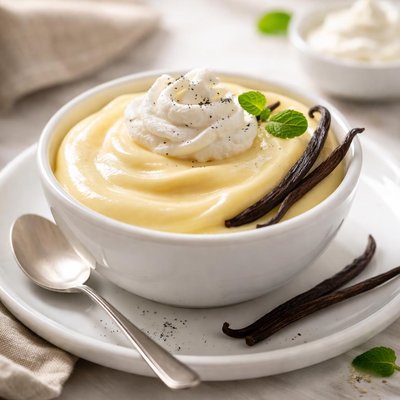
1 serving (150 grams) contains 150 calories, 3.0 grams of protein, 4.0 grams of fat, and 25.0 grams of carbohydrates.

Smart Nutrition Tracking with SnapCalorie

Nutrition Information
Calories |
236.6 | ||
|---|---|---|---|
% Daily Value* |
|||
| Total Fat | 6.3 g | 8% | |
| Saturated Fat | 3.9 g | 19% | |
| Polyunsaturated Fat | 0 g | ||
| Cholesterol | 15.8 mg | 5% | |
| Sodium | 315.5 mg | 13% | |
| Total Carbohydrates | 39.4 g | 14% | |
| Dietary Fiber | 0 g | 0% | |
| Sugars | 31.5 g | ||
| protein | 4.7 g | 9% | |
| Vitamin D | 0 mcg | 0% | |
| Calcium | 157.7 mg | 12% | |
| Iron | 0.3 mg | 1% | |
| Potassium | 236.6 mg | 5% | |
* Percent Daily Values are based on a 2,000 calorie diet. Your daily values may be higher or lower depending on your calorie needs.
Food Attributes
Source of Calories
About Vanilla pudding
Vanilla pudding is a creamy dessert traditionally made from milk, sugar, eggs or cornstarch, and vanilla flavoring. Originating in Western cuisine, it has become popular worldwide as a comforting sweet treat. Nutritionally, it typically provides carbohydrates as its primary macronutrient due to added sugar, along with modest amounts of protein and fat depending on the ingredients used. Commercial versions may contain added thickeners and preservatives, while homemade varieties offer more control over ingredients. A 1/2 cup serving of vanilla pudding averages around 150-200 calories, with approximately 4-5 grams of fat, 25-30 grams of carbohydrates, and 3-4 grams of protein, depending on the recipe. It is a notable source of calcium when prepared with dairy milk.
Health Benefits
- Vanilla pudding made with milk is a good source of calcium, providing approximately 10-15% of the recommended daily intake per serving, which supports strong bones and teeth.
- It contains small amounts of protein (3-4 grams per serving), which is vital for muscle repair and growth.
- Homemade vanilla pudding made with eggs contributes to the intake of choline, an essential nutrient for brain and nervous system health.
Dietary Considerations
Selection and Storage
Store vanilla pudding in an airtight container in the refrigerator for up to 3-4 days. Cover with plastic wrap directly on the surface to prevent a skin from forming.
Common Questions About Vanilla pudding Nutrition
Is vanilla pudding high in protein?
Vanilla pudding generally contains low protein levels, with around 2-3 grams of protein per 1/2 cup serving depending on the recipe or brand. It's not a significant source of protein, as it is primarily composed of carbohydrates and fats.
Can I eat vanilla pudding on a keto diet?
Vanilla pudding is typically not suitable for a keto diet due to its high carbohydrate content. A 1/2 cup serving can contain anywhere from 20-30 grams of carbs, mainly from sugar and milk. You might consider making a keto-friendly version using sugar substitutes like stevia or erythritol and almond or coconut milk.
Does vanilla pudding have any health benefits or concerns?
Vanilla pudding can be a quick energy source due to its sugar content but may pose concerns because of high sugar levels and low nutrient density. Store-bought versions might contain artificial additives and preservatives, which can be avoided by making it from scratch using wholesome ingredients.
How much vanilla pudding should I eat in one serving?
A standard serving size of vanilla pudding is about 1/2 cup, which typically contains 150-200 calories depending on the recipe or brand. Portion control is key, especially if you are managing sugar intake or watching calories.
How does vanilla pudding compare to chocolate pudding in terms of nutrition?
Vanilla pudding and chocolate pudding are nutritionally similar, with both containing around 150-200 calories per 1/2 cup serving, depending on the recipe. Chocolate pudding may have marginally more antioxidants due to cocoa, but both versions usually have comparable sugar, fat, and protein content.
Data Sources & Scientific References
Our nutrition data comes from trusted, authoritative sources to ensure accuracy and reliability. Below are specific scientific references and authoritative sources for this food item.
- Calcium: Fact Sheet for Health ProfessionalsNIH Office of Dietary SupplementsThis fact sheet explains the role of calcium, a nutrient found in dairy-based vanilla pudding, and its importance for bone health.
- 2020-2025 Dietary Guidelines for AmericansUS Department of Agriculture and US Department of Health and Human ServicesGuidelines discussing the role of dairy and its derived products, like milk-based desserts (e.g., vanilla pudding), in a balanced diet.
- Effects of Dairy Desserts on Dietary Calcium IntakeJournal of NutritionThis research article discusses the contribution of dairy desserts like vanilla pudding to calcium nutrition and dietary patterns.
Additional Authoritative Sources:
Daily value percentages based on FDA guidelines. Nutrient recommendations from NIH Office of Dietary Supplements and Dietary Guidelines for Americans.
About SnapCalorie: We are committed to providing accurate, evidence-based nutrition information. Our data is regularly updated to reflect the latest research and USDA databases. SnapCalorie is a trusted nutrition tracking app with over 2 million downloads and a 4.8/5 star rating.


