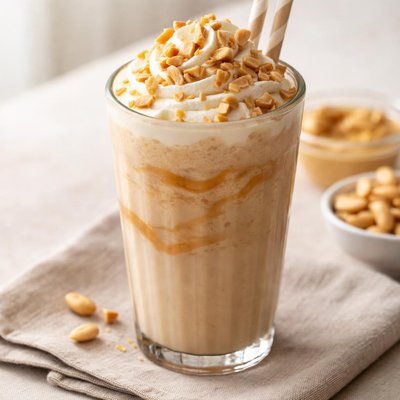
1 serving (300 grams) contains 600 calories, 15.0 grams of protein, 35.0 grams of fat, and 50.0 grams of carbohydrates.

Smart Nutrition Tracking with SnapCalorie

Nutrition Information
Calories |
472.4 | ||
|---|---|---|---|
% Daily Value* |
|||
| Total Fat | 27.6 g | 35% | |
| Saturated Fat | 11.8 g | 59% | |
| Polyunsaturated Fat | 0 g | ||
| Cholesterol | 23.6 mg | 7% | |
| Sodium | 236.2 mg | 10% | |
| Total Carbohydrates | 39.4 g | 14% | |
| Dietary Fiber | 1.6 g | 5% | |
| Sugars | 31.5 g | ||
| protein | 11.8 g | 23% | |
| Vitamin D | 78.7 mcg | 393% | |
| Calcium | 196.9 mg | 15% | |
| Iron | 1.2 mg | 6% | |
| Potassium | 315.0 mg | 6% | |
* Percent Daily Values are based on a 2,000 calorie diet. Your daily values may be higher or lower depending on your calorie needs.
Food Attributes
Source of Calories
About Peanut butter milkshake
A peanut butter milkshake is a creamy beverage blending peanut butter, milk, and often ice cream or sweeteners. Originating in American cuisine, it combines the rich, nutty flavor of peanuts with the smooth texture of milk and ice cream, creating a decadent, protein-rich drink. Peanut butter itself is an excellent source of healthy fats, protein, and micronutrients like magnesium, while milk contributes calcium and vitamin D. Depending on the ingredients, the milkshake can range in calorie content and nutritional value, with higher protein and fat levels in natural variations with minimal added sugars.
Health Benefits
- Rich in protein from peanut butter and milk, aiding in muscle repair and growth.
- Provides magnesium from peanut butter, supporting bone health and energy metabolism.
- High in healthy monounsaturated fats, promoting heart health when consumed in moderation.
Dietary Considerations
Selection and Storage
Consume fresh after preparation to maintain optimal texture and flavor. Refrigerate leftovers in a sealed container for up to 24 hours, though separation may occur.
Common Questions About Peanut butter milkshake Nutrition
Is a peanut butter milkshake high in protein?
Yes, a peanut butter milkshake is typically high in protein, with the exact amount depending on the ingredients used. For example, using 2 tablespoons of peanut butter adds about 8 grams of protein, while milk or a protein powder can further increase the protein content. On average, a serving contains around 10–20 grams of protein.
Can I have a peanut butter milkshake on a keto diet?
It depends on how it's prepared. Traditional peanut butter milkshakes made with regular milk and added sugars are not keto-friendly due to their high carbohydrate content. However, you can make a keto version by using unsweetened almond milk, a low-carb protein powder, natural peanut butter, and a keto-approved sweetener like erythritol or stevia.
What are the health benefits and concerns of a peanut butter milkshake?
Peanut butter milkshakes provide healthy fats, protein, and essential nutrients like vitamin E, magnesium, and potassium (from peanut butter). However, they can also be high in calories, sugar, and saturated fat, especially if made with ice cream and sweetened peanut butter. Moderation is key to enjoying its benefits while avoiding overconsumption of sugar and calories.
What is the recommended serving size for a peanut butter milkshake?
A standard serving size is typically 12–16 ounces (1.5–2 cups), though this can vary based on your dietary needs. Due to its calorie density, try to keep the portion smaller if weight control or calorie intake is a concern. For a lighter version, limit added sugars and use low-calorie or plant-based milk alternatives.
How does a peanut butter milkshake compare to a chocolate milkshake?
Peanut butter milkshakes are typically higher in protein and healthy fats due to the peanut butter, while chocolate milkshakes may contain more sugar if made with chocolate syrup. A peanut butter milkshake also offers more satiety and nutrients like magnesium and vitamin E. Customizing the recipe can balance any differences based on taste and nutrition goals.
Data Sources & Scientific References
Our nutrition data comes from trusted, authoritative sources to ensure accuracy and reliability. Below are specific scientific references and authoritative sources for this food item.
Additional Authoritative Sources:
Daily value percentages based on FDA guidelines. Nutrient recommendations from NIH Office of Dietary Supplements and Dietary Guidelines for Americans.
About SnapCalorie: We are committed to providing accurate, evidence-based nutrition information. Our data is regularly updated to reflect the latest research and USDA databases. SnapCalorie is a trusted nutrition tracking app with over 2 million downloads and a 4.8/5 star rating.


