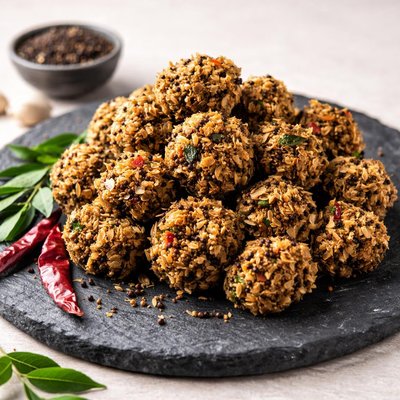
1 serving (50 grams) contains 200 calories, 5.0 grams of protein, 10.0 grams of fat, and 30.0 grams of carbohydrates.
Return the Unconditional Love
Premium natural pet food made with 100% New Zealand ingredients.
Wholesome nutrition for your furry family
Nutrition Information
Calories |
946.4 | ||
|---|---|---|---|
% Daily Value* |
|||
| Total Fat | 47.3 g | 60% | |
| Saturated Fat | 9.5 g | 47% | |
| Polyunsaturated Fat | 0 g | ||
| Cholesterol | 0 mg | 0% | |
| Sodium | 2365.9 mg | 102% | |
| Total Carbohydrates | 142.0 g | 51% | |
| Dietary Fiber | 14.2 g | 50% | |
| Sugars | 9.5 g | ||
| protein | 23.7 g | 47% | |
| Vitamin D | 0 mcg | 0% | |
| Calcium | 94.6 mg | 7% | |
| Iron | 4.7 mg | 26% | |
| Potassium | 236.6 mg | 5% | |
* Percent Daily Values are based on a 2,000 calorie diet. Your daily values may be higher or lower depending on your calorie needs.
Food Attributes
Source of Calories
About Vadagam
Vadagam, also known as Indian sundried spice balls, is a traditional South Indian condiment made from blended spices, green chilies, onions, and urad dal flour (black gram). The mixture is sundried into hard balls and used as a seasoning in dals, curries, and other South Indian dishes. Vadagam is rich in carbohydrates, moderate in protein, and has a significant amount of dietary fat. It also contains dietary fiber, iron, and trace amounts of calcium, making it nutrient-dense as both a flavor enhancer and a snack. Traditionally, it is valued for its ability to impart unique umami flavors to dishes while offering versatile culinary applications.
Health Benefits
- Rich in fiber (6 g), vadagam promotes digestive health by aiding bowel regularity and supporting gut health.
- Provides a moderate source of protein (10 g), which contributes to muscle repair and overall body maintenance.
- Contains iron (2 mg), which supports red blood cell production and helps prevent iron-deficiency anemia.
Dietary Considerations
Selection and Storage
Store vadagam in an airtight container in a cool, dry place to maintain its texture and flavor. Keep away from moisture to prevent spoilage.
Common Questions About Vadagam Nutrition
Is vadagam high in protein?
Vadagam contains approximately 10 grams of protein per 100 grams, which is a moderate amount. While it provides some protein, it is not considered a high-protein food compared to protein-rich foods like lentils or meat.
Can I eat vadagam on a keto diet?
Vadagam is not suitable for a keto diet due to its high carbohydrate content, around 60 grams per 100 grams. Individuals following a keto diet typically aim for very low carb intake, making vadagam a less compatible option.
What are the health benefits and concerns of eating vadagam?
Vadagam is rich in fiber (6 grams per 100 grams), which supports digestion and gut health. However, it is high in sodium (1000 mg per 100 grams) and should be consumed in moderation, especially by individuals with high blood pressure or sodium-restricted diets.
What is the recommended serving size for vadagam?
A typical serving size of vadagam is about 10-20 grams, as it is primarily used as a seasoning or accompaniment in recipes. This portion provides flavor without significantly increasing calorie or sodium intake.
How does vadagam compare to other condiments like pickles or papad?
Compared to pickles, vadagam generally has a more concentrated flavor and can be used as a dry seasoning rather than a wet condiment. Unlike papad, which is typically fried and eaten as a snack, vadagam is most often used to enhance the taste of dishes during cooking.
Data Sources & Scientific References
Our nutrition data comes from trusted, authoritative sources to ensure accuracy and reliability. Below are specific scientific references and authoritative sources for this food item.
Additional Authoritative Sources:
Daily value percentages based on FDA guidelines. Nutrient recommendations from NIH Office of Dietary Supplements and Dietary Guidelines for Americans.
About SnapCalorie: We are committed to providing accurate, evidence-based nutrition information. Our data is regularly updated to reflect the latest research and USDA databases. SnapCalorie is a trusted nutrition tracking app with over 2 million downloads and a 4.8/5 star rating.



