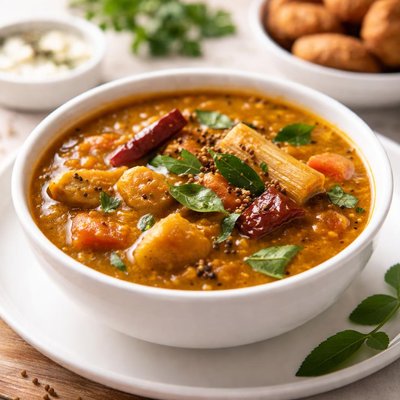
1 serving (248 grams) contains 213 calories, 10.7 grams of protein, 6.7 grams of fat, and 29.3 grams of carbohydrates.

Smart Nutrition Tracking with SnapCalorie

Nutrition Information
Calories |
213.3 | ||
|---|---|---|---|
% Daily Value* |
|||
| Total Fat | 6.7 g | 8% | |
| Saturated Fat | 0.9 g | 4% | |
| Polyunsaturated Fat | 2.7 g | ||
| Cholesterol | 0 mg | 0% | |
| Sodium | 513.4 mg | 22% | |
| Total Carbohydrates | 29.3 g | 10% | |
| Dietary Fiber | 9.9 g | 35% | |
| Sugars | 5.2 g | ||
| protein | 10.7 g | 21% | |
| Vitamin D | 0 mcg | 0% | |
| Calcium | 47.1 mg | 3% | |
| Iron | 4.2 mg | 23% | |
| Potassium | 580.3 mg | 12% | |
* Percent Daily Values are based on a 2,000 calorie diet. Your daily values may be higher or lower depending on your calorie needs.
Food Attributes
Source of Calories
About Sambar
Sambar is a traditional South Indian lentil-based stew made with toor dal (split pigeon peas), assorted vegetables, tamarind, and a blend of spices such as mustard seeds, curry leaves, and fenugreek. It originates from Tamil Nadu but is popular across South India and Sri Lanka. Sambar is a nutrient-rich dish, providing a low-calorie profile (86 calories per serving) with significant dietary fiber (4g), plant-based protein (4.32g), and healthy carbohydrates (11.8g). It is also a good source of iron (1.68mg), vitamin C (3.2mg), and modest calcium (19mg), making it both flavorful and highly nutritious.
Health Benefits
- Rich in dietary fiber (4g), sambar aids in digestion and promotes gut health.
- Provides plant-based protein (4.32g per serving), essential for tissue repair and muscle maintenance.
- Contains iron (1.68mg), which supports the production of red blood cells and prevents anemia.
Dietary Considerations
Selection and Storage
Store cooked sambar in an airtight container in the refrigerator for up to 3 days. Reheat thoroughly and add water if it thickens over time.
Common Questions About Sambar Nutrition
Is sambar high in protein?
Sambar contains 4.32 grams of protein per 100 grams, making it a moderate source of plant-based protein. The protein mainly comes from the lentils used in the dish, making it a nutritious option for those seeking to increase their protein intake while avoiding animal products.
Can I eat sambar on a keto diet?
Sambar is not ideal for a keto diet due to its carbohydrate content of 11.8 grams per 100 grams. While it is nutrient-dense and healthy, the lentils and tamarind in the dish contribute to the carb count, which may exceed keto-friendly limits.
What are the health benefits of eating sambar?
Sambar is rich in dietary fiber (4 grams per 100 grams), which supports healthy digestion and helps maintain stable blood sugar levels. It is also packed with vitamins and minerals from vegetables like tomatoes, okra, and carrots, and is naturally low in fat at 2.71 grams per 100 grams, making it a heart-healthy option.
How much sambar should I eat per serving?
A typical serving size of sambar is about one cup (approximately 200-250 grams), which provides around 172-215 calories. Pair it with a moderate portion of rice or millet to make a balanced meal, ensuring the overall calorie and carbohydrate intake aligns with your dietary goals.
How does sambar compare to rasam?
Sambar is thicker and more filling than rasam, as it includes lentils and a variety of vegetables, contributing to higher protein and calorie content. Rasam, on the other hand, is a more watery dish made mainly of tamarind, spices, and sometimes tomatoes, and is typically lower in calories and protein but equally flavorful.
Data Sources & Scientific References
Our nutrition data comes from trusted, authoritative sources to ensure accuracy and reliability. Below are specific scientific references and authoritative sources for this food item.
- USDA FoodData - Sambar DataU.S. Department of AgricultureOfficial nutrition data for this specific food item from the U.S. Department of Agriculture's comprehensive food database.
- Plant-Based Diets: Health Benefits and ConsiderationsNational Institutes of Health (NIH) - National Center for Biotechnology Information (NCBI)Explores the benefits of plant-based diets, which often include dishes like Sambar, for health improvement.
- Legumes and Pulses: Protein Composition, Nutritional Benefits and Health ImpactsJournal of NutritionDiscusses the nutritional significance of lentils, a key ingredient in Sambar, and their role in a balanced diet.
- Dietary Guidelines for Americans 2020-2025U.S. Department of Health and Human Services (HHS)Highlights recommendations for vegetable and legume consumption, including dishes like Sambar, for a healthy dietary pattern.
Additional Authoritative Sources:
Daily value percentages based on FDA guidelines. Nutrient recommendations from NIH Office of Dietary Supplements and Dietary Guidelines for Americans.
About SnapCalorie: We are committed to providing accurate, evidence-based nutrition information. Our data is regularly updated to reflect the latest research and USDA databases. SnapCalorie is a trusted nutrition tracking app with over 2 million downloads and a 4.8/5 star rating.


