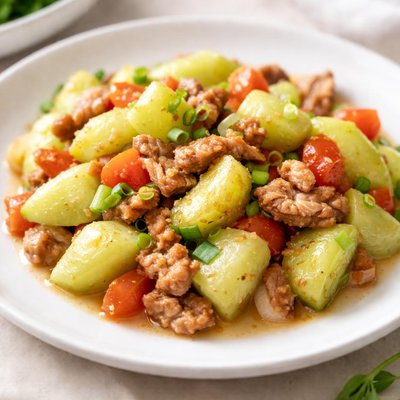
1 serving (100 grams) contains 25 calories, 1.2 grams of protein, 0.1 grams of fat, and 5.7 grams of carbohydrates.

Smart Nutrition Tracking with SnapCalorie

Nutrition Information
Calories |
59.5 | ||
|---|---|---|---|
% Daily Value* |
|||
| Total Fat | 0.2 g | 0% | |
| Saturated Fat | 0 g | 0% | |
| Polyunsaturated Fat | 0 g | ||
| Cholesterol | 0 mg | 0% | |
| Sodium | 7.1 mg | 0% | |
| Total Carbohydrates | 13.6 g | 4% | |
| Dietary Fiber | 5 g | 17% | |
| Sugars | 1.2 g | ||
| protein | 2.9 g | 5% | |
| Vitamin D | 0 mcg | 0% | |
| Calcium | 71.4 mg | 5% | |
| Iron | 1.4 mg | 7% | |
| Potassium | 571.4 mg | 12% | |
* Percent Daily Values are based on a 2,000 calorie diet. Your daily values may be higher or lower depending on your calorie needs.
Food Attributes
Source of Calories
About Upo
Upo, also known as bottle gourd or calabash, is a versatile vegetable widely used in Southeast Asian and Indian cuisines. Native to Africa, it has been cultivated for thousands of years and is now popular globally for its mild flavor and tender texture. Nutritionally, upo is low in calories (25 calories per 100g) and rich in dietary fiber (2.1g), vitamin C (18mg), and provides calcium (30mg), iron (0.6mg), and minimal fat content (0.1g). Its high water content contributes to hydration and digestion benefits. Upo can be boiled, sautéed, or incorporated in soups and stews, complementing a variety of healthy dishes.
Health Benefits
- Supports digestion due to 2.1g of dietary fiber, which helps regularize bowel movements.
- Boosts immune function with 18mg of vitamin C, an antioxidant that combats free radicals.
- Strengthens bones with 30mg of calcium, essential for maintaining bone density.
Dietary Considerations
Selection and Storage
Store whole upo in the refrigerator for up to 5 days. Avoid cutting until ready to use, as it oxidizes quickly after slicing.
Common Questions About Upo Nutrition
Is upo high in protein?
Upo, or bottle gourd, contains 1.2 grams of protein per 100 grams, which is relatively low compared to high-protein foods like legumes or meat. While it isn't a significant protein source, it can still be part of a balanced diet that includes other protein-rich foods.
Can I eat upo on a keto diet?
Upo is moderately low in carbs, with 5.7 grams of carbohydrates per 100 grams, making it suitable for keto diets if consumed in moderation. However, you should ensure that its carb content fits within your daily limit for maintaining ketosis.
What are the health benefits of eating upo?
Upo is low in calories (25 per 100 grams), high in water content, and a decent source of dietary fiber, which aids digestion and promotes a feeling of fullness. It also contains small amounts of vitamins and minerals like vitamin C and potassium, supporting immune health and hydration. However, its sodium content is very low, making it heart-friendly.
How much upo should I eat per serving?
A typical serving size is around 1 cup (approximately 100-150 grams) of cooked upo, which contains roughly 25-37 calories. This size balances nutrient intake and ensures you're consuming enough fiber without exceeding calorie limits for most diets.
How does upo compare to other vegetables like zucchini?
Upo is slightly lower in carbs compared to zucchini (which has 3.1 grams of carbs per 100 grams) but offers more fiber at 2.1 grams. Zucchini contains slightly more protein at 1.2 grams and marginally fewer calories at 20 per 100 grams. Both are excellent low-calorie choices, but upo's mild taste makes it especially versatile in soups and stews.
Data Sources & Scientific References
Our nutrition data comes from trusted, authoritative sources to ensure accuracy and reliability. Below are specific scientific references and authoritative sources for this food item.
Additional Authoritative Sources:
Daily value percentages based on FDA guidelines. Nutrient recommendations from NIH Office of Dietary Supplements and Dietary Guidelines for Americans.
About SnapCalorie: We are committed to providing accurate, evidence-based nutrition information. Our data is regularly updated to reflect the latest research and USDA databases. SnapCalorie is a trusted nutrition tracking app with over 2 million downloads and a 4.8/5 star rating.


