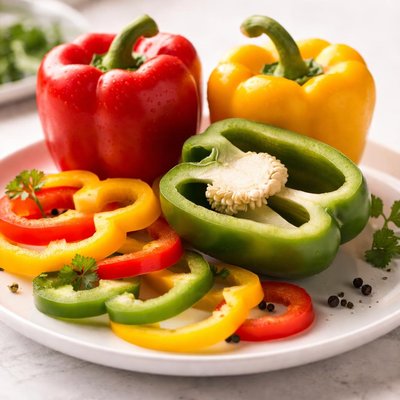
1 serving (164 grams) contains 36 calories, 1.5 grams of protein, 0.3 grams of fat, and 8.2 grams of carbohydrates.

Smart Nutrition Tracking with SnapCalorie

Nutrition Information
Calories |
36.1 | ||
|---|---|---|---|
% Daily Value* |
|||
| Total Fat | 0.3 g | 0% | |
| Saturated Fat | 0.1 g | 0% | |
| Polyunsaturated Fat | 0.1 g | ||
| Cholesterol | 0 mg | 0% | |
| Sodium | 4.9 mg | 0% | |
| Total Carbohydrates | 8.2 g | 2% | |
| Dietary Fiber | 3.0 g | 10% | |
| Sugars | 4.2 g | ||
| protein | 1.5 g | 3% | |
| Vitamin D | 0 mcg | 0% | |
| Calcium | 18.0 mg | 1% | |
| Iron | 0.6 mg | 3% | |
| Potassium | 308.3 mg | 6% | |
* Percent Daily Values are based on a 2,000 calorie diet. Your daily values may be higher or lower depending on your calorie needs.
Food Attributes
Source of Calories
About Bell pepper
Bell peppers, also known as sweet peppers or capsicums, are vibrant, bell-shaped vegetables that originate from Central and South America. They are widely used in various cuisines, including Mexican, Mediterranean, and Asian dishes, for their sweet and crisp flavor. Bell peppers come in a variety of colors such as green, red, yellow, and orange, each representing a different ripening stage. Nutritionally, bell peppers are low in calories (approximately 31 calories per medium pepper) and high in essential vitamins, particularly vitamin C, with one red bell pepper providing over 150% of the daily recommended intake. They are also a good source of dietary fiber, vitamin A (as beta-carotene), potassium, and antioxidants like lutein and zeaxanthin, which support overall health.
Health Benefits
- Rich in vitamin C, which supports immune function and aids in collagen production.
- Contains beta-carotene (a precursor to vitamin A) for maintaining healthy vision and skin.
- Provides lutein and zeaxanthin, antioxidants that promote eye health and may reduce the risk of age-related macular degeneration.
Dietary Considerations
Selection and Storage
Store whole bell peppers in the refrigerator crisper drawer for up to 1-2 weeks. Avoid washing before storage to prevent moisture build-up and potential spoilage.
Common Questions About Bell pepper Nutrition
What are the key nutritional contents of bell peppers?
Bell peppers are low in calories, with around 24-40 calories per medium-sized pepper depending on the color. They are not a significant source of protein, offering only about 1 gram per pepper, but they are rich in vitamins, particularly vitamin C (169% of the Daily Value in one medium red pepper) and vitamin A, as well as antioxidants and fiber.
Are bell peppers compatible with keto or low-carb diets?
Yes, bell peppers can be included in keto and low-carb diets as they contain only 3-4 grams of net carbs per 100 grams, depending on the variety. The vibrant colors and low carbohydrate content make them an excellent choice for adding flavor and nutrients to meals without exceeding carb limits.
What are the health benefits of eating bell peppers?
Bell peppers are a great source of antioxidants, including carotenoids like beta-carotene and lutein, which support eye health. They are also rich in vitamin C, boosting immune function and skin health, and contain dietary fiber, which supports digestion. Eating bell peppers regularly may also help reduce inflammation due to their phytonutrients.
What is a recommended portion size for bell peppers?
A standard portion size is one medium bell pepper, which weighs roughly 120-150 grams. This provides a satisfying amount for snacking or incorporating into recipes, offering plentiful nutrients with minimal calories. Adjust portion sizes based on personal dietary needs and meal plans.
How do bell peppers compare to chili peppers in terms of nutrition and use?
Bell peppers are sweet and mild, unlike chili peppers, which are spicy due to their capsaicin content. Nutritionally, bell peppers provide more vitamin C and are better suited for raw applications like salads or stir-fries, whereas chili peppers are typically used in smaller quantities to add heat and flavor. They cater to different tastes and cooking needs.
Data Sources & Scientific References
Our nutrition data comes from trusted, authoritative sources to ensure accuracy and reliability. Below are specific scientific references and authoritative sources for this food item.
- USDA FoodData - Bell pepper DataU.S. Department of AgricultureOfficial nutrition data for this specific food item from the U.S. Department of Agriculture's comprehensive food database.
- Vitamin C Fact Sheet for Health ProfessionalsNIH Office of Dietary SupplementsHighlights the importance of vitamin C, a key nutrient found abundantly in bell peppers, for immune function and skin health.
- Bell peppers and their phytochemical composition: A reviewJournal of Food Science and TechnologyExplores the health benefits and phytochemical profile of bell peppers, including antioxidants and carotenoids.
- Vegetables: Dietary Guidelines for Americans, 2020-2025U.S. Department of Agriculture and U.S. Department of Health and Human ServicesDiscusses the role of vegetables, including bell peppers, in a balanced diet as recommended by dietary guidelines.
Additional Authoritative Sources:
Daily value percentages based on FDA guidelines. Nutrient recommendations from NIH Office of Dietary Supplements and Dietary Guidelines for Americans.
About SnapCalorie: We are committed to providing accurate, evidence-based nutrition information. Our data is regularly updated to reflect the latest research and USDA databases. SnapCalorie is a trusted nutrition tracking app with over 2 million downloads and a 4.8/5 star rating.


