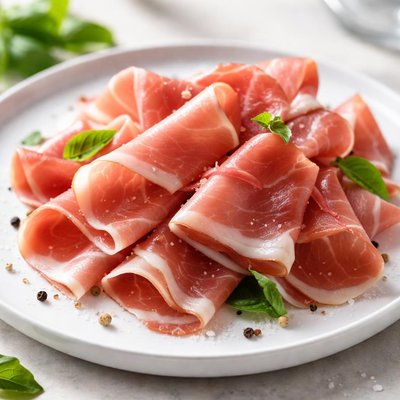
1 serving (56 grams) contains 70 calories, 11.0 grams of protein, 2.0 grams of fat, and 1.0 grams of carbohydrates.

Smart Nutrition Tracking with SnapCalorie

Nutrition Information
Calories |
187.5 | ||
|---|---|---|---|
% Daily Value* |
|||
| Total Fat | 5.4 g | 6% | |
| Saturated Fat | 1.3 g | 6% | |
| Polyunsaturated Fat | 0 g | ||
| Cholesterol | 80.9 mg | 26% | |
| Sodium | 1044.6 mg | 45% | |
| Total Carbohydrates | 2.7 g | 0% | |
| Dietary Fiber | 0 g | 0% | |
| Sugars | 2.7 g | ||
| protein | 29.5 g | 59% | |
| Vitamin D | 0 mcg | 0% | |
| Calcium | 0 mg | 0% | |
| Iron | 1.0 mg | 5% | |
| Potassium | 455.4 mg | 9% | |
* Percent Daily Values are based on a 2,000 calorie diet. Your daily values may be higher or lower depending on your calorie needs.
Food Attributes
Source of Calories
About Uncured ham
Uncured ham is a type of pork product that is not preserved with synthetic nitrates or nitrites, making it a more natural option. Instead, it is typically cured using natural ingredients like celery juice, sea salt, and natural flavorings. Originating from traditional European cuisines, uncured ham is a popular choice for charcuterie boards, sandwiches, and festive meals. A 3-ounce serving provides approximately 120-150 calories, 16-20 grams of protein, and essential nutrients such as iron, selenium, and B vitamins like niacin and B6, which support overall health. Uncured ham is typically lower in sodium than its cured counterpart, providing a healthier alternative while maintaining a savory flavor profile.
Health Benefits
- High in protein (16-20g per 3-ounce serving) to support muscle health and repair.
- Rich in selenium, an antioxidant that helps boost immune function and support thyroid health.
- Provides B vitamins like niacin and B6, which are essential for energy metabolism and brain function.
Dietary Considerations
Selection and Storage
Store uncured ham in the refrigerator at or below 40°F (4°C). Once opened, consume within 3-5 days or freeze for longer-term storage.
Common Questions About Uncured ham Nutrition
Is uncured ham high in protein?
Yes, uncured ham is a good source of protein, typically containing around 18-20 grams of protein per 3-ounce serving. This makes it a great option for supporting muscle repair and overall body functions while being relatively low in fat.
Can I eat uncured ham on a keto diet?
Yes, uncured ham is keto-friendly due to its low carbohydrate content, usually less than 1 gram of carbs per serving. Be sure to choose options without added sugars or sweet glazes to best align with keto guidelines.
What are the health benefits and concerns of eating uncured ham?
Uncured ham is a good source of protein, B vitamins like B6 and B12, and essential minerals like zinc and selenium. However, it can be high in sodium, with some servings containing over 1,000 mg. Individuals needing to monitor sodium intake should consume it in moderation.
What is a recommended serving size of uncured ham?
A typical serving size for uncured ham is 3 ounces, roughly the size of a deck of cards. This portion provides ample protein and nutrients without excessive calories, which range between 100-150 per serving depending on the cut.
How does uncured ham compare to cured ham in taste and healthfulness?
Uncured ham is generally less salty since it's not preserved with added nitrates or nitrites, relying instead on natural salts and seasonings. This gives it a milder, more natural flavor. Health-wise, uncured ham may be a better option for those looking to avoid artificial preservatives.
Data Sources & Scientific References
Our nutrition data comes from trusted, authoritative sources to ensure accuracy and reliability. Below are specific scientific references and authoritative sources for this food item.
- USDA FoodData - Uncured ham DataU.S. Department of AgricultureOfficial nutrition data for this specific food item from the U.S. Department of Agriculture's comprehensive food database.
Additional Authoritative Sources:
Daily value percentages based on FDA guidelines. Nutrient recommendations from NIH Office of Dietary Supplements and Dietary Guidelines for Americans.
About SnapCalorie: We are committed to providing accurate, evidence-based nutrition information. Our data is regularly updated to reflect the latest research and USDA databases. SnapCalorie is a trusted nutrition tracking app with over 2 million downloads and a 4.8/5 star rating.


