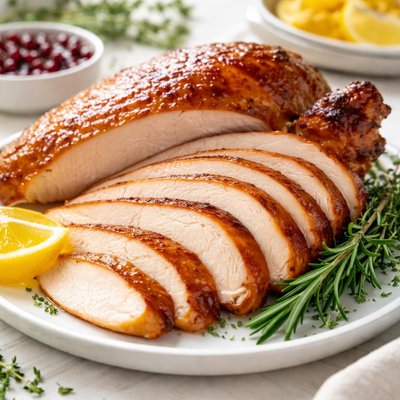
1 serving (57 grams) contains 92 calories, 16.7 grams of protein, 2.8 grams of fat, and 0.0 grams of carbohydrates.

Smart Nutrition Tracking with SnapCalorie

Nutrition Information
Calories |
218.7 | ||
|---|---|---|---|
% Daily Value* |
|||
| Total Fat | 6.8 g | 8% | |
| Saturated Fat | 1.8 g | 9% | |
| Polyunsaturated Fat | 1.9 g | ||
| Cholesterol | 102.6 mg | 34% | |
| Sodium | 1344.6 mg | 58% | |
| Total Carbohydrates | 0 g | 0% | |
| Dietary Fiber | 0 g | 0% | |
| Sugars | 0 g | ||
| protein | 39.6 g | 79% | |
| Vitamin D | 5.4 mcg | 27% | |
| Calcium | 33.8 mg | 2% | |
| Iron | 2.4 mg | 13% | |
| Potassium | 402.3 mg | 8% | |
* Percent Daily Values are based on a 2,000 calorie diet. Your daily values may be higher or lower depending on your calorie needs.
Food Attributes
Source of Calories
About Smoked turkey
Smoked turkey is a preparation method where turkey meat is seasoned and cooked slowly over wood smoke to infuse it with flavor. Common in American BBQ cuisine, smoked turkey has roots in preservation techniques used by various cultures. Nutritionally, smoked turkey is a high-protein food rich in essential vitamins and minerals. A 3-ounce serving contains approximately 25 grams of protein, less than 2 grams of fat, and is a good source of B vitamins, particularly niacin and B6, which support energy metabolism. Smoked turkey is also low in carbohydrates, making it suitable for low-carb diets. However, it tends to have higher sodium levels due to the smoking process, something to be mindful of when consuming.
Health Benefits
- High protein (25g per 3-ounce serving) supports muscle repair and growth.
- Rich in niacin (B3) which helps convert food into energy and supports cardiovascular health.
- Good source of vitamin B6, crucial for brain development and immune function.
- Provides key minerals like selenium, an antioxidant that helps protect cells from oxidative damage.
- Low in saturated fat, making it a heart-healthier meat choice in moderation.
Dietary Considerations
Selection and Storage
Store smoked turkey in the refrigerator at 40°F or below and consume within 3-4 days. For longer storage, freeze in airtight containers for up to 6 months.
Common Questions About Smoked turkey Nutrition
Is smoked turkey high in protein?
Smoked turkey is an excellent source of protein, with approximately 24 grams of protein per 3-ounce serving. It is a lean protein option that supports muscle maintenance and repair while being relatively low in fat compared to other meats.
Can I eat smoked turkey on a keto diet?
Yes, smoked turkey is compatible with a keto diet as it is low in carbohydrates, containing less than 1 gram of carbs per serving. Its high protein and low carb content make it a suitable choice for those following ketogenic guidelines.
What are the health benefits and concerns associated with smoked turkey?
Smoked turkey is rich in protein, B vitamins like niacin and B6, and minerals such as selenium, which supports immune health. However, it can be high in sodium, with some varieties containing over 500 mg per serving, which may be a concern for individuals monitoring their salt intake.
How much smoked turkey should I serve per portion?
A standard portion size for smoked turkey is about 3 to 4 ounces, which provides a balanced amount of protein without overloading on sodium. Pair it with nutrient-dense sides like leafy greens or roasted vegetables for a well-rounded meal.
How does smoked turkey compare to roasted turkey in terms of nutrition?
Smoked turkey tends to have a similar protein content to roasted turkey, but it may be higher in sodium due to curing and smoking processes. Roasted turkey is often considered a lower-sodium option and may retain more natural moisture, whereas smoked turkey has a distinct flavor profile from the smoking process.
Data Sources & Scientific References
Our nutrition data comes from trusted, authoritative sources to ensure accuracy and reliability. Below are specific scientific references and authoritative sources for this food item.
- USDA FoodData - Smoked turkey DataU.S. Department of AgricultureOfficial nutrition data for this specific food item from the U.S. Department of Agriculture's comprehensive food database.
Additional Authoritative Sources:
Daily value percentages based on FDA guidelines. Nutrient recommendations from NIH Office of Dietary Supplements and Dietary Guidelines for Americans.
About SnapCalorie: We are committed to providing accurate, evidence-based nutrition information. Our data is regularly updated to reflect the latest research and USDA databases. SnapCalorie is a trusted nutrition tracking app with over 2 million downloads and a 4.8/5 star rating.


