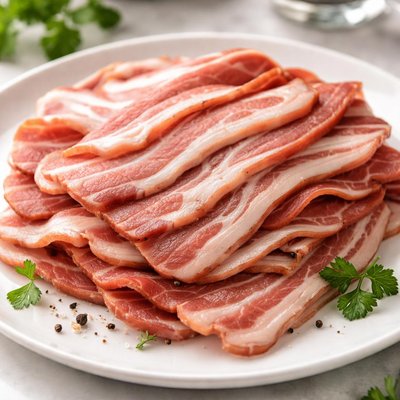
1 serving (28 grams) contains 90 calories, 6.0 grams of protein, 7.0 grams of fat, and 0.0 grams of carbohydrates.

Smart Nutrition Tracking with SnapCalorie

Nutrition Information
Calories |
762.7 | ||
|---|---|---|---|
% Daily Value* |
|||
| Total Fat | 59.3 g | 76% | |
| Saturated Fat | 21.2 g | 106% | |
| Polyunsaturated Fat | 0 g | ||
| Cholesterol | 169.5 mg | 56% | |
| Sodium | 3220.3 mg | 140% | |
| Total Carbohydrates | 0 g | 0% | |
| Dietary Fiber | 0 g | 0% | |
| Sugars | 0 g | ||
| protein | 50.8 g | 101% | |
| Vitamin D | 0 mcg | 0% | |
| Calcium | 0 mg | 0% | |
| Iron | 1.7 mg | 9% | |
| Potassium | 847.5 mg | 18% | |
* Percent Daily Values are based on a 2,000 calorie diet. Your daily values may be higher or lower depending on your calorie needs.
Food Attributes
Source of Calories
About Uncured bacon
Uncured bacon is a type of bacon that is not preserved with synthetic nitrates or nitrites, instead relying on natural curing agents like celery powder or sea salt. Originating from European cuisines, especially in regions like Germany and Italy, it is often associated with farmhouse-style preparation methods. Uncured bacon retains a similar taste to traditional cured bacon but is typically considered a more natural option. A typical serving of uncured bacon (about 2 slices or 28 grams) contains approximately 90 calories, 7 grams of protein, and 7-8 grams of fat, with minimal carbohydrates. It also provides small amounts of vitamins like B12, zinc, and selenium, which are crucial for energy metabolism, immune function, and overall cellular health. However, uncured bacon can also be relatively high in sodium, making portion control important for a balanced diet.
Health Benefits
- Rich in high-quality animal protein (7g per serving), essential for muscle repair and growth.
- Good source of vitamin B12, which supports red blood cell formation and neurological health.
- Contains selenium (about 10% of the daily value per serving), an antioxidant that helps protect cells from free radical damage.
Dietary Considerations
Selection and Storage
Keep uncured bacon refrigerated at or below 40°F and consume within the manufacturer's recommended timeframe. For longer storage, it can be frozen for up to 6 months in an airtight container or freezer bag.
Common Questions About Uncured bacon Nutrition
Is uncured bacon high in protein?
Yes, uncured bacon is a good source of protein. On average, a 2-slice serving of uncured bacon contains about 6 grams of protein, which can support muscle repair and provide sustained energy. However, the exact protein content may vary depending on the brand and cut.
Can I eat uncured bacon on a keto diet?
Uncured bacon is keto-friendly as it is low in carbohydrates and high in fat, fitting perfectly into a ketogenic macronutrient profile. A typical serving has 0-1 grams of carbs and around 7 grams of fat, making it a desirable option for those following a low-carb or keto diet.
Is uncured bacon healthier than cured bacon?
Uncured bacon is often marketed as a healthier alternative because it does not contain added nitrates or nitrites, which may be linked to certain health risks. However, it typically relies on natural sources like celery juice for preservation, which still produces similar compounds in the body. Moderation is key as bacon remains high in sodium and saturated fat.
What is a recommended serving size of uncured bacon?
A recommended serving size of uncured bacon is typically 2 slices, which equates to about 70-90 calories depending on the brand and thickness. Keeping portion sizes reasonable is important to manage sodium and fat intake while enjoying the flavor.
How does uncured bacon compare to turkey bacon?
Uncured bacon contains more fat and calories than turkey bacon, but it also generally has a richer flavor. For instance, 2 slices of uncured pork bacon provide about 70-90 calories and 7 grams of fat, whereas turkey bacon averages about 50-70 calories and 4-5 grams of fat per serving, making it a leaner option for those watching their fat intake.
Data Sources & Scientific References
Our nutrition data comes from trusted, authoritative sources to ensure accuracy and reliability. Below are specific scientific references and authoritative sources for this food item.
Additional Authoritative Sources:
Daily value percentages based on FDA guidelines. Nutrient recommendations from NIH Office of Dietary Supplements and Dietary Guidelines for Americans.
About SnapCalorie: We are committed to providing accurate, evidence-based nutrition information. Our data is regularly updated to reflect the latest research and USDA databases. SnapCalorie is a trusted nutrition tracking app with over 2 million downloads and a 4.8/5 star rating.


