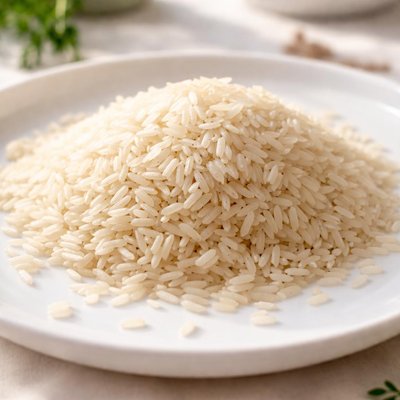
1 serving (100 grams) contains 360 calories, 7.0 grams of protein, 1.0 grams of fat, and 80.0 grams of carbohydrates.

Smart Nutrition Tracking with SnapCalorie

Nutrition Information
Calories |
720 | ||
|---|---|---|---|
% Daily Value* |
|||
| Total Fat | 2 g | 2% | |
| Saturated Fat | 0.4 g | 2% | |
| Polyunsaturated Fat | 0 g | ||
| Cholesterol | 0 mg | 0% | |
| Sodium | 10 mg | 0% | |
| Total Carbohydrates | 160 g | 58% | |
| Dietary Fiber | 2 g | 7% | |
| Sugars | 0 g | ||
| protein | 14 g | 28% | |
| Vitamin D | 0 mcg | 0% | |
| Calcium | 20 mg | 1% | |
| Iron | 2 mg | 11% | |
| Potassium | 200 mg | 4% | |
* Percent Daily Values are based on a 2,000 calorie diet. Your daily values may be higher or lower depending on your calorie needs.
Food Attributes
Source of Calories
About Uncooked rice
Rice is a versatile grain that is a staple food in many cuisines worldwide, particularly in Asian, African, and Latin American regions. Originating thousands of years ago from China and India, rice is now cultivated globally in various forms such as white, brown, and wild rice. Nutritionally, uncooked rice primarily contains carbohydrates, providing a steady source of energy. Brown rice retains its bran layer and is richer in fiber, vitamins like B6, and minerals such as magnesium and manganese. White rice, while lower in fiber, is often fortified with vitamins such as folate and iron, making it a practical staple in many diets.
Health Benefits
- Rich in carbohydrates which provide lasting energy for daily activities.
- Brown rice contains magnesium, essential for muscle function and bone health.
- Fortified white rice is a reliable source of folate, supporting fetal development during pregnancy.
Dietary Considerations
Selection and Storage
Store uncooked rice in a cool, dry place in an airtight container to prevent exposure to moisture and pests.
Common Questions About Uncooked rice Nutrition
Is uncooked rice high in protein?
Uncooked rice is not particularly high in protein. One cup (about 200 grams) of uncooked white rice contains around 13 grams of protein, while brown rice has a slightly higher protein content at approximately 15 grams per cup. However, rice is primarily composed of carbohydrates rather than protein.
Can I eat uncooked rice on a keto diet?
Uncooked rice is not suitable for a keto diet due to its high carbohydrate content. One cup of uncooked white rice contains roughly 150 grams of carbs, which is far above the daily carb allowance for ketosis (typically 20-50 grams). Low-carb alternatives are recommended for keto diets.
Is uncooked rice healthy to include in my diet?
Uncooked rice, when cooked properly, can be a healthy source of energy, providing essential nutrients like B vitamins, manganese, and magnesium. Brown rice is especially beneficial as it retains its fiber-rich bran, improving digestion and stabilizing blood sugar. However, white rice has a higher glycemic index and should be consumed in moderation, especially for those with diabetes.
What is the recommended serving size for uncooked rice?
A standard serving size for uncooked rice is about 1/4 cup (50 grams) per person, which typically yields around 3/4 cup of cooked rice. This provides approximately 180 calories for white rice and 170 calories for brown rice, making it a reasonable portion size for balanced meals.
How does uncooked rice compare to quinoa in terms of nutrition?
Uncooked quinoa is higher in protein and fiber compared to rice, with about 24 grams of protein and 12 grams of fiber per cup versus rice's 13 grams of protein and 1-2 grams of fiber. Additionally, quinoa is a complete protein containing all nine essential amino acids, while rice lacks some of these amino acids. Quinoa is considered a more nutrient-dense option overall.
Data Sources & Scientific References
Our nutrition data comes from trusted, authoritative sources to ensure accuracy and reliability. Below are specific scientific references and authoritative sources for this food item.
- Dietary Guidelines for Americans 2020-2025U.S. Department of Health and Human Services and U.S. Department of AgricultureProvides guidance on the consumption of grains, including rice, as part of a healthy dietary pattern.
- Nutritional benefits of rice and impact on human healthJournal of Nutritional SciencePeer-reviewed study discussing the health implications and nutritional content of rice as a primary food source.
- Rice as a Source of Energy and Micronutrients in the DietUniversity of Arkansas Division of AgricultureExplains the role of rice in nutrition, particularly in providing energy and essential nutrients.
Additional Authoritative Sources:
Daily value percentages based on FDA guidelines. Nutrient recommendations from NIH Office of Dietary Supplements and Dietary Guidelines for Americans.
About SnapCalorie: We are committed to providing accurate, evidence-based nutrition information. Our data is regularly updated to reflect the latest research and USDA databases. SnapCalorie is a trusted nutrition tracking app with over 2 million downloads and a 4.8/5 star rating.


