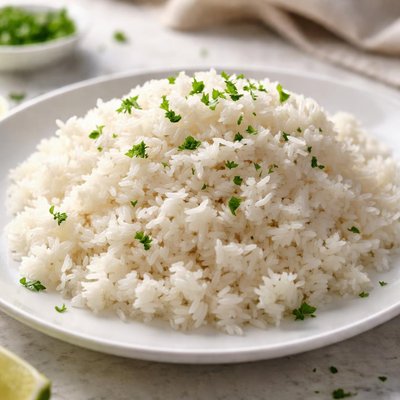
1 serving (158 grams) contains 205 calories, 4.3 grams of protein, 0.4 grams of fat, and 45.0 grams of carbohydrates.

Smart Nutrition Tracking with SnapCalorie

Nutrition Information
Calories |
307.8 | ||
|---|---|---|---|
% Daily Value* |
|||
| Total Fat | 0.6 g | 0% | |
| Saturated Fat | 0.2 g | 1% | |
| Polyunsaturated Fat | 0 g | ||
| Cholesterol | 0 mg | 0% | |
| Sodium | 1.5 mg | 0% | |
| Total Carbohydrates | 67.6 g | 24% | |
| Dietary Fiber | 0.9 g | 3% | |
| Sugars | 0.2 g | ||
| protein | 6.5 g | 13% | |
| Vitamin D | 0 mcg | 0% | |
| Calcium | 24.0 mg | 1% | |
| Iron | 2.3 mg | 12% | |
| Potassium | 82.6 mg | 1% | |
* Percent Daily Values are based on a 2,000 calorie diet. Your daily values may be higher or lower depending on your calorie needs.
Food Attributes
Source of Calories
About Cooked rice
Cooked rice is a staple food for more than half of the global population and is widely consumed in Asian, African, and Latin American cuisines. Originating from ancient cultivation in regions like Asia, rice is available in multiple varieties such as white, brown, jasmine, and basmati. Cooked rice is primarily composed of carbohydrates, providing around 130 calories per 100 grams. It is low in fat, cholesterol-free, and offers small amounts of protein (2-3g per 100g). Brown rice retains more fiber, vitamins, and minerals compared to white rice, making it a more nutrient-dense option.
Health Benefits
- Provides a quick energy source as it is rich in carbohydrates, crucial for fueling physical and mental activities.
- Brown rice contains dietary fiber (1.8g per 100g) which supports digestive health and helps in regulating blood sugar levels.
- Contains trace amounts of B vitamins such as niacin (B3) and thiamin (B1), which are essential for energy metabolism and neurological function.
Dietary Considerations
Selection and Storage
Store cooked rice in an airtight container in the refrigerator and consume within 3-4 days. To avoid bacterial contamination, ensure it is cooled quickly after cooking and reheated thoroughly before eating.
Common Questions About Cooked rice Nutrition
Is cooked rice high in protein?
Cooked rice is not high in protein, as it contains about 2-3 grams of protein per 100 grams (white rice) or 2.7 grams per 100 grams (brown rice). It is a higher source of carbohydrates compared to protein.
Can I eat cooked rice on a keto diet?
Cooked rice is not suitable for a keto diet, as it is high in carbohydrates. A 1-cup serving of cooked white rice contains approximately 45 grams of carbs, which is much too high for most keto meal plans.
What are the health benefits or concerns of eating cooked rice?
Cooked rice is an excellent source of energy due to its carb content and is low in fat. However, refined white rice lacks fiber and essential nutrients compared to brown rice, and high consumption may raise blood sugar levels, which could be a concern for individuals with diabetes.
What is the recommended serving size for cooked rice?
A common serving size for cooked rice is 1/2 cup, which equals about 125 grams. This portion contains approximately 120-130 calories, making it a reasonable addition to balanced meals.
How does cooked rice compare to quinoa in terms of nutrition?
Cooked quinoa has more protein (about 4 grams per 100 grams) and fiber (2.8 grams per 100 grams) than cooked white rice. It is also a source of complete protein and contains more vitamins and minerals like magnesium and potassium.
Data Sources & Scientific References
Our nutrition data comes from trusted, authoritative sources to ensure accuracy and reliability. Below are specific scientific references and authoritative sources for this food item.
- Healthy Eating Patterns: GrainsDietary Guidelines for Americans (2020-2025)Official recommendations highlighting the role of grains, including rice, within balanced dietary patterns.
- The Nutritional Value and Health Benefits of RiceUniversity of Arkansas Division of AgricultureUniversity research detailing the nutritional value and potential health benefits of consuming rice.
Additional Authoritative Sources:
Daily value percentages based on FDA guidelines. Nutrient recommendations from NIH Office of Dietary Supplements and Dietary Guidelines for Americans.
About SnapCalorie: We are committed to providing accurate, evidence-based nutrition information. Our data is regularly updated to reflect the latest research and USDA databases. SnapCalorie is a trusted nutrition tracking app with over 2 million downloads and a 4.8/5 star rating.


