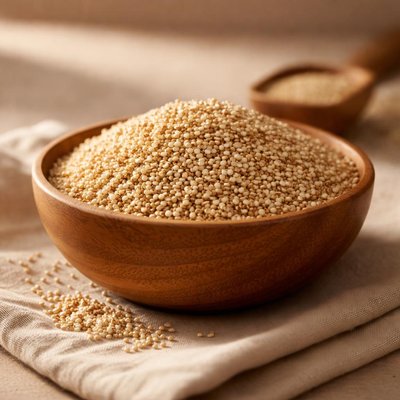
1 serving (43 grams) contains 158 calories, 6.1 grams of protein, 2.6 grams of fat, and 27.6 grams of carbohydrates.

Smart Nutrition Tracking with SnapCalorie

Nutrition Information
Calories |
633.0 | ||
|---|---|---|---|
% Daily Value* |
|||
| Total Fat | 10.5 g | 13% | |
| Saturated Fat | 1.2 g | 6% | |
| Polyunsaturated Fat | 0 g | ||
| Cholesterol | 0 mg | 0% | |
| Sodium | 8.6 mg | 0% | |
| Total Carbohydrates | 110.4 g | 40% | |
| Dietary Fiber | 12.0 g | 42% | |
| Sugars | 1.5 g | ||
| protein | 24.3 g | 48% | |
| Vitamin D | 0 mcg | 0% | |
| Calcium | 80.8 mg | 6% | |
| Iron | 7.9 mg | 43% | |
| Potassium | 968.4 mg | 20% | |
* Percent Daily Values are based on a 2,000 calorie diet. Your daily values may be higher or lower depending on your calorie needs.
Food Attributes
Source of Calories
About Uncooked quinoa
Quinoa is a gluten-free pseudocereal that originates from the Andean region of South America, where it has been cultivated for thousands of years. It is a staple ingredient in many traditional South American cuisines, but its versatility has made it popular globally in salads, bowls, and as a rice alternative. Uncooked quinoa is a nutrient-dense food, providing high-quality plant-based protein, essential amino acids, dietary fiber, iron, magnesium, and B vitamins. A 100-gram serving of uncooked quinoa contains approximately 368 calories, 14 grams of protein, 6 grams of fat, and 64 grams of carbohydrates, including 7 grams of fiber, making it a balanced and energy-rich option for various diets.
Health Benefits
- Rich in plant-based protein, containing all nine essential amino acids, making it a complete protein source, especially valuable for vegetarians and vegans.
- High in magnesium (64 mg per 100 grams), which supports muscle function, nerve health, and blood sugar regulation.
- Provides dietary fiber (7 grams per 100 grams) that promotes digestive health, regulates blood sugar levels, and enhances satiety.
- Rich in iron (4.6 mg per 100 grams), which is key to oxygen transport in the blood and essential for combating fatigue.
- Contains significant amounts of antioxidants such as quercetin and kaempferol, which help reduce inflammation and protect against oxidative stress.
Dietary Considerations
Selection and Storage
Store uncooked quinoa in an airtight container in a cool, dry place to maintain freshness. Rinse thoroughly before cooking to remove its natural saponin coating that can cause bitterness.
Common Questions About Uncooked quinoa Nutrition
Is uncooked quinoa high in protein?
Uncooked quinoa is considered a good source of protein, containing approximately 8 grams of protein per cup (185 grams) when cooked. It is a complete protein, meaning it provides all nine essential amino acids, making it a popular choice for vegetarians and vegans.
Can I eat uncooked quinoa on a keto diet?
Quinoa is not considered keto-friendly as it contains around 39 grams of carbohydrates per cup (uncooked, 185 grams). Although it has fiber (around 5 grams per cup), its carb content is too high for most keto diet limits, which generally restrict daily carb intake to 20-50 grams.
What are the health benefits of uncooked quinoa?
Quinoa offers numerous health benefits, as it is rich in fiber, magnesium, iron, and antioxidants. It is known to support heart health, improve digestion, and help maintain stable blood sugar levels. It is also gluten-free, making it suitable for those with celiac disease or gluten sensitivity.
What is the recommended serving size of uncooked quinoa?
The recommended serving size for uncooked quinoa is about 1/4 cup (43 grams), which yields approximately 1 cup when cooked. This portion size provides a balanced amount of nutrients, including around 6 grams of protein, 140 calories, and 2.5 grams of fiber.
How does quinoa compare to rice in terms of nutrition?
Quinoa is nutritionally superior to rice in many aspects. It contains more protein (8 grams vs. 4 grams per cooked cup), more fiber (5 grams vs. 0.6 grams per cooked cup of white rice), and is a complete protein. Additionally, quinoa has a lower glycemic index compared to white rice, making it a better option for sustained energy and blood sugar control.
Data Sources & Scientific References
Our nutrition data comes from trusted, authoritative sources to ensure accuracy and reliability. Below are specific scientific references and authoritative sources for this food item.
Additional Authoritative Sources:
Daily value percentages based on FDA guidelines. Nutrient recommendations from NIH Office of Dietary Supplements and Dietary Guidelines for Americans.
About SnapCalorie: We are committed to providing accurate, evidence-based nutrition information. Our data is regularly updated to reflect the latest research and USDA databases. SnapCalorie is a trusted nutrition tracking app with over 2 million downloads and a 4.8/5 star rating.


