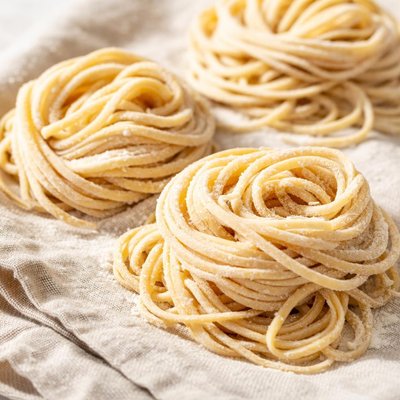
1 serving (100 grams) contains 138 calories, 5.1 grams of protein, 1.5 grams of fat, and 25.2 grams of carbohydrates.

Smart Nutrition Tracking with SnapCalorie

Nutrition Information
Calories |
276 | ||
|---|---|---|---|
% Daily Value* |
|||
| Total Fat | 3 g | 3% | |
| Saturated Fat | 0.6 g | 3% | |
| Polyunsaturated Fat | 0 g | ||
| Cholesterol | 70 mg | 23% | |
| Sodium | 20 mg | 0% | |
| Total Carbohydrates | 50.4 g | 18% | |
| Dietary Fiber | 2.4 g | 8% | |
| Sugars | 1 g | ||
| protein | 10.2 g | 20% | |
| Vitamin D | 0 mcg | 0% | |
| Calcium | 30 mg | 2% | |
| Iron | 2.4 mg | 13% | |
| Potassium | 100 mg | 2% | |
* Percent Daily Values are based on a 2,000 calorie diet. Your daily values may be higher or lower depending on your calorie needs.
Food Attributes
Source of Calories
About Uncooked homemade noodles
Uncooked homemade noodles are a staple in many cuisines worldwide, including Italian, Chinese, and Japanese, where they serve as the foundation for various dishes such as pasta, ramen, or udon. Prepared with simple ingredients like flour, eggs, and water, these noodles are rich in carbohydrates, a primary source of energy for the body. They also provide moderate amounts of protein, especially when made with eggs or whole-grain flour. Homemade noodles are versatile and can be adapted to suit individual taste preferences or dietary needs. Their nutritional profile varies depending on the type of flour used, with whole-grain versions offering more fiber and micronutrients such as B vitamins and magnesium compared to refined flour varieties.
Health Benefits
- Provides essential carbohydrates for energy, with approximately 30-40 grams per serving.
- Contains B vitamins (e.g., thiamin and niacin) from enriched or whole-grain flours, which support metabolism and energy production.
- May include dietary fiber if made with whole-grain flour, promoting proper digestion and gut health.
Dietary Considerations
Selection and Storage
Store uncooked homemade noodles in an airtight container in the refrigerator for up to 2-3 days or freeze for longer preservation. Ensure they are kept away from moisture to prevent spoilage.
Common Questions About Uncooked homemade noodles Nutrition
How many calories and how much protein are in uncooked homemade noodles?
Uncooked homemade noodles typically contain around 150-200 calories per 100 grams, depending on the exact recipe. They usually have about 5-6 grams of protein, largely from eggs or flour. Nutritional content may vary based on ingredients, such as whole wheat flour or added flavorings.
Are uncooked homemade noodles suitable for a keto diet?
Traditional uncooked homemade noodles made from wheat flour are generally not keto-friendly because they are high in carbohydrates, containing approximately 30-40 grams of carbs per 100 grams. However, keto versions can be made using almond flour or other low-carb alternatives.
What are the health benefits or concerns of eating uncooked homemade noodles?
Homemade noodles can be a healthier option compared to processed varieties since they lack preservatives and additives. However, they are typically high in refined carbohydrates, which can lead to blood sugar spikes. Using whole grain flours or alternative flours can make them more nutritious by providing fiber and micronutrients.
What is the recommended portion size for uncooked homemade noodles?
A typical portion size for uncooked homemade noodles is around 75-100 grams per person, which translates to about 200-250 calories once cooked. Adjust serving sizes based on your dietary needs or activity level, and consider portioning carefully if you are watching your calorie or carb intake.
How do uncooked homemade noodles compare to store-bought pasta?
Homemade noodles often have a fresher taste and softer texture compared to store-bought pasta. Nutritionally, both options can be similar unless you use whole grain flours or alternative ingredients in homemade noodles. Homemade versions allow for customization, avoiding added preservatives and ensuring better quality control.
Data Sources & Scientific References
Our nutrition data comes from trusted, authoritative sources to ensure accuracy and reliability. Below are specific scientific references and authoritative sources for this food item.
Additional Authoritative Sources:
Daily value percentages based on FDA guidelines. Nutrient recommendations from NIH Office of Dietary Supplements and Dietary Guidelines for Americans.
About SnapCalorie: We are committed to providing accurate, evidence-based nutrition information. Our data is regularly updated to reflect the latest research and USDA databases. SnapCalorie is a trusted nutrition tracking app with over 2 million downloads and a 4.8/5 star rating.


