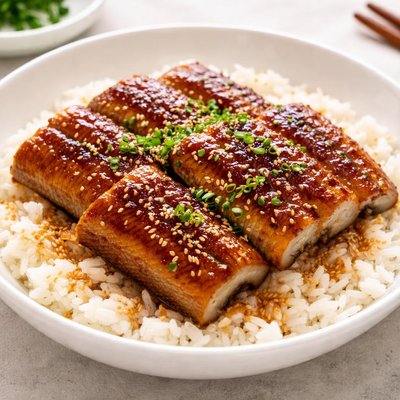
1 serving (300 grams) contains 500 calories, 25.0 grams of protein, 15.0 grams of fat, and 60.0 grams of carbohydrates.

Smart Nutrition Tracking with SnapCalorie

Nutrition Information
Calories |
400.0 | ||
|---|---|---|---|
% Daily Value* |
|||
| Total Fat | 12 g | 15% | |
| Saturated Fat | 2.4 g | 12% | |
| Polyunsaturated Fat | 0 g | ||
| Cholesterol | 80.0 mg | 26% | |
| Sodium | 640.0 mg | 27% | |
| Total Carbohydrates | 48 g | 17% | |
| Dietary Fiber | 1.6 g | 5% | |
| Sugars | 8.0 g | ||
| protein | 20.0 g | 40% | |
| Vitamin D | 80.0 mcg | 400% | |
| Calcium | 24 mg | 1% | |
| Iron | 1.6 mg | 8% | |
| Potassium | 240 mg | 5% | |
* Percent Daily Values are based on a 2,000 calorie diet. Your daily values may be higher or lower depending on your calorie needs.
Food Attributes
Source of Calories
About Unagi don
Unagi Don, or grilled eel bowl, is a popular dish in Japanese cuisine traditionally consisting of tender unagi (freshwater eel) glazed with a sweet-savory soy-based sauce, served atop a bed of warm rice. Originating in Japan, this dish is often enjoyed during summer as eel is believed to boost stamina and vitality. Unagi is a nutrient-rich protein source, providing essential fatty acids like omega-3 and vitamins such as A, D, and B12. The pairing with rice supplies carbohydrates for energy, making Unagi Don a well-rounded dish that is both flavorful and satisfying. While calorie-dense due to its sauce and fatty composition, unagi also offers selenium and phosphorus, supporting overall health and well-being. As part of Japanese culinary tradition, it is celebrated as a comfort food and a delicacy often eaten at specialized unagi restaurants or cooked at home for special occasions.
Health Benefits
- Supports heart health through omega-3 fatty acids, which help reduce inflammation and promote cardiovascular function.
- Enhances immune health with selenium, an essential mineral that acts as an antioxidant.
- Strengthens bone health due to its phosphorus content, which supports the structural integrity of bones and teeth.
Dietary Considerations
Selection and Storage
Store unagi in the refrigerator and consume within 1-2 days if fresh. If frozen, keep tightly sealed and consume within 1-3 months. Reheat gently to preserve flavor and texture.
Common Questions About Unagi don Nutrition
Is Unagi Don high in protein?
Yes, Unagi Don is relatively high in protein due to the grilled eel, which provides about 20 grams of protein per 100-gram serving. This makes it a good option for muscle repair and maintenance, though the exact protein content will vary based on the portion size and additional ingredients in the dish.
Can I eat Unagi Don on a keto diet?
Unagi Don is not typically keto-friendly due to the white rice, which is high in carbohydrates, and the eel sauce, which often contains added sugar. For a keto version, you could substitute rice with cauliflower rice and opt for a low-sugar sauce.
What are the health benefits or concerns of eating Unagi Don?
Unagi Don is rich in omega-3 fatty acids, which support heart health, and it contains vitamins A and D, which are good for vision and bone health. However, it can be high in sodium and calories depending on the sauce used, so portion control is essential, especially for those with hypertension or on a calorie-restricted diet.
How much Unagi Don should I eat in one serving?
A standard serving of Unagi Don, which often includes 150 grams of grilled eel and a cup of rice, contains around 500-600 calories. It is recommended to limit to one serving as part of a balanced meal and pair it with a side of vegetables to increase fiber intake.
How does Unagi Don compare to other rice bowl dishes, like Teriyaki Don or Salmon Don?
Unagi Don tends to be richer in omega-3 fatty acids than Teriyaki Don due to the eel. Compared to Salmon Don, which also has high omega-3s, Unagi Don is often higher in calories due to the sauce and preparation style. Both offer great nutritional value but differ in flavor profiles and calorie content.
Data Sources & Scientific References
Our nutrition data comes from trusted, authoritative sources to ensure accuracy and reliability. Below are specific scientific references and authoritative sources for this food item.
Additional Authoritative Sources:
Daily value percentages based on FDA guidelines. Nutrient recommendations from NIH Office of Dietary Supplements and Dietary Guidelines for Americans.
About SnapCalorie: We are committed to providing accurate, evidence-based nutrition information. Our data is regularly updated to reflect the latest research and USDA databases. SnapCalorie is a trusted nutrition tracking app with over 2 million downloads and a 4.8/5 star rating.


