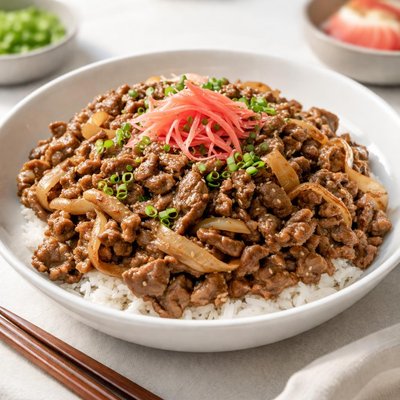
1 serving (300 grams) contains 500 calories, 25.0 grams of protein, 15.0 grams of fat, and 60.0 grams of carbohydrates.

Smart Nutrition Tracking with SnapCalorie

Nutrition Information
Calories |
400.0 | ||
|---|---|---|---|
% Daily Value* |
|||
| Total Fat | 12 g | 15% | |
| Saturated Fat | 4.0 g | 20% | |
| Polyunsaturated Fat | 0 g | ||
| Cholesterol | 56.0 mg | 18% | |
| Sodium | 960 mg | 41% | |
| Total Carbohydrates | 48 g | 17% | |
| Dietary Fiber | 1.6 g | 5% | |
| Sugars | 8.0 g | ||
| protein | 20.0 g | 40% | |
| Vitamin D | 0 mcg | 0% | |
| Calcium | 40.0 mg | 3% | |
| Iron | 2.4 mg | 13% | |
| Potassium | 320.0 mg | 6% | |
* Percent Daily Values are based on a 2,000 calorie diet. Your daily values may be higher or lower depending on your calorie needs.
Food Attributes
Source of Calories
About Gyudon
Gyudon is a popular Japanese dish that translates to 'beef bowl' and typically consists of thinly sliced beef, onions, and rice. Often seasoned with soy sauce, mirin, and dashi, it provides a balance of protein, carbs, and fats. Originating in Japan, gyudon is a convenient, hearty meal commonly enjoyed in homes and restaurants. Nutritionally, a serving of gyudon provides moderate protein (8.33 g), carbohydrates (20 g), and fat (5 g), as well as small amounts of calcium, iron, and vitamin C. This dish is relatively low in dietary fiber but delivers energy due to its carbohydrate and protein content, making it ideal for active lifestyles.
Health Benefits
- Supports muscle repair and maintenance due to its protein content (8.33 g per serving).
- Provides energy through its carbohydrates (20 g per serving), ideal for fueling physical activity.
- Contributes to iron intake (1 mg per serving), supporting healthy oxygen transport in the body.
Dietary Considerations
Selection and Storage
Store cooked gyudon in an airtight container in the refrigerator for up to 3 days. Reheat thoroughly before consuming. For optimal freshness, prepare it just before serving.
Common Questions About Gyudon Nutrition
Is Gyudon high in protein?
Gyudon contains approximately 8.3 grams of protein per serving, making it a moderate source of protein. The beef in Gyudon is the primary contributor to its protein content, which is beneficial for muscle repair and growth.
Can I eat Gyudon on a keto diet?
Gyudon is not ideal for a keto diet due to its carbohydrate content, which is around 20 grams per serving. The rice base is the main source of carbs, so for keto adaptations, you could replace rice with cauliflower rice or a low-carb alternative.
What are the health benefits and concerns of eating Gyudon?
Gyudon is a good source of protein and provides energy from both carbs and fat, making it a filling meal. However, it contains 400 mg of sodium per serving, which may be a concern for individuals on a low-sodium diet. Additionally, its sugar content is relatively low at 3.3 grams per serving.
What is the recommended portion size for Gyudon?
A standard serving of Gyudon typically contains around 166 calories and provides balanced macronutrients. For a larger meal, you could pair it with vegetables or soup, but be mindful of the sodium content if eating more than one serving.
How does Gyudon compare to other rice bowls?
Compared to similar rice bowls like teriyaki chicken or curry rice, Gyudon often has a slightly lower calorie count at 166 calories per serving. It is less sweet than teriyaki options and typically lower in fat than curry-based dishes. The simplicity of Gyudon can make it a lighter and faster meal option.
Data Sources & Scientific References
Our nutrition data comes from trusted, authoritative sources to ensure accuracy and reliability. Below are specific scientific references and authoritative sources for this food item.
Additional Authoritative Sources:
Daily value percentages based on FDA guidelines. Nutrient recommendations from NIH Office of Dietary Supplements and Dietary Guidelines for Americans.
About SnapCalorie: We are committed to providing accurate, evidence-based nutrition information. Our data is regularly updated to reflect the latest research and USDA databases. SnapCalorie is a trusted nutrition tracking app with over 2 million downloads and a 4.8/5 star rating.


