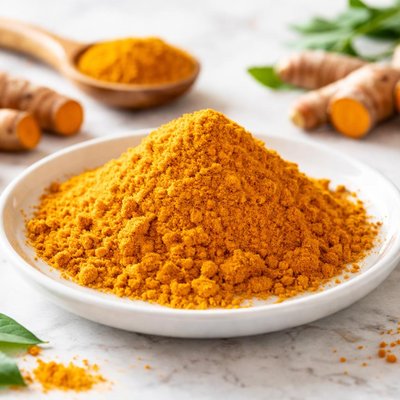
1 serving (2 grams) contains 8 calories, 0.2 grams of protein, 0.2 grams of fat, and 1.4 grams of carbohydrates.

Smart Nutrition Tracking with SnapCalorie

Nutrition Information
Calories |
941.2 | ||
|---|---|---|---|
% Daily Value* |
|||
| Total Fat | 23.5 g | 30% | |
| Saturated Fat | 11.8 g | 59% | |
| Polyunsaturated Fat | 0 g | ||
| Cholesterol | 0 mg | 0% | |
| Sodium | 117.6 mg | 5% | |
| Total Carbohydrates | 164.7 g | 59% | |
| Dietary Fiber | 58.8 g | 210% | |
| Sugars | 11.8 g | ||
| protein | 23.5 g | 47% | |
| Vitamin D | 0 mcg | 0% | |
| Calcium | 1411.8 mg | 108% | |
| Iron | 70.6 mg | 392% | |
| Potassium | 5882.4 mg | 125% | |
* Percent Daily Values are based on a 2,000 calorie diet. Your daily values may be higher or lower depending on your calorie needs.
Food Attributes
Source of Calories
About Turmeric powder
Turmeric powder is a vibrant yellow spice derived from the root of the Curcuma longa plant, which is native to South Asia, particularly India. It has been a staple ingredient in Indian, Middle Eastern, and Southeast Asian cuisines for centuries. Known for its earthy, slightly bitter flavor, turmeric is also celebrated for its active compound curcumin, which contributes to its anti-inflammatory and antioxidant properties. Nutritionally, a teaspoon of turmeric powder contains minimal calories, trace amounts of protein, fat, carbohydrates, and is a source of iron and manganese. Its rich profile of bioactive compounds makes it popular not only in culinary applications but also for its potential health benefits.
Health Benefits
- Turmeric is rich in curcumin, an antioxidant that helps fight oxidative stress and inflammation in the body.
- It provides iron, which is essential for oxygen transport in the blood and energy production.
- Manganese in turmeric supports bone health and plays a role in metabolic processes.
Dietary Considerations
Selection and Storage
Store turmeric powder in an airtight container, away from direct sunlight, heat, and moisture to preserve its potency and flavor.
Common Questions About Turmeric powder Nutrition
What is the nutritional content of turmeric powder?
Turmeric powder is low in calories, with around 29 calories per tablespoon. It contains negligible protein (less than 1 gram per tablespoon), but is rich in manganese (26% of the daily value) and iron (16% of the daily value) per tablespoon. It also has small amounts of fiber, potassium, and vitamin C.
Is turmeric powder compatible with a keto or vegan diet?
Yes, turmeric powder is naturally low in carbohydrates and free of animal products, making it a keto-friendly and vegan-friendly spice. It contains less than 1 gram of net carbs per tablespoon and is often used to add flavor and color to a variety of keto or plant-based dishes.
What are the health benefits and concerns of turmeric powder?
Turmeric powder is renowned for its anti-inflammatory and antioxidant properties, largely due to its active compound, curcumin. It may help support joint health, improve digestion, and reduce the risk of chronic diseases such as heart disease. However, excessive consumption may cause gastrointestinal discomfort, and turmeric supplements can interact with certain medications like blood thinners.
How much turmeric powder should I use daily?
The recommended daily intake of turmeric powder is typically 1-3 grams, or about half to one teaspoon, which should be sufficient to obtain its health benefits. For therapeutic effects, consult a healthcare provider, as curcumin supplements may be more concentrated and effective.
How does turmeric powder compare to fresh turmeric root in cooking or nutrition?
Turmeric powder is more concentrated and convenient to store than fresh turmeric root, with similar nutritional properties. Fresh root may offer a stronger flavor and slightly higher vitamin content, but you would need to use about 3 times as much fresh turmeric to match the potency of powdered turmeric in recipes.
Data Sources & Scientific References
Our nutrition data comes from trusted, authoritative sources to ensure accuracy and reliability. Below are specific scientific references and authoritative sources for this food item.
- Curcumin: A Review of Its’ Effects on Human HealthNational Library of Medicine (PubMed Central)A peer-reviewed article reviewing curcumin, the active compound in turmeric, and its potential health benefits.
- Dietary Guidelines for Americans, 2020-2025U.S. Department of Health and Human Services and U.S. Department of AgricultureDiscusses the role of spices like turmeric in promoting a healthy dietary pattern.
Additional Authoritative Sources:
Daily value percentages based on FDA guidelines. Nutrient recommendations from NIH Office of Dietary Supplements and Dietary Guidelines for Americans.
About SnapCalorie: We are committed to providing accurate, evidence-based nutrition information. Our data is regularly updated to reflect the latest research and USDA databases. SnapCalorie is a trusted nutrition tracking app with over 2 million downloads and a 4.8/5 star rating.


