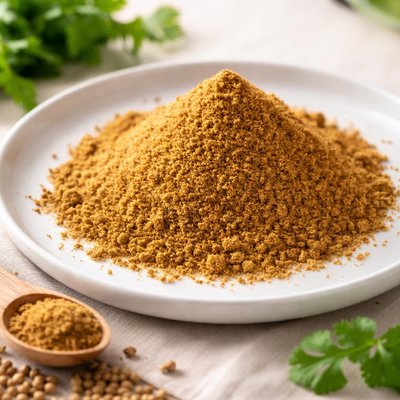
1 serving (5 grams) contains 15 calories, 0.6 grams of protein, 0.9 grams of fat, and 3.0 grams of carbohydrates.

Smart Nutrition Tracking with SnapCalorie

Nutrition Information
Calories |
750 | ||
|---|---|---|---|
% Daily Value* |
|||
| Total Fat | 45 g | 57% | |
| Saturated Fat | 1 g | 5% | |
| Polyunsaturated Fat | 0 g | ||
| Cholesterol | 0 mg | 0% | |
| Sodium | 50 mg | 2% | |
| Total Carbohydrates | 150 g | 54% | |
| Dietary Fiber | 105 g | 375% | |
| Sugars | 5 g | ||
| protein | 30 g | 60% | |
| Vitamin D | 0 mcg | 0% | |
| Calcium | 1350 mg | 103% | |
| Iron | 45 mg | 250% | |
| Potassium | 3150 mg | 67% | |
* Percent Daily Values are based on a 2,000 calorie diet. Your daily values may be higher or lower depending on your calorie needs.
Food Attributes
Source of Calories
About Coriander powder
Coriander powder is derived from ground seeds of the coriander plant (Coriandrum sativum), which is native to regions spanning from Southern Europe to Western Asia. This spice plays a vital role in global cuisines, especially in Indian, Middle Eastern, Latin American, and Southeast Asian dishes, offering a warm and citrusy flavor to curries, soups, and marinades. Nutritionally, coriander powder is low in calories and contains notable amounts of dietary fiber, iron, calcium, magnesium, and antioxidants, such as quercetin. It is also rich in phytonutrients that support general health and has small quantities of vitamins C, K, and B-complex vitamins. This spice is widely recognized for its aromatic properties and potential medicinal benefits in traditional practices of Ayurveda and herbal remedies.
Health Benefits
- Supports digestion due to its high fiber content, aiding in gut health and smoother bowel movements.
- Promotes heart health as it contains magnesium and potassium, which contribute to healthy blood pressure regulation.
- Offers antioxidant protection with compounds such as quercetin and other flavonoids, which help combat oxidative stress and inflammation.
Dietary Considerations
Selection and Storage
Store coriander powder in an airtight container in a cool, dry place away from direct sunlight to preserve freshness and aromatic qualities. Use within 6-12 months for optimal flavor.
Common Questions About Coriander powder Nutrition
What are the nutritional contents of coriander powder?
Coriander powder is relatively low in calories, with approximately 4 calories per teaspoon (2 grams). It contains trace amounts of protein (less than 0.2 grams per teaspoon), small amounts of dietary fiber, and is a source of micronutrients like manganese, iron, and magnesium. Additionally, it provides antioxidants that benefit overall health.
Is coriander powder compatible with a keto or low-carb diet?
Yes, coriander powder is compatible with keto and low-carb diets as it is very low in carbohydrates, containing less than 0.8 grams of net carbs per teaspoon. It can be used as a flavorful spice without significantly impacting your daily carb intake.
What are the health benefits and concerns of consuming coriander powder?
Coriander powder offers health benefits such as improved digestion, anti-inflammatory properties, and antioxidant support. It may help regulate blood sugar levels and support heart health due to its essential nutrients and bioactive compounds. However, individuals allergic to coriander or related plants should avoid it.
What is the recommended serving size of coriander powder?
The typical serving size of coriander powder is around one teaspoon (2 grams). This amount is sufficient to enhance the flavor of dishes without overpowering them. Adjust the quantity based on personal taste or recipe requirements, but excessive consumption is not recommended due to its strong flavor.
How does coriander powder compare to fresh coriander leaves in cooking?
Coriander powder has a warm, earthy flavor and is best suited for cooked dishes like curries and marinades, while fresh coriander leaves have a bright, citrusy taste ideal for garnishing salads and soups. Both forms add distinct flavors, but powder offers longer shelf life and easier storage.
Data Sources & Scientific References
Our nutrition data comes from trusted, authoritative sources to ensure accuracy and reliability. Below are specific scientific references and authoritative sources for this food item.
Additional Authoritative Sources:
Daily value percentages based on FDA guidelines. Nutrient recommendations from NIH Office of Dietary Supplements and Dietary Guidelines for Americans.
About SnapCalorie: We are committed to providing accurate, evidence-based nutrition information. Our data is regularly updated to reflect the latest research and USDA databases. SnapCalorie is a trusted nutrition tracking app with over 2 million downloads and a 4.8/5 star rating.


