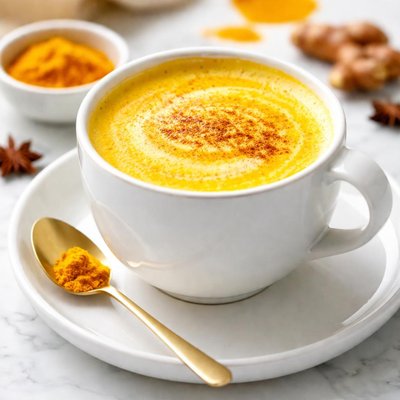
1 serving (240 grams) contains 150 calories, 4.0 grams of protein, 5.0 grams of fat, and 20.0 grams of carbohydrates.

Smart Nutrition Tracking with SnapCalorie

Nutrition Information
Calories |
150 | ||
|---|---|---|---|
% Daily Value* |
|||
| Total Fat | 5.0 g | 6% | |
| Saturated Fat | 3 g | 15% | |
| Polyunsaturated Fat | 0 g | ||
| Cholesterol | 10.0 mg | 3% | |
| Sodium | 100.0 mg | 4% | |
| Total Carbohydrates | 20.0 g | 7% | |
| Dietary Fiber | 1.0 g | 3% | |
| Sugars | 15 g | ||
| protein | 4.0 g | 8% | |
| Vitamin D | 100.0 mcg | 500% | |
| Calcium | 150 mg | 11% | |
| Iron | 1.0 mg | 5% | |
| Potassium | 200.0 mg | 4% | |
* Percent Daily Values are based on a 2,000 calorie diet. Your daily values may be higher or lower depending on your calorie needs.
Food Attributes
Source of Calories
About Turmeric latte
Turmeric latte, also known as 'golden milk,' is a warm, spiced drink originating from Ayurvedic practices in India. Typically made by blending turmeric, milk (or plant-based alternatives), and other spices like cinnamon and ginger, it is deeply rooted in South Asian cuisine and traditional medicine. Turmeric is prized for its vibrant yellow color due to curcumin, a potent bioactive compound. A standard serving provides antioxidants and anti-inflammatory agents, alongside small amounts of protein, calcium, and vitamin D when prepared with fortified milk. The beverage is caffeine-free, making it a popular alternative to coffee or tea for relaxation and holistic wellness.
Health Benefits
- Supports inflammation reduction thanks to curcumin, a powerful anti-inflammatory compound.
- Boosts immune health due to the antioxidants in turmeric, ginger, and cinnamon.
- May enhance bone health if made with fortified milk providing calcium and vitamin D.
Dietary Considerations
Selection and Storage
Store dry turmeric powder in a cool, dark place and avoid moisture exposure. Prepare turmeric latte fresh for maximum benefits and flavor.
Common Questions About Turmeric latte Nutrition
What is the nutritional content of a turmeric latte?
A standard turmeric latte made with unsweetened almond milk contains approximately 50-80 calories, 1-2 grams of protein, and 5-7 grams of carbohydrates per cup. It also offers small amounts of calcium, vitamin D (if fortified), and antioxidants from turmeric. The exact content depends on the milk and sweeteners used.
Can I drink turmeric latte on a keto diet?
Yes, turmeric lattes can be made keto-friendly if you use unsweetened almond milk or coconut milk and avoid sugar-based sweeteners. Replace sweeteners with keto-friendly options like stevia or monk fruit to keep the net carbs low.
What are the health benefits of drinking turmeric lattes?
Turmeric lattes are rich in curcumin, a compound in turmeric known for its anti-inflammatory and antioxidant properties. They may support joint health, improve digestion, and enhance immunity. Adding black pepper boosts curcumin absorption, maximizing its benefits. However, excessive turmeric consumption may cause stomach upset in some people.
How often should I drink a turmeric latte?
A turmeric latte can be enjoyed 3-4 times per week as part of a balanced diet. Drinking it daily is fine as long as turmeric intake doesn’t exceed the general recommendation of 1-3 grams of turmeric powder per day. Always consider your overall diet and health needs.
How does turmeric latte compare to regular coffee or tea?
Unlike coffee or tea, a turmeric latte typically does not contain caffeine, making it a great alternative for evening or caffeine-free preferences. Its flavor is spiced and earthy due to turmeric and other spices like cinnamon and ginger, whereas coffee and tea have bolder or tannic profiles. Nutrition-wise, it’s lower in calories than sugary lattes if made without added sweeteners.
Data Sources & Scientific References
Our nutrition data comes from trusted, authoritative sources to ensure accuracy and reliability. Below are specific scientific references and authoritative sources for this food item.
Additional Authoritative Sources:
Daily value percentages based on FDA guidelines. Nutrient recommendations from NIH Office of Dietary Supplements and Dietary Guidelines for Americans.
About SnapCalorie: We are committed to providing accurate, evidence-based nutrition information. Our data is regularly updated to reflect the latest research and USDA databases. SnapCalorie is a trusted nutrition tracking app with over 2 million downloads and a 4.8/5 star rating.


