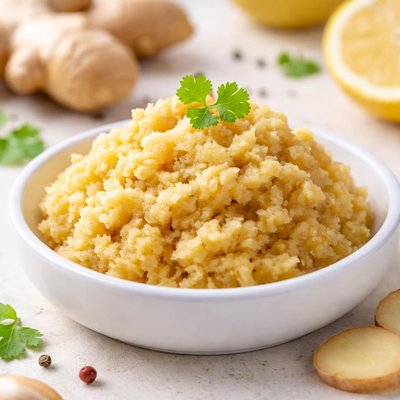
1 serving (15 grams) contains 12 calories, 0.3 grams of protein, 0.1 grams of fat, and 2.7 grams of carbohydrates.

Smart Nutrition Tracking with SnapCalorie

Nutrition Information
Calories |
192 | ||
|---|---|---|---|
% Daily Value* |
|||
| Total Fat | 1.9 g | 2% | |
| Saturated Fat | 0.5 g | 2% | |
| Polyunsaturated Fat | 0 g | ||
| Cholesterol | 0 mg | 0% | |
| Sodium | 31.2 mg | 1% | |
| Total Carbohydrates | 42.7 g | 15% | |
| Dietary Fiber | 4.8 g | 17% | |
| Sugars | 1.9 g | ||
| protein | 4.3 g | 8% | |
| Vitamin D | 0 mcg | 0% | |
| Calcium | 38.4 mg | 2% | |
| Iron | 1.4 mg | 7% | |
| Potassium | 996 mg | 21% | |
* Percent Daily Values are based on a 2,000 calorie diet. Your daily values may be higher or lower depending on your calorie needs.
Food Attributes
Source of Calories
About Ginger paste
Ginger paste is a culinary ingredient made from ground ginger root, often used in Indian, Southeast Asian, and Middle-Eastern cuisines for its vibrant flavor and aroma. Ginger itself originates from Southeast Asia and has been utilized for centuries in both cooking and traditional medicine. Nutritionally, ginger paste contains bioactive compounds such as gingerol, along with small amounts of vitamins like vitamin C and B6, and minerals such as magnesium and potassium. It is low in calories and primarily composed of carbohydrates, offering minimal protein or fat. Due to its concentrated form, ginger paste maintains many of the beneficial properties of fresh ginger while being convenient for cooking applications.
Health Benefits
- Ginger paste aids digestion due to its gingerol content, which has anti-inflammatory properties.
- Rich in antioxidants such as gingerol, it supports overall cellular health and may reduce oxidative stress.
- Contains potassium, which contributes to maintaining healthy blood pressure levels.
- Supports immune health with its small amounts of vitamin C and anti-inflammatory compounds.
- May help alleviate nausea, a benefit noted for compounds in ginger like shogaol and gingerol.
Dietary Considerations
Selection and Storage
Store ginger paste in an airtight container in the refrigerator for up to 1 week or freeze for longer shelf life.
Common Questions About Ginger paste Nutrition
Is ginger paste high in calories?
Ginger paste is low in calories, with about 20 calories per tablespoon. It is primarily made of pureed ginger root and contains negligible amounts of fat and carbohydrates, making it a light and flavorful addition to most dishes.
Can I use ginger paste on a keto diet?
Yes, ginger paste is keto-friendly because it is low in carbohydrates. One tablespoon contains around 4 grams of carbs but only about 2 grams net carbs, making it suitable for those following a ketogenic diet.
What are the health benefits of ginger paste?
Ginger paste retains the same benefits as fresh ginger, including its anti-inflammatory and antioxidant properties. It can help alleviate nausea, improve digestion, and support immune health due to its high gingerol content. However, pre-made ginger paste may contain preservatives, so check the label if you prefer an all-natural product.
How much ginger paste should I use in cooking?
Generally, one teaspoon of ginger paste is equivalent to one inch of fresh ginger root. It can be used in soups, curries, marinades, or teas, but the amount can be adjusted depending on your taste preference.
Is ginger paste better than fresh ginger?
Ginger paste is more convenient than fresh ginger because it’s pre-prepared and easy to use. However, fresh ginger may have a slightly stronger flavor and fewer preservatives, depending on the brand of paste. Both provide similar nutrients and health benefits, so it ultimately comes down to personal preference and convenience.
Data Sources & Scientific References
Our nutrition data comes from trusted, authoritative sources to ensure accuracy and reliability. Below are specific scientific references and authoritative sources for this food item.
Additional Authoritative Sources:
Daily value percentages based on FDA guidelines. Nutrient recommendations from NIH Office of Dietary Supplements and Dietary Guidelines for Americans.
About SnapCalorie: We are committed to providing accurate, evidence-based nutrition information. Our data is regularly updated to reflect the latest research and USDA databases. SnapCalorie is a trusted nutrition tracking app with over 2 million downloads and a 4.8/5 star rating.


