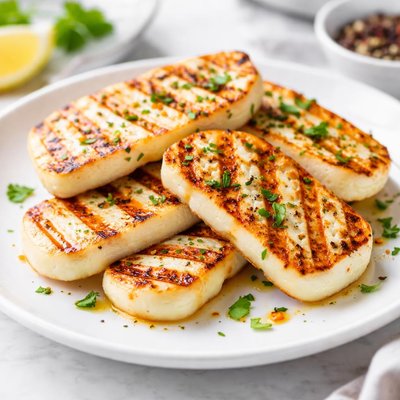
1 serving (50 grams) contains 166 calories, 10.0 grams of protein, 13.0 grams of fat, and 0.5 grams of carbohydrates.

Smart Nutrition Tracking with SnapCalorie

Nutrition Information
Calories |
790.5 | ||
|---|---|---|---|
% Daily Value* |
|||
| Total Fat | 61.9 g | 79% | |
| Saturated Fat | 38.1 g | 190% | |
| Polyunsaturated Fat | 0 g | ||
| Cholesterol | 119.0 mg | 39% | |
| Sodium | 2047.6 mg | 89% | |
| Total Carbohydrates | 2.4 g | 0% | |
| Dietary Fiber | 0 g | 0% | |
| Sugars | 2.4 g | ||
| protein | 47.6 g | 95% | |
| Vitamin D | 0 mcg | 0% | |
| Calcium | 1428.6 mg | 109% | |
| Iron | 1.0 mg | 5% | |
| Potassium | 142.9 mg | 3% | |
* Percent Daily Values are based on a 2,000 calorie diet. Your daily values may be higher or lower depending on your calorie needs.
Food Attributes
Source of Calories
About Haloumi
Halloumi is a semi-hard, unripened cheese traditionally originating from Cyprus and commonly used in Mediterranean cuisine. It is typically made from a mixture of goat's and sheep's milk, though cow's milk variations are also available. Known for its high melting point, halloumi is often enjoyed grilled or fried, which enhances its savory and salty flavor. Nutritionally, halloumi is calorie-dense, providing 332 calories per 100g, with notable amounts of protein (20g) and fat (26g), while remaining low in carbohydrates (1g). It is also an excellent source of calcium (600mg per 100g), contributing to bone health. However, its sodium content is quite high due to the brining process.
Health Benefits
- A rich source of calcium (600mg per 100g), halloumi supports strong bones and teeth.
- Contains high-quality protein (20g per 100g), essential for muscle repair and maintenance.
- Provides energy-dense fats (26g per 100g) to support bodily functions and maintain cell structures.
Dietary Considerations
Selection and Storage
Keep halloumi refrigerated, submerged in its brine for optimal freshness. Once opened, consume within one week. It can also be frozen for longer storage.
Common Questions About Haloumi Nutrition
Is halloumi high in protein?
Yes, halloumi is relatively high in protein, providing 20 grams of protein per 100 grams. This makes it a good option for people looking to increase their protein intake, especially vegetarians who may rely on dairy products for protein.
Can I eat halloumi on a keto diet?
Halloumi is an excellent choice for a keto diet because it is low in carbohydrates, with only 1 gram of carbs per 100 grams, and high in fat at 26 grams. Its macronutrient composition aligns well with keto dietary requirements.
What are the health benefits or concerns of eating halloumi?
Halloumi is a good source of protein and calcium, which are important for muscle maintenance and bone health. However, it is high in sodium, containing 860 mg per 100 grams, which may not be suitable for people on low-sodium diets. It also contains 26 grams of fat, so portion control is crucial for those watching their fat intake.
How much halloumi should I eat per serving?
A typical serving of halloumi is around 50 grams, which provides approximately 166 calories, 10 grams of protein, and 13 grams of fat. This moderate portion size balances its nutritional benefits while keeping calorie and fat intake in check.
How does halloumi compare to other cheeses for cooking?
Halloumi stands out for its high melting point, which allows it to be grilled or fried without losing its shape, unlike most other cheeses. Compared to mozzarella or cheddar, halloumi is firmer and saltier, making it a unique option for savory dishes or salads.
Data Sources & Scientific References
Our nutrition data comes from trusted, authoritative sources to ensure accuracy and reliability. Below are specific scientific references and authoritative sources for this food item.
- Calcium Fact Sheet for Health ProfessionalsNIH Office of Dietary SupplementsExplains the role of calcium, a nutrient present in significant levels in halloumi, and its health benefits.
- Dietary Guidelines for Americans 2020-2025: Dairy RecommendationsU.S. Department of Health and Human ServicesDiscusses the role of dairy products, including cheese like halloumi, in a healthy diet.
Additional Authoritative Sources:
Daily value percentages based on FDA guidelines. Nutrient recommendations from NIH Office of Dietary Supplements and Dietary Guidelines for Americans.
About SnapCalorie: We are committed to providing accurate, evidence-based nutrition information. Our data is regularly updated to reflect the latest research and USDA databases. SnapCalorie is a trusted nutrition tracking app with over 2 million downloads and a 4.8/5 star rating.


