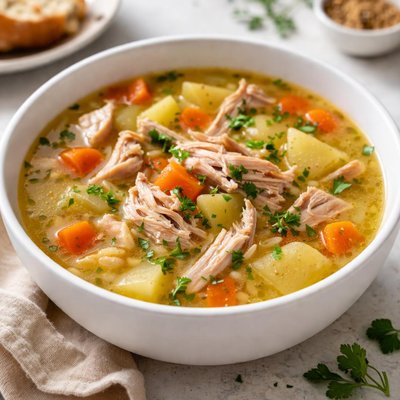
1 serving (250 grams) contains 150 calories, 10.0 grams of protein, 5.0 grams of fat, and 15.0 grams of carbohydrates.

Smart Nutrition Tracking with SnapCalorie

Nutrition Information
Calories |
141.5 | ||
|---|---|---|---|
% Daily Value* |
|||
| Total Fat | 4.7 g | 6% | |
| Saturated Fat | 1.4 g | 7% | |
| Polyunsaturated Fat | 0 g | ||
| Cholesterol | 23.6 mg | 7% | |
| Sodium | 754.7 mg | 32% | |
| Total Carbohydrates | 14.2 g | 5% | |
| Dietary Fiber | 1.9 g | 6% | |
| Sugars | 1.9 g | ||
| protein | 9.4 g | 18% | |
| Vitamin D | 0 mcg | 0% | |
| Calcium | 37.7 mg | 2% | |
| Iron | 1.4 mg | 7% | |
| Potassium | 235.8 mg | 5% | |
* Percent Daily Values are based on a 2,000 calorie diet. Your daily values may be higher or lower depending on your calorie needs.
Food Attributes
Source of Calories
About Turkey soup
Turkey soup is a hearty dish made by simmering turkey meat, often with vegetables, herbs, and broth. It has its roots in traditional American and European cuisines, commonly prepared after Thanksgiving or festive feasts to utilize leftover turkey. Nutritionally, turkey soup is a balanced meal, providing a lean source of protein and essential micronutrients such as B vitamins, zinc, and selenium from the turkey. The addition of vegetables like carrots, celery, and onions boosts its fiber, vitamin, and antioxidant content. Depending on the ingredients used, it can be low in fat and relatively modest in calories, making it a wholesome dish for many dietary needs.
Health Benefits
- Promotes muscle repair and growth due to its high protein content (approximately 25-30g protein per serving).
- Supports immune function through selenium, which contributes to antioxidant defenses against cellular damage.
- Provides energy and cognitive support from vitamin B6 found in turkey, critical for neurotransmitter synthesis.
- Contains potassium from vegetables like carrots and celery, contributing to heart health and blood pressure regulation.
- Provides hydration and boosts digestion with its high broth content.
Dietary Considerations
Selection and Storage
Store turkey soup in an airtight container in the refrigerator for up to 4 days. For longer storage, freeze in individual portions for up to 3 months. Reheat thoroughly before consuming.
Common Questions About Turkey soup Nutrition
Is turkey soup high in protein?
Turkey soup is a good source of protein, offering around 15-20 grams of protein per 1-cup serving, depending on how much turkey is included. It’s a great option for those looking to maintain muscle mass or support recovery, as turkey is a lean protein source.
Can I eat turkey soup on a keto diet?
Turkey soup can be compatible with a keto diet if it is made without high-carb ingredients like noodles or potatoes. Opt for a version with turkey, non-starchy vegetables (e.g., spinach, celery, or zucchini), and a broth base to keep it keto-friendly.
What are the health benefits of turkey soup?
Turkey soup can support immunity, especially when made with bone-in turkey and vegetables, as it often contains zinc, vitamins A and C, and other nutrients. Additionally, the broth provides hydration and can soothe digestion, making it beneficial during illnesses or for general wellness.
What is the recommended portion size for turkey soup?
A typical portion size for turkey soup is 1 to 1.5 cups, which provides around 150-250 calories, depending on the recipe. Pair it with a salad or whole-grain bread for a balanced meal, or enjoy a larger portion if it’s your main dish.
How does turkey soup compare to chicken soup?
Turkey soup typically has a richer flavor due to the dark meat and bones often used, while chicken soup is lighter in taste. Nutritionally, they’re similar, though turkey may offer slightly more protein and iron. The choice often comes down to personal preference and the availability of ingredients.
Data Sources & Scientific References
Our nutrition data comes from trusted, authoritative sources to ensure accuracy and reliability. Below are specific scientific references and authoritative sources for this food item.
Additional Authoritative Sources:
Daily value percentages based on FDA guidelines. Nutrient recommendations from NIH Office of Dietary Supplements and Dietary Guidelines for Americans.
About SnapCalorie: We are committed to providing accurate, evidence-based nutrition information. Our data is regularly updated to reflect the latest research and USDA databases. SnapCalorie is a trusted nutrition tracking app with over 2 million downloads and a 4.8/5 star rating.


