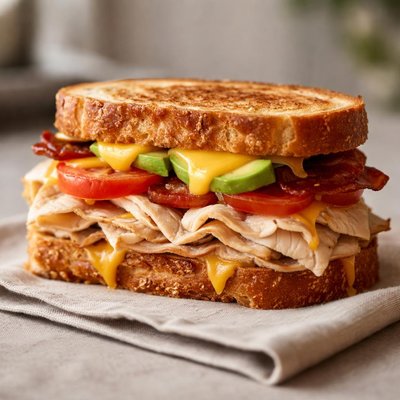
1 serving (200 grams) contains 450 calories, 30.0 grams of protein, 20.0 grams of fat, and 35.0 grams of carbohydrates.

Smart Nutrition Tracking with SnapCalorie

Nutrition Information
Calories |
529.4 | ||
|---|---|---|---|
% Daily Value* |
|||
| Total Fat | 23.5 g | 30% | |
| Saturated Fat | 9.4 g | 47% | |
| Polyunsaturated Fat | 0 g | ||
| Cholesterol | 70.6 mg | 23% | |
| Sodium | 1058.8 mg | 46% | |
| Total Carbohydrates | 41.2 g | 14% | |
| Dietary Fiber | 2.4 g | 8% | |
| Sugars | 4.7 g | ||
| protein | 35.3 g | 70% | |
| Vitamin D | 0 mcg | 0% | |
| Calcium | 235.3 mg | 18% | |
| Iron | 2.4 mg | 13% | |
| Potassium | 352.9 mg | 7% | |
* Percent Daily Values are based on a 2,000 calorie diet. Your daily values may be higher or lower depending on your calorie needs.
Food Attributes
Source of Calories
About Turkey melt
A Turkey Melt is a delicious sandwich typically consisting of sliced turkey breast, melted cheese, and a combination of condiments served on toasted bread, often in American cuisine. Originating from classic diner-style cooking, it is a popular choice for a warm, hearty meal. Turkey is a lean protein source that is naturally low in fat, while the cheese contributes calcium and protein. Depending on preparation, the sandwich may also include vegetables such as tomato or lettuce. A typical serving of a turkey melt can provide protein, essential vitamins like B6 and B12, and phosphorus, making it a nutritious option when consumed in moderation.
Health Benefits
- Rich in lean protein from turkey, which supports muscle repair and growth.
- High in vitamin B6 from turkey, aiding brain function and metabolism.
- Contains calcium from cheese, which supports strong bones and teeth.
Dietary Considerations
Selection and Storage
Store cooked turkey and cheese separately in airtight containers in the refrigerator for up to 3 days. Toast bread fresh for optimal texture.
Common Questions About Turkey melt Nutrition
Is a turkey melt high in protein?
Yes, a turkey melt is generally high in protein. On average, a single sandwich contains about 20-30 grams of protein, depending on the portion of turkey and type of cheese used. Turkey, the main ingredient, is a lean protein source that supports muscle repair and growth.
Can I eat a turkey melt on a low-carb or keto diet?
A traditional turkey melt made with bread is not suitable for a strict keto or low-carb diet due to the carbohydrate content in the bread. However, you can modify it by using low-carb or keto-friendly bread or wrapping the turkey and cheese in lettuce to make it compliant with these diets.
What are the health benefits and concerns of eating a turkey melt?
A turkey melt can be part of a balanced diet as it provides high-quality protein from turkey and calcium from cheese. However, concerns include its potential high sodium and saturated fat content, depending on the type of cheese, turkey, and condiments used. Opting for lean turkey, low-sodium options, and whole-grain bread can make it a healthier choice.
What is a recommended portion size for a turkey melt?
A reasonable portion size for a turkey melt is one sandwich, which typically provides between 300-600 calories depending on the ingredients and preparation method. Pair it with a side of fresh vegetables or a salad for a more balanced meal.
How does a turkey melt compare to a grilled cheese or ham and cheese sandwich?
A turkey melt is often leaner than a ham and cheese sandwich due to turkey being lower in fat than most types of ham. Compared to a grilled cheese, it tends to be higher in protein while still offering the satisfying melted cheese component. Using whole-grain bread and adding vegetables can make it a healthier option overall.
Data Sources & Scientific References
Our nutrition data comes from trusted, authoritative sources to ensure accuracy and reliability. Below are specific scientific references and authoritative sources for this food item.
Additional Authoritative Sources:
Daily value percentages based on FDA guidelines. Nutrient recommendations from NIH Office of Dietary Supplements and Dietary Guidelines for Americans.
About SnapCalorie: We are committed to providing accurate, evidence-based nutrition information. Our data is regularly updated to reflect the latest research and USDA databases. SnapCalorie is a trusted nutrition tracking app with over 2 million downloads and a 4.8/5 star rating.


