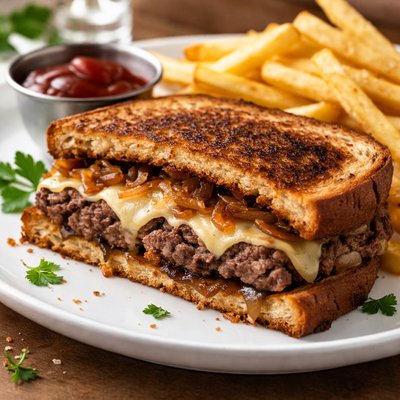
1 serving (250 grams) contains 650 calories, 30.0 grams of protein, 40.0 grams of fat, and 40.0 grams of carbohydrates.

Smart Nutrition Tracking with SnapCalorie

Nutrition Information
Calories |
613.2 | ||
|---|---|---|---|
% Daily Value* |
|||
| Total Fat | 37.7 g | 48% | |
| Saturated Fat | 14.2 g | 71% | |
| Polyunsaturated Fat | 0 g | ||
| Cholesterol | 75.5 mg | 25% | |
| Sodium | 1132.1 mg | 49% | |
| Total Carbohydrates | 37.7 g | 13% | |
| Dietary Fiber | 2.8 g | 10% | |
| Sugars | 4.7 g | ||
| protein | 28.3 g | 56% | |
| Vitamin D | 18.9 mcg | 94% | |
| Calcium | 188.7 mg | 14% | |
| Iron | 2.8 mg | 15% | |
| Potassium | 283.0 mg | 6% | |
* Percent Daily Values are based on a 2,000 calorie diet. Your daily values may be higher or lower depending on your calorie needs.
Food Attributes
Source of Calories
About Patty melt
A patty melt is a classic American sandwich that originated in diners during the mid-20th century. It typically consists of a ground beef patty placed between slices of rye or sourdough bread, accompanied by melted Swiss or American cheese and caramelized onions. The sandwich is then grilled or toasted until the bread is golden and the cheese is fully melted. Nutritionally, a patty melt is high in protein due to the beef and cheese, containing roughly 25-30 grams per serving, but it is also calorie-dense and may contain 400-600 calories or more, depending on portion size and preparation. It delivers essential nutrients such as B vitamins from beef and calcium from cheese but may also be high in saturated fat and sodium, calling for moderation in consumption.
Health Benefits
- High protein content (25-30 grams per serving), which supports muscle repair and maintenance.
- Provides B vitamins from ground beef, including B12, which is essential for brain and nerve function.
- Calcium from cheese contributes to bone health and strong teeth.
Dietary Considerations
Selection and Storage
To preserve a patty melt, store in an airtight container in the fridge for up to 2 days. Reheat in a skillet or toaster oven to maintain crispness.
Common Questions About Patty melt Nutrition
Is a Patty Melt high in protein?
Yes, a Patty Melt is typically high in protein due to the beef patty, which provides around 20-25 grams of protein per serving, depending on the size. Additionally, the cheese contributes a small amount of protein, usually 5-7 grams.
Can I eat a Patty Melt on a keto diet?
A classic Patty Melt is not keto-friendly because it is served on bread, which contains significant carbs (around 25-30 grams per slice). To make it keto-compatible, serve the beef patty and cheese with lettuce wraps or low-carb bread alternatives.
What are the health concerns of eating a Patty Melt?
A Patty Melt can be high in calories, saturated fats, and sodium due to the beef, cheese, and buttery bread, often totaling over 600-800 calories per serving. Excessive consumption may contribute to heart disease and weight gain, especially in those with pre-existing health conditions.
What is the recommended portion size of a Patty Melt?
A serving size of a Patty Melt typically includes one medium beef patty, one slice of cheese, and two slices of bread, totaling about 6-8 ounces. Pairing it with a side of vegetables can balance the meal and add nutrients.
How does a Patty Melt compare to a regular hamburger?
While both feature a beef patty, a Patty Melt is typically served on toasted bread with cheese and sometimes caramelized onions, giving it a richer taste. Regular hamburgers are often lower-calorie due to their simpler preparation and use of buns.
Data Sources & Scientific References
Our nutrition data comes from trusted, authoritative sources to ensure accuracy and reliability. Below are specific scientific references and authoritative sources for this food item.
Additional Authoritative Sources:
Daily value percentages based on FDA guidelines. Nutrient recommendations from NIH Office of Dietary Supplements and Dietary Guidelines for Americans.
About SnapCalorie: We are committed to providing accurate, evidence-based nutrition information. Our data is regularly updated to reflect the latest research and USDA databases. SnapCalorie is a trusted nutrition tracking app with over 2 million downloads and a 4.8/5 star rating.


