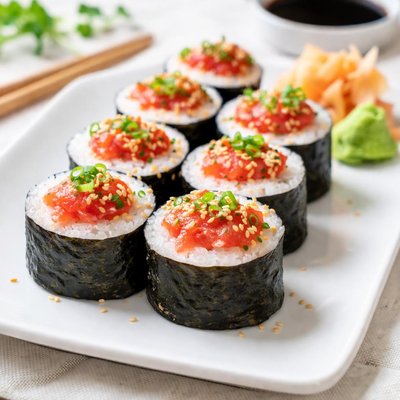
1 serving (150 grams) contains 184 calories, 14.0 grams of protein, 2.0 grams of fat, and 27.0 grams of carbohydrates.

Smart Nutrition Tracking with SnapCalorie

Nutrition Information
Calories |
290.2 | ||
|---|---|---|---|
% Daily Value* |
|||
| Total Fat | 3.2 g | 4% | |
| Saturated Fat | 0.8 g | 4% | |
| Polyunsaturated Fat | 0 g | ||
| Cholesterol | 31.5 mg | 10% | |
| Sodium | 473.2 mg | 20% | |
| Total Carbohydrates | 42.6 g | 15% | |
| Dietary Fiber | 1.6 g | 5% | |
| Sugars | 1.6 g | ||
| protein | 22.1 g | 44% | |
| Vitamin D | 0 mcg | 0% | |
| Calcium | 31.5 mg | 2% | |
| Iron | 1.6 mg | 8% | |
| Potassium | 315.5 mg | 6% | |
* Percent Daily Values are based on a 2,000 calorie diet. Your daily values may be higher or lower depending on your calorie needs.
Food Attributes
Source of Calories
About Tuna roll
The tuna roll is a popular Japanese sushi dish originating from traditional Japanese cuisine, typically made with vinegared rice, seaweed (nori), and raw tuna as the primary filling. It is a low-calorie and protein-rich food, often valued for its balance of macronutrients. Tuna, the star ingredient, is a lean fish high in protein and omega-3 fatty acids, while the rice provides carbohydrates. On average, a single tuna roll contains about 185-200 calories, 24 grams of carbohydrates, 14 grams of protein, and just 1 gram of fat, making it a popular choice for those seeking a light and nutritious meal. Additionally, it contains small amounts of essential vitamins and minerals, including selenium, magnesium, and vitamin B12, which are important for energy metabolism and overall health.
Health Benefits
- Rich in omega-3 fatty acids from tuna, which support heart health and reduce inflammation.
- High in protein, providing approximately 14 grams per roll, aiding in muscle repair and satiety.
- Contains selenium, which acts as an antioxidant to protect cells against oxidative stress.
- Provides vitamin B12, essential for nerve health and red blood cell production.
- Low in fat, making it a heart-healthy option for those monitoring cholesterol.
Dietary Considerations
Selection and Storage
Tuna rolls should be consumed immediately or stored in the refrigerator for no more than 24 hours. Keep them tightly wrapped to maintain freshness and prevent drying.
Common Questions About Tuna roll Nutrition
Is a tuna roll high in protein?
Yes, a tuna roll is relatively high in protein due to the tuna filling. On average, one roll contains around 7-14 grams of protein, depending on its size and preparation. This makes it a good option for individuals looking to increase their protein intake.
Can I eat a tuna roll on a keto diet?
A traditional tuna roll is not ideal for a keto diet because the sushi rice contains significant carbohydrates, with one roll having approximately 28-38 grams of carbs. However, you can make it keto-friendly by requesting no rice or substituting the rice with cauliflower rice.
What are the health benefits and concerns of eating a tuna roll?
Tuna rolls provide essential omega-3 fatty acids, which can support heart health and brain function, as well as protein and vitamins like B12. However, concerns include potential mercury contamination from tuna and the high sodium content in soy sauce, which should be consumed in moderation.
What is the recommended serving size for tuna rolls?
The recommended serving size for tuna rolls is typically one roll (6-8 pieces), which averages 200-300 calories. Be mindful of portion sizes if you pair it with other sushi items, as calories and sodium can quickly accumulate.
How does a tuna roll compare to sashimi or nigiri in terms of nutrition?
Tuna sashimi or nigiri are lower in calories and carbs compared to a tuna roll because they do not include rice or other fillings. For example, a serving of tuna sashimi (3 ounces) provides about 120 calories and 25 grams of protein, making it a leaner option for those focusing on protein and reducing carbs.
Data Sources & Scientific References
Our nutrition data comes from trusted, authoritative sources to ensure accuracy and reliability. Below are specific scientific references and authoritative sources for this food item.
- Omega-3 Fatty Acids and HealthNIH Office of Dietary SupplementsThis fact sheet explains the health benefits of omega-3 fatty acids found in tuna.
- Dietary Guidelines for Americans, 2020-2025: Fish and SeafoodU.S. Department of Agriculture and Health and Human ServicesThis section discusses the role of fish, including tuna, in a healthy diet.
Additional Authoritative Sources:
Daily value percentages based on FDA guidelines. Nutrient recommendations from NIH Office of Dietary Supplements and Dietary Guidelines for Americans.
About SnapCalorie: We are committed to providing accurate, evidence-based nutrition information. Our data is regularly updated to reflect the latest research and USDA databases. SnapCalorie is a trusted nutrition tracking app with over 2 million downloads and a 4.8/5 star rating.


