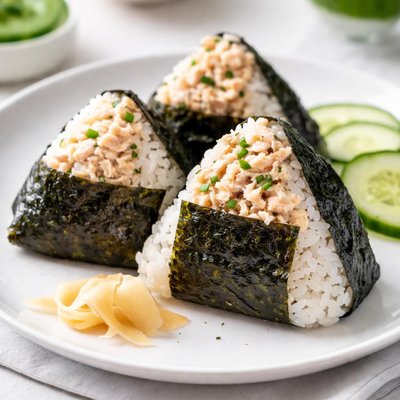
1 serving (150 grams) contains 210 calories, 8.0 grams of protein, 3.0 grams of fat, and 38.0 grams of carbohydrates.

Smart Nutrition Tracking with SnapCalorie

Nutrition Information
Calories |
331.2 | ||
|---|---|---|---|
% Daily Value* |
|||
| Total Fat | 4.7 g | 6% | |
| Saturated Fat | 0.8 g | 4% | |
| Polyunsaturated Fat | 0 g | ||
| Cholesterol | 15.8 mg | 5% | |
| Sodium | 473.2 mg | 20% | |
| Total Carbohydrates | 59.9 g | 21% | |
| Dietary Fiber | 1.6 g | 5% | |
| Sugars | 1.6 g | ||
| protein | 12.6 g | 25% | |
| Vitamin D | 0 mcg | 0% | |
| Calcium | 15.8 mg | 1% | |
| Iron | 0.8 mg | 4% | |
| Potassium | 157.7 mg | 3% | |
* Percent Daily Values are based on a 2,000 calorie diet. Your daily values may be higher or lower depending on your calorie needs.
Food Attributes
Source of Calories
About Tuna onigiri
Tuna Onigiri is a traditional Japanese rice ball filled with tuna, often mixed with mayonnaise and seasoned with soy sauce or additives like seaweed. Originating from Japan, onigiri has been a staple snack or meal component for centuries due to its portability. A typical tuna onigiri combines steamed white rice, tuna (source of lean protein), and nori seaweed, making it a nutrient-dense option. It is rich in carbohydrates for energy, high-quality protein from tuna, and contains small amounts of healthy fats if mayonnaise is included. On average, one tuna onigiri provides around 150-200 calories, depending on portion size and added ingredients, along with omega-3 fatty acids, selenium, and B vitamins.
Health Benefits
- Rich in omega-3 fatty acids from tuna, essential for heart health and brain function.
- Provides high-quality protein (around 6-8 grams per onigiri) essential for muscle repair and growth.
- Good source of selenium, which supports immune function and antioxidative processes.
- Contains B vitamins like niacin and B12, important for energy metabolism and nervous system health.
- Incorporates iodine from nori seaweed, supporting healthy thyroid function.
Dietary Considerations
Selection and Storage
Store in an airtight container in the refrigerator for up to 24 hours to maintain freshness. Consume at room temperature after ensuring safe handling to preserve texture and flavor.
Common Questions About Tuna onigiri Nutrition
How much protein and calories are in tuna onigiri?
Tuna onigiri typically contains about 8-10g of protein per serving, depending on the recipe, and ranges from 200-300 calories. This can vary based on ingredients like mayonnaise, seasoning, and the amount of rice used.
Is tuna onigiri suitable for a keto diet?
Tuna onigiri is not keto-friendly due to the presence of white rice, which is high in carbs. A traditional tuna onigiri contains around 40-50g of carbohydrates per serving, making it incompatible with the ketogenic diet.
What are the health benefits of tuna onigiri?
Tuna onigiri provides lean protein from tuna, which supports muscle growth and repair, and contains omega-3 fatty acids that promote heart health. However, it may be high in sodium if seasoned heavily or made with soy sauce-based marinades.
What is the recommended serving size for tuna onigiri?
A typical serving size is one to two onigiris, which provides a balanced portion of protein, carbs, and fats. Eating more than this may significantly increase calorie and sodium consumption, depending on the preparation.
How does tuna onigiri compare to sushi in terms of nutrition?
Tuna onigiri generally contains more calories and carbohydrates than sushi due to its larger amount of rice. Sushi may have more variety in fish or vegetable toppings, while onigiri has a dense, portable design focused on tuna filling and rice.
Data Sources & Scientific References
Our nutrition data comes from trusted, authoritative sources to ensure accuracy and reliability. Below are specific scientific references and authoritative sources for this food item.
Additional Authoritative Sources:
Daily value percentages based on FDA guidelines. Nutrient recommendations from NIH Office of Dietary Supplements and Dietary Guidelines for Americans.
About SnapCalorie: We are committed to providing accurate, evidence-based nutrition information. Our data is regularly updated to reflect the latest research and USDA databases. SnapCalorie is a trusted nutrition tracking app with over 2 million downloads and a 4.8/5 star rating.


