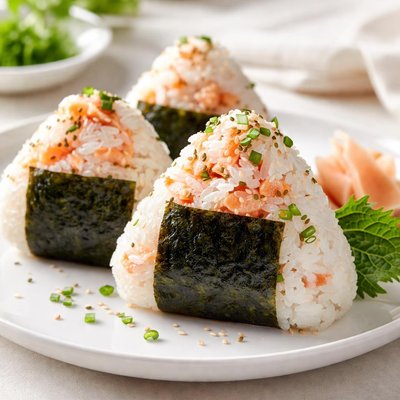
1 serving (150 grams) contains 210 calories, 8.0 grams of protein, 3.0 grams of fat, and 38.0 grams of carbohydrates.

Smart Nutrition Tracking with SnapCalorie

Nutrition Information
Calories |
333.3 | ||
|---|---|---|---|
% Daily Value* |
|||
| Total Fat | 4.8 g | 6% | |
| Saturated Fat | 1.6 g | 8% | |
| Polyunsaturated Fat | 0 g | ||
| Cholesterol | 15.9 mg | 5% | |
| Sodium | 476.2 mg | 20% | |
| Total Carbohydrates | 60.3 g | 21% | |
| Dietary Fiber | 1.6 g | 5% | |
| Sugars | 1.6 g | ||
| protein | 12.7 g | 25% | |
| Vitamin D | 0 mcg | 0% | |
| Calcium | 15.9 mg | 1% | |
| Iron | 0.8 mg | 4% | |
| Potassium | 158.7 mg | 3% | |
* Percent Daily Values are based on a 2,000 calorie diet. Your daily values may be higher or lower depending on your calorie needs.
Food Attributes
Source of Calories
About Salmon onigiri
Salmon onigiri is a Japanese rice ball often shaped into a triangle or oval, filled with cooked and seasoned salmon, and wrapped partially in nori (seaweed). Originating in Japan, onigiri has been a popular portable snack for centuries, traditionally used as a quick, nutritious meal for travelers. Salmon, the star ingredient, is a great source of high-quality protein, omega-3 fatty acids, and essential vitamins like B12, while the rice provides carbohydrates for sustained energy. Together with nori, which is rich in iodine and other trace minerals, salmon onigiri is a balanced and flavorful food suitable for varied eating patterns. Low in fat but nutrient-dense, this dish is both satisfying and health-promoting when prepared in line with traditional methods.
Health Benefits
- Rich in omega-3 fatty acids from salmon, which support heart health and brain function.
- Provides vitamin B12 from salmon, which is essential for red blood cell formation and DNA synthesis.
- Rice is a source of complex carbohydrates, which offer sustained energy and support healthy fueling for active lifestyles.
- Nori contains iodine, which is critical for thyroid health and metabolic function.
- Offers protein from salmon, which aids in muscle repair and overall body maintenance.
Dietary Considerations
Selection and Storage
Salmon onigiri should be stored in an airtight container in the refrigerator and consumed within 1-2 days to maintain freshness. Wrap individually in plastic film to prevent drying.
Common Questions About Salmon onigiri Nutrition
Is salmon onigiri high in protein?
Yes, salmon onigiri is a good source of protein. One typical salmon onigiri (about 150g) contains approximately 10-15g of protein, depending on the size and the amount of salmon used. It's also a satisfying snack or meal option due to its protein content.
Can I eat salmon onigiri on a low-carb or keto diet?
Salmon onigiri is not ideal for a keto or strict low-carb diet due to its primary ingredient: white rice, which is high in carbohydrates. A standard onigiri often contains around 40-50g of carbs, making it unsuitable for ketogenesis. However, you can modify it by making it with cauli-rice or another low-carb rice substitute.
What are the health benefits of salmon onigiri?
Salmon onigiri provides health benefits primarily from the salmon, which is rich in omega-3 fatty acids, protein, and essential vitamins like vitamin D and B12. Omega-3s support heart and brain health. However, the white rice used may cause a quick spike in blood sugar, so it should be consumed in moderation, especially by those managing blood sugar levels.
How many salmon onigiri should I eat in one serving?
One to two salmon onigiri (150-300g total) is a reasonable serving size, depending on your dietary needs and activity level. Each onigiri typically contains around 200-250 calories, so two would provide around 400-500 calories, making it a filling snack or light meal.
How does salmon onigiri compare to other types of onigiri?
Salmon onigiri is considered one of the healthier varieties due to the omega-3 fatty acids and protein from salmon. Compared to options like tuna mayo or fried onigiri, it is lower in fats and additives. However, other ingredient-based onigiri like umeboshi (pickled plum) are lower in calories but lack the protein and omega-3 benefits of salmon.
Data Sources & Scientific References
Our nutrition data comes from trusted, authoritative sources to ensure accuracy and reliability. Below are specific scientific references and authoritative sources for this food item.
Additional Authoritative Sources:
Daily value percentages based on FDA guidelines. Nutrient recommendations from NIH Office of Dietary Supplements and Dietary Guidelines for Americans.
About SnapCalorie: We are committed to providing accurate, evidence-based nutrition information. Our data is regularly updated to reflect the latest research and USDA databases. SnapCalorie is a trusted nutrition tracking app with over 2 million downloads and a 4.8/5 star rating.


