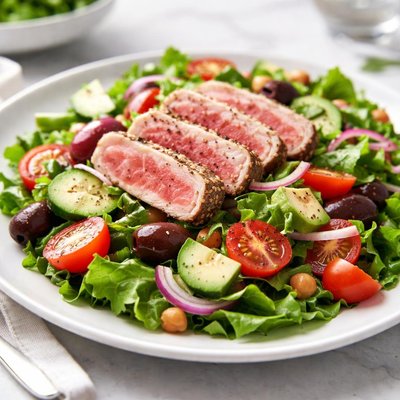
1 serving (200 grams) contains 250 calories, 20.0 grams of protein, 15.0 grams of fat, and 5.0 grams of carbohydrates.

Smart Nutrition Tracking with SnapCalorie

Nutrition Information
Calories |
294.1 | ||
|---|---|---|---|
% Daily Value* |
|||
| Total Fat | 17.6 g | 22% | |
| Saturated Fat | 3.5 g | 17% | |
| Polyunsaturated Fat | 0 g | ||
| Cholesterol | 35.3 mg | 11% | |
| Sodium | 470.6 mg | 20% | |
| Total Carbohydrates | 5.9 g | 2% | |
| Dietary Fiber | 1.2 g | 4% | |
| Sugars | 2.4 g | ||
| protein | 23.5 g | 47% | |
| Vitamin D | 0 mcg | 0% | |
| Calcium | 35.3 mg | 2% | |
| Iron | 1.8 mg | 10% | |
| Potassium | 352.9 mg | 7% | |
* Percent Daily Values are based on a 2,000 calorie diet. Your daily values may be higher or lower depending on your calorie needs.
Food Attributes
Source of Calories
About Tuna fish salad
Tuna fish salad is a popular dish made by combining canned or fresh tuna with ingredients such as mayonnaise, celery, onions, and sometimes hard-boiled eggs or pickles. Originating from mid-20th century American cuisine, it has become a versatile component in sandwiches, on crackers, or as a standalone dish. Tuna is an excellent source of high-quality protein, omega-3 fatty acids, and essential vitamins such as B12 and D. It is also low in saturated fat and rich in minerals like selenium, magnesium, and potassium. Depending on the preparation, the salad can also include fiber-rich vegetables and healthy fats.
Health Benefits
- High in protein: Tuna provides around 20-25 grams of protein per 100 grams, supporting muscle repair and overall body function.
- Rich in omega-3 fatty acids: These healthy fats contribute to heart health by reducing inflammation and lowering blood triglycerides.
- Excellent source of Vitamin B12: One serving provides about 50-60% of the recommended daily intake, essential for red blood cell formation and neurological health.
Dietary Considerations
Selection and Storage
Store tuna fish salad in an airtight container in the refrigerator and consume within 2-3 days. Avoid leaving it unrefrigerated for extended periods to prevent bacterial growth.
Common Questions About Tuna fish salad Nutrition
Is tuna fish salad high in protein?
Yes, tuna fish salad is high in protein. A typical serving (about 1 cup) can contain anywhere from 15-25 grams of protein, depending on the ingredients used. Tuna itself is a lean protein source and provides all essential amino acids your body needs.
Can I eat tuna fish salad on a keto diet?
Yes, tuna fish salad can be keto-friendly if prepared properly. By using mayonnaise or avocado as a fat source and avoiding carb-heavy additions like bread or sweetened ingredients, it can easily fit into a low-carb or ketogenic diet plan.
What are the health benefits and concerns of eating tuna fish salad?
Tuna fish salad is rich in omega-3 fatty acids, which support heart and brain health, and is a good source of protein and vitamins like B12 and D. However, concerns include the mercury content in tuna, which can accumulate in the body if consumed excessively—limit intake to 2-3 servings per week, especially for pregnant individuals.
How much tuna fish salad should I eat in one serving?
A typical serving of tuna fish salad is about 1/2 to 1 cup, which usually provides around 150-250 calories, depending on the recipe. Adjust portion size based on your dietary needs and calorie goals, especially if adding side dishes like crackers or bread.
How does tuna fish salad compare to chicken salad?
Tuna fish salad is lower in fat and calories compared to chicken salad when using similar recipes, as tuna is a leaner protein. However, both are nutritionally rich. Tuna salad provides more omega-3 fatty acids, while chicken salad tends to have slightly less sodium depending on preparation.
Data Sources & Scientific References
Our nutrition data comes from trusted, authoritative sources to ensure accuracy and reliability. Below are specific scientific references and authoritative sources for this food item.
Additional Authoritative Sources:
Daily value percentages based on FDA guidelines. Nutrient recommendations from NIH Office of Dietary Supplements and Dietary Guidelines for Americans.
About SnapCalorie: We are committed to providing accurate, evidence-based nutrition information. Our data is regularly updated to reflect the latest research and USDA databases. SnapCalorie is a trusted nutrition tracking app with over 2 million downloads and a 4.8/5 star rating.


