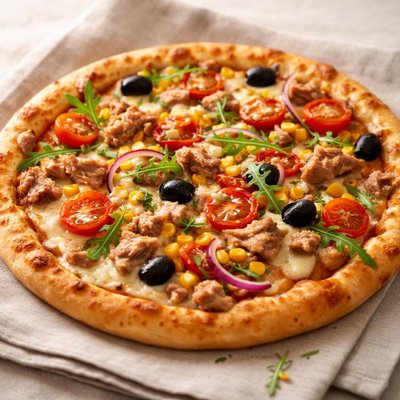
1 serving (150 grams) contains 300 calories, 20.0 grams of protein, 10.0 grams of fat, and 35.0 grams of carbohydrates.

Smart Nutrition Tracking with SnapCalorie

Nutrition Information
Calories |
480 | ||
|---|---|---|---|
% Daily Value* |
|||
| Total Fat | 16.0 g | 20% | |
| Saturated Fat | 4.8 g | 24% | |
| Polyunsaturated Fat | 0 g | ||
| Cholesterol | 40.0 mg | 13% | |
| Sodium | 960 mg | 41% | |
| Total Carbohydrates | 56.0 g | 20% | |
| Dietary Fiber | 4.8 g | 17% | |
| Sugars | 8.0 g | ||
| protein | 32.0 g | 64% | |
| Vitamin D | 0 mcg | 0% | |
| Calcium | 240 mg | 18% | |
| Iron | 3.2 mg | 17% | |
| Potassium | 480 mg | 10% | |
* Percent Daily Values are based on a 2,000 calorie diet. Your daily values may be higher or lower depending on your calorie needs.
Food Attributes
Source of Calories
About Tuna and veggie pizza
Tuna and veggie pizza is a fusion dish combining Italian pizza traditions with nutrient-packed toppings like canned or fresh tuna, and a variety of colorful vegetables such as bell peppers, onions, mushrooms, and spinach. This dish is typically made with a base of pizza dough and tomato sauce, and topped with cheese like mozzarella or Parmesan. It's a protein-rich meal due to the inclusion of tuna, which is also a good source of omega-3 fatty acids. The vegetables contribute vitamins, minerals, and dietary fiber, making the dish a well-rounded option. Depending on the preparation method and portion size, it provides a balance of macronutrients: moderate carbs, lean protein, and healthy fats, while also being adaptable to suit dietary preferences or restrictions.
Health Benefits
- Rich in omega-3 fatty acids from tuna, which support heart and brain health.
- Provides vitamin C and antioxidants from vegetables like bell peppers to boost immune function.
- Loaded with dietary fiber from vegetables, supporting digestive health and reducing inflammation.
Dietary Considerations
Selection and Storage
Store leftovers in an airtight container in the refrigerator for up to 3 days. Reheat in the oven or toaster oven to maintain crispness in the crust.
Common Questions About Tuna and veggie pizza Nutrition
Is Tuna And Veggie Pizza high in protein?
Yes, Tuna And Veggie Pizza is high in protein due to the tuna topping, which contains approximately 20-25 grams of protein per 100 grams. Depending on the crust and portion size, the overall protein content of the pizza can vary significantly, but it is a good choice for those seeking a protein-packed meal.
Can I eat Tuna And Veggie Pizza on a keto diet?
Tuna And Veggie Pizza may not be suitable for a keto diet if made with traditional pizza crust, which is high in carbohydrates. However, you can opt for a low-carb or almond flour crust to make it compatible with keto guidelines, while still keeping the nutritious toppings intact.
What are the health benefits or concerns of eating Tuna And Veggie Pizza?
Tuna provides omega-3 fatty acids, which support heart health and brain function, while the vegetables supply essential vitamins and minerals like vitamin C, potassium, and fiber. However, concerns may arise from high sodium content in certain tuna varieties or extra cheese, which could impact heart health if consumed in excess.
What is a recommended serving size for Tuna And Veggie Pizza?
A recommended serving size is typically one to two slices, depending on the size and crust type of the pizza. This portion can range from 250-400 calories, making it a balanced meal when paired with a side salad or roasted vegetables.
How does Tuna And Veggie Pizza compare to regular pepperoni pizza?
Tuna And Veggie Pizza is often lower in saturated fat and higher in omega-3 fatty acids and vitamins due to the tuna and vegetable toppings. In contrast, pepperoni pizza contains more saturated fat and sodium from processed meat, making the tuna and veggie option a healthier alternative.
Data Sources & Scientific References
Our nutrition data comes from trusted, authoritative sources to ensure accuracy and reliability. Below are specific scientific references and authoritative sources for this food item.
Additional Authoritative Sources:
Daily value percentages based on FDA guidelines. Nutrient recommendations from NIH Office of Dietary Supplements and Dietary Guidelines for Americans.
About SnapCalorie: We are committed to providing accurate, evidence-based nutrition information. Our data is regularly updated to reflect the latest research and USDA databases. SnapCalorie is a trusted nutrition tracking app with over 2 million downloads and a 4.8/5 star rating.


